
 If the film 28 Years Later is taken as an allegory for the struggle of getting a GP appointment, you might expect the follow-up, The Bone Temple, to have an orthopaedic angle. Instead, the focus shifts away from community palliative care towards mental health, unsurprising in a post-apocalyptic Britain devastated by a psychosis-inducing rage virus.1 Here, we encounter Dr Ian Kelson, a curious GP with a sketchy practice boundary. Viewers are reminded early that, despite the obvious paucity of primary care funding, he is “NHS” and that there is no need to worry about reciprocity.
In many respects, Kelson embodies the idealised GP of cultural consciousness: an easy-to-talk-to, principled eccentric, whose workplace doubles as his home.2 Dyed in iodine, this orange-coloured generalist is a man of science and compassion. Bereft of the technological equipment that increasingly penetrates modern medicine, Kelson’s screen prestige is elevated into a blowpipe reimagining of Fildes’ The Doctor.3 Such depictions of clinical kindness and empathy amid despair and desperation permeate patient expectations, evidently requiring more than a plague to dissolve.
In many respects, Kelson embodies the idealised GP of cultural consciousness: an easy-to-talk-to, principled eccentric, whose workplace doubles as his home.
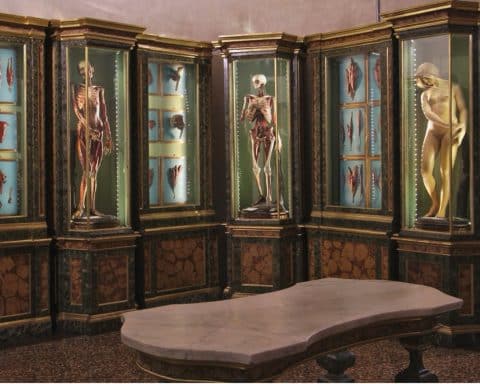
Set against the film’s graphic, meandering violence, Kelson’s permanence echoes reassuring familiarity. He resides in an ossuary, a temple of bones, to honour the dead. Hidden underground in his bunker, we catch a glimpse of his aging medical textbooks, including a BNF 37, The Handbook of Medical Ethics, and The BMA Book of Executive Health.4 Above ground, towers of human remains replace cabinets of Lloyd George notes. A central sculpture of skulls serves as a record of the dead and reminds the living of their mortality. Memorials are designed to transcend generations, linking the past, present, and future; they offer connection and continuity, qualities that resonate with GPs. It is interesting to consider that the NHS has now outlived a cohort of human beings, and to reflect on whether GPs themselves risk being perceived as a timeless affair. 28 Years Later: The Bone Temple is a fascinating film in which viewers of a clinical persuasion will find a gripping portrayal of an isolated GP who has become a monument of ideology in a decivilised society.
Featured Film: 28 Years Later: The Bone Temple (2026), Directed by Nia DaCosta; Written by Alex Garland; and Starring Ralph Fiennes, Jack O’ Connell, Alfie Williams Ellin kellyman and Chi Lewis-Parry. Production: Columbia Pictures/Decibel Films/DNA Films. Distributor: Sony Pictures Releasing
References:
- Ellis A. BMJ. 2002 Nov 9;325(7372):1119. PMCID: PMC1124603.
- Dr Finlay’s Casebook. YouTube; [cited 2026 Jan 24]. Available from: https://youtu.be/vTiK43XRh08
- Tate. The Doctor, exhibited 1891, Sir Luke Fildes [Internet]. London: Tate; [cited 2026 Jan 24]. Available from: https://www.tate.org.uk/art/artworks/fildes-the-doctor-n01522
- Haslam D. THE BMA BOOK OF EXECUTIVE HEALTH. J R Coll Gen Pract. 1979 Nov;29(208):690. PMCID: PMC2159097.
Featured Photo by Arlinda on Unsplash