
Nigel Masters is a retired general practitioner
Jessica Downs* is lead physiotherapist of the Hyper-Acute Stroke Unit at High Wycombe Hospital
Although medicine is a scientific pursuit there are times when a leap of faith is needed to solve a problem. This scenario began in the garden with a hawthorn puncture wound to the underside of the left forefoot. The recipient described it like a nail entering the base of the great toe.* The site of injury was underside of the first metacarpophalangeal joint. The recipient removed the thorn spike, and the wound healed quickly. During the span of ten days, the discomfort at the site increased, so a typical regimen of broad-spectrum oral antibiotics was administered. The discomfort settled, but three weeks later there was a sudden worsening of the pain around the great toe joint such that it became red, swollen, stiff and painful to walk on. Although sepsis was suspected, screening for acute inflammatory markers showed no positive results. The inflamed joint resembled a case of acute gouty arthritis, but uric acid was normal and would be an unlikely diagnosis in a young fit woman. Non- steroidal pain killers were ineffective. When not weight bearing, the joint was less painful and the gout-like attacks were not triggered. The patient received ‘Fit notes’ because she was unable to work. It strikes us that a United Kingdom ‘Fit note’ that is in fact a sick note seems to be a good example of Orwellian doublespeak.
The discomfort settled, but three weeks later there was a sudden worsening of the pain around the great toe joint such that it became red, swollen, stiff and painful to walk on.
Thus, an unexplained left great toe mono-arthritis ensued. Rheumatoid disease tests came back negative, and doctors used both ultrasound and MRI scans to look for thorn fragments. Although no foreign objects were detected, the entry wound was noticeable, and the tendon sheaths around the intact plantar tendon were swollen. The actual great toe joint space appeared normal.
A literature search revealed a condition called thorn synovitis which is a result of thorn fragments causing a rare late onset mono-arthritis typically in the metacarpals but also in the knee, elbow, ankle joints. The studies suggested that this can only be remedied by removing the radiolucent fragments from the joint.1
A discussion with the orthopaedic team resulted in an operative procedure to examine the joint by subluxation and general inspection of the wound site. During surgery, the outer joint capsule appeared red, but no thorn fragments were visible to the naked eye. Once lavage was completed and microbial and tissue samples were collected, the wound was closed. A further two-week course of broad-spectrum antibiotics were given and within four weeks the condition had completely resolved. All tests undertaken including extensive microbial testing were once again negative. Almost a year later, the mono-arthritis has not recurred, and the great toe joint remains normal. A scientific explanation remains elusive. This brings to mind the Medieval practice of bloodletting, which people believed would eliminate harmful substances from the body.
A literature search revealed a condition called thorn synovitis…
As no thorn fragments were seen on scans the decision to sub lux and view the joint surfaces was difficult. The chronic mono-arthritis was persistent and very disabling so that the decision to operate on the joint was in fact straightforward.
Despite John Fry’s adage that says common diseases are most frequent,2 I encountered many rare conditions during my thirty years of practice. This medical rarity just happened to involve my daughter’s foot and occurred after I retired.
*Deputy Editor’s note: The patient described is one of the authors. We do not publish clinical case histories or case series in BJGPLife. This is a reflection and viewpoint. Where articles involve a patient (even anonymous) we expect written consent from the patient (or their legal representative if they do not have capacity).
References
- Tenazinha C, Barros R, Polido-Pereira J, Saraiva F. Plant thorn synovitis: case report of a synovial biopsy both diagnostic and therapeutic. Rheumatology (Oxford). 2022 May 5;61(5):e137-e138. DOI: 10.1093/rheumatology/keab568
- John Fry and Gerald Sandler Common Diseases. Their Nature, Presentation and Care. 1993. ISBN 0-7923-8803-8.
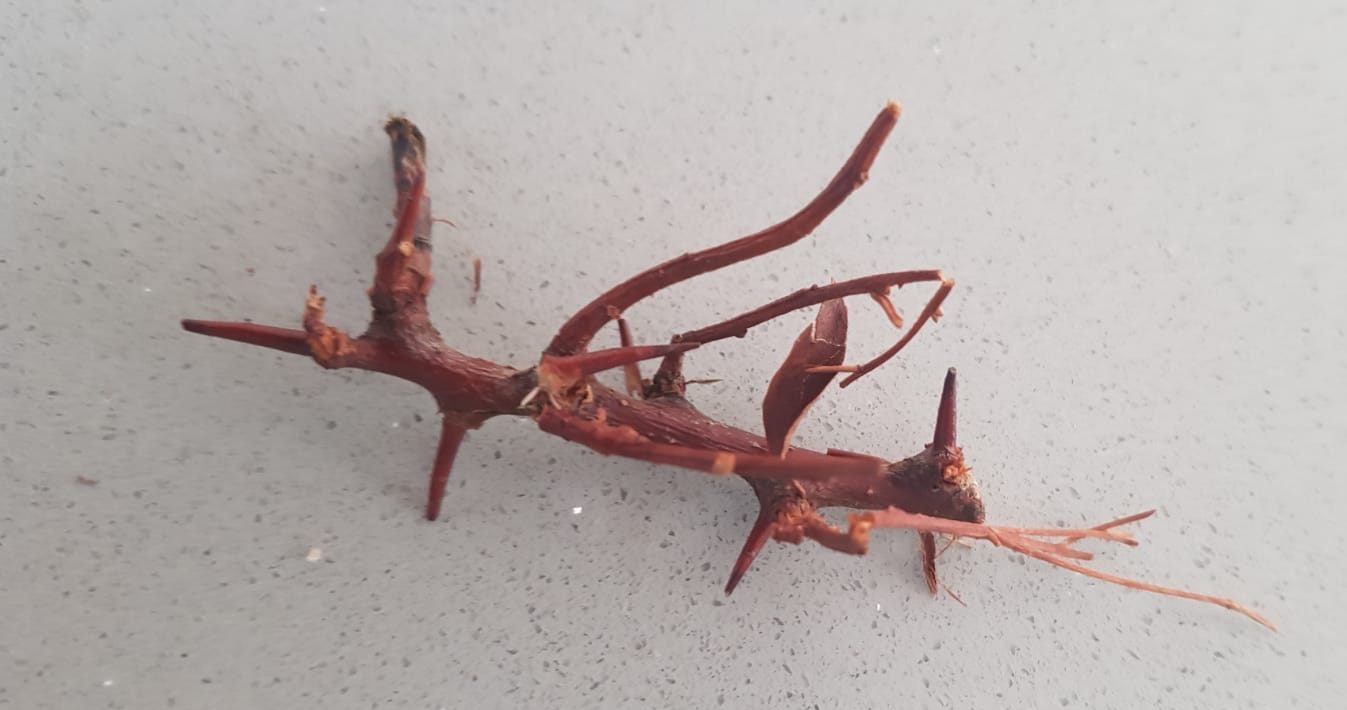
Featured image: Hawthorn photograph, taken by the authors, 2025