
James Latimer is a GP and Occupational Health Physician practising in the North East of England
“How can medical education be improved for the benefit of the patient?’’ – this is a question for which you could put one hundred medical educationalists in a room and come out with one hundred different answers.
My solution is no different, at least that was until I realised that I could just pop this question into my favourite Artificial Intelligence (AI) and know that it would give me the solution without even having to burn a single calorie to power up my brain.
“Medical education can be improved to enhance patient outcomes by shifting toward patient- and population-centered curricula, integrating quality improvement (QI) and patient safety training, leveraging mastery learning and deliberate practice, and increasing real-time patient involvement in teaching.” says ChatGPT
AI is fast becoming the new electricity.
In fact I’d go one step further and say that AI is, as far as most users are concerned, their new doctor, plumber, accountant and just about every job under the sun. Who needs a doctor when AI will diagnosis you with just a few symptoms. Indeed AI, if Microsoft1 is to be believed, will beat doctors in accuracy tests “by a mile” within the year or at least this was the article that the AI driven search engine wished to propagate to me.
For the benefit of the patient we should be developing those skills that cannot be read or recited, but rather learned through practice and time.
However I personally think the answer is a bit more complex – but maybe this is my non-AI brain pushing back. Being a clinician is about more than diagnosis. It is about more than prescribing. It is about the experience of spending time with a patient, listening to a patient and affirming their symptoms and then coming to a joint decision of care. If you’ve ever been on the phone to the bank or the utilities you’ll be well accustomed to the desire to speak to someone who is not a machine, to have an actual conversation with someone about your issue and make progress rather than pushing button after button. These conversational skills, I put it to you, should be the focus of medical education going forward because AI is gobbling up just about everything else.
With the advent of Artificial Intelligence it would appear that the recollection of knowledge is loosing its value year by year. By all means, this is not necessarily a bad thing. After all my predecessors would have treasured having this sort of information at their fingertips decades ago. Knowledge is ever expanding and increasingly available over the internet. In the 1950s I might have had to go to the library on dark and blustery November evening to find out the cardinal symptoms of Melioidosis but now I could have the answer in seconds at my fingertips with all the information on how to treat it and a wide set of differentials.
As such I put to you that knowledge is not the source of improvement that we need to be considering if we are to further medical education for the benefit of the patient – after all our patients have ready access to this information and will be increasingly doing their own research.
For the benefit of the patient we should be developing those skills that cannot be read or recited, but rather learned through practice and time.
After all anyone could learn even the most complex interpretations of medical tests – they knew this a decade ago…
The University of California Experiment
In 2015 like today there remained a lot of debate around what knowledge one needs to qualify as a doctor and a specialist.2 A discussion that has become more fervent in recent times with an advent of new roles that have been created within the NHS.
Of all specialities however it is particularly pathologists and radiologists that have been confronted with perceptual challenges in this regard. These doctors, even after years of education and training, sometimes struggle to arrive at or agree upon the correct disease or risk classifications using the visual cues present on microscope slides or medical images (e.g., x-rays)1 and there is considerable room for enhancing medical image perception and interpretation; this can occur not only via additional visual and verbal training.
So in 2015 the University of California posed the question that was on probably only one person’s lips: Do you need to be a doctor to be able to detect breast cancer? They took a group of 16 ‘rookies’ and decided to try and teach them as to how to diagnosis breast cancer based on pathology slides. The idea was that at the end of the training period these rookies would be able to look at slides and be able to tell whether the breast tissue was malignant or benign.
Despite the fact that it normally takes years to train to be come fully qualified pathologists, these rookies who had never diagnosed any kind of cancer before in their lives actually did astonishingly well. After only two weeks of training they managed to get about 85% of the slides correct.
After just two weeks they were doing incredibly well … but there was a catch and we’ll come back to that
The Argument For Skills
The fact that even a rookie can learn what I struggled to do in medical school successfully (and still do) perhaps emphasises the route that medical education should take in the interests of the patient for our future workforce.
Softer skills such as compassion, communication, argument and picking up the subtle signs that are not clearly evident will pay dividends in one’s career and it is imperative that we focus on this at an early age. Anyone can consider an SSRI for mood disorder but an excellent clinician will be able to achieve that diagnosis and treatment plan through active listening3 and compassion – this will add so much more to the treatment.
No two humans are identical – biologically or personally and recognising this is key in medicine. We need to be developing the skills that cannot be taught between the pages of a book and we should be placing students clinically and having them develop these skills through practice more and more.
A patient who feels listened to is much more likely to take a medication prescribed than another who feels that we are just going through the motions. A patient who is able to relate to a doctor is much more likely to divulge potentially important clinical information than a clinician who is just going through the processes as was written in the book. Most complaints that I have seen are not about a doctor lacking knowledge, but rather a doctor lacking compassion and listening skills. I think it is clear where our collective deficits lie and I don’t even have to ask AI on that one.
After all anyone could learn even the most complex interpretations of medical tests – they knew this a decade ago…
Skills can only be learned in practice, not in writing and it is important that we begin to focus on this in Medical Education or risk loosing focus on improving patient experience and, at the heart of it, the patient. After all the rookies showed us that the knowledge can be picked up quickly with the right training.
Return to the University of California Experiment
These rookies in the California experiment were not learning listening skills but rather just a very specific interpretation of pathology slides. To some doubters particularly those in the medical field it may seem no surprise that they were doing so well.
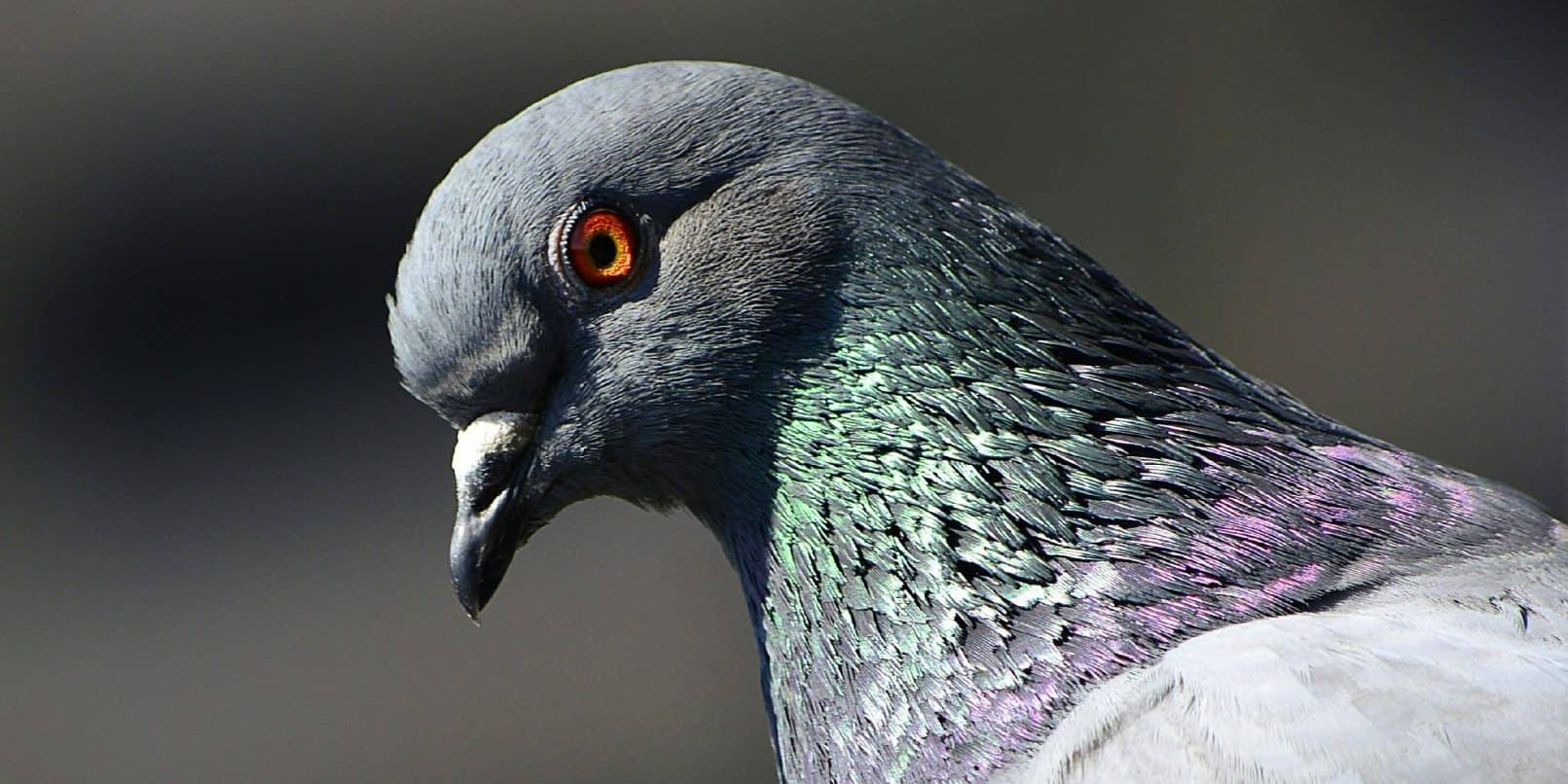
But what is more impressive about these results was not the findings but the rookies identity. These were not keen medical students, they weren’t strangers off the street. There were in fact … pigeons.
Now I know it’s a bit difficult to imagine pigeons sitting at the microscope diagnosing breast cancer so I do implore you to look back at the initial study including their little laboratory in Figure 1 of said study.4
Essentially in their Pigeon box these pigeons would be shown a number of slides and they would peck on one side if they thought it was malignant and they would peck on the other side if they thought that it was benign and they’d get a little treat if they got it right.
Now they got 85% of the slides correct on their own but if you combined the votes (or flock-sourced the diagnosis) then the accuracy of these pigeons shot up to an incredible 99%. This is comparable to what a fully fledged, fully trained pathologist would be able to manage after decades of training.
I like this particular study because I think that we like to image ourselves as humans, as medical trained professionals, as doctors as being uniquely capable of a whole range of things. We like to imagine that we are uniquely talented and that we, and we alone, are capable of doing specialist things but this example clearly demonstrates that this is not the case.
If you can train birds to diagnosis cancer then why can’t anyone else do it? Knowledge, and medical knowledge at that, is not what it used to be.
Wrapping Up
And this extends to the Medical Education sector. What used to be passed down in volumes of books and journals and only available to those who had read it in the library on that dusky November eve is now readily available at one’s fingertips in the depths of the ocean or whilst flying overhead. It’s available in seconds to those who know what to search for.
If I were writing this essay twenty years ago then the focus of this essay may have been very different but times change. And so must medical education.
Skills are where we need to be focusing our medical education journey on now. These skills cannot be picked up be Artificial Intelligence and require years of precision. They will be what makes us unique. The skills to be able to actively listen, unpick what is important in a patient history, the subtle signs and process this towards getting a diagnosis will not be replicated by any computer anytime soon.
We need to be focusing on compassion, the emotional intelligence and the intricacies of history taking and examination that form the basis of our practice if medical education is to keep up with the times. These cannot be Googled. These cannot be cheated upon. Yet these are an inherent part of our practice. Often it is not what a patient says but how they say it that can be the clincher.
These soft skills that were once developed later on in one’s career are increasingly important now.
A surgeon once told me that “anyone can operate but only a surgeon knows when not to” and this has stuck with me for over a decade now. I put it to you that now, in today’s technologically advanced environment that “anyone can possess medical information but only true doctors with the right skills can put this to use”
Skills over knowledge. Practice over paperwork. Otherwise one decade you’ve got the skills of a doctor and the next… Well… the next you’re doing exactly what a pigeon could.
References
- Milmo, D. (2025). Microsoft says AI system better than doctors at diagnosing complex health conditions. [online] the Guardian. Available at: https://www.theguardian.com/technology/2025/jun/30/microsoft-ai-system-better-doctors-diagnosing-health-conditions-research.
- Drew-Hill, A., Kisielewska, J., Edwards, J., Evans, S., Burr, S., Zahra, D. and Rigby-Jones, A. (2025). Physician Associate graduates have comparable knowledge to medical graduates. MedEdPublish, 15, p.20. doi: https://doi.org/10.12688/mep.20974.1
- Tennant, K., Butler, T.J.T. and Long, A. (2023). Active listening. [online] National Library of Medicine. Available at: https://www.ncbi.nlm.nih.gov/books/NBK442015/
- Levenson, R.M., Krupinski, E.A., Navarro, V.M. and Wasserman, E.A. (2015). Pigeons (Columba livia) as Trainable Observers of Pathology and Radiology Breast Cancer Images. PLOS ONE, 10(11), p.e0141357. doi: https://doi.org/10.1371/journal.pone.0141357
Featured Photo by Sneha Cecil on Unsplash