
 Peter Lindsay has enjoyed and survived 44 years as a General Practitioner. His interests include the care of people with learning disability for which he was the original RCGP Curriculum Guardian and the author/editor of an introductory textbook.
This autumn, someone will appear on “Strictly Come Dancing”.1 The nation will herald her appearance as a breakthrough; she will receive live and virtual applause and admiration that she has overcome her disability. Little comment will be made of her sevenfold increased risk of premature mortality and morbidity with 50% of that mortality being respiratory because, by chance, she is learning-disabled due to Down Syndrome. In the first year of COVID, NICE reduced the priority of people with learning disability for acute admission. When the vaccine became available no agency, not even the RCGP, suggested that, because of the high respiratory mortality, they should be considered a priority even though they were 6 times more likely to die and young people like her were 30 times more likely to die.
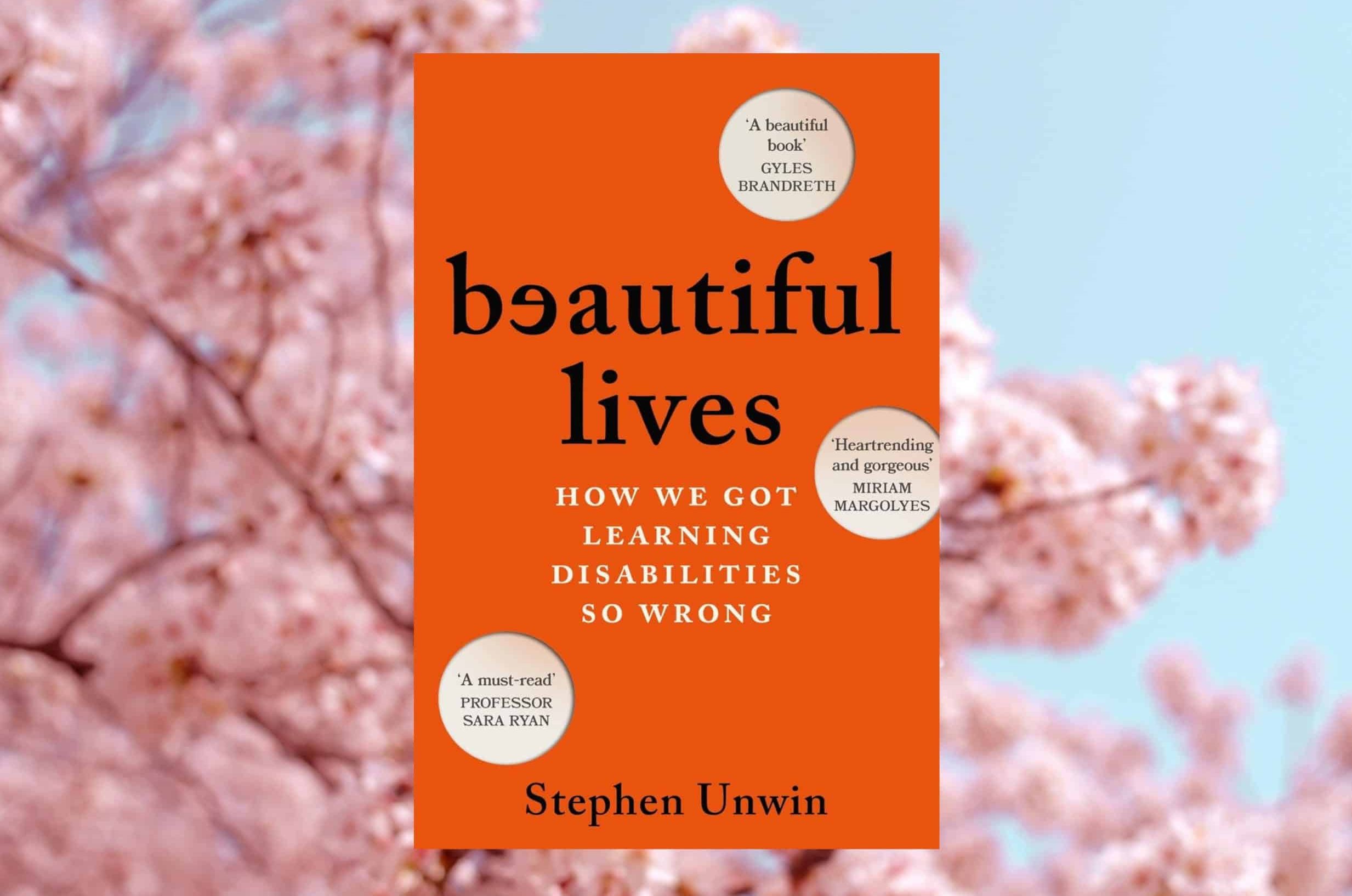
This contradiction is described so well in this magnificent book written in a page turning fashion by Stephen Unwin whose son Joey is affected by learning disability and Autism (I’ll refer to them as Stephen and Joey in this review). Elegant prose presented with well-argued passion makes each page cry out to be read, reflected on and radiated to colleagues, trainees, and students. It is researched, referenced and fully annotated. For any doctor in Europe or the USA interested in the care of people with learning disability it is a ‘must read.’
Back in 1965, Martin Luther King Jr 1965 proposed that “…the arc of the moral universe is long but it bends towards justice.” Throughout, Stephen repeats that the moral universe has bent in the right direction but frequently reverses its progress – there are examples of this happening since publication.
“So, what is it about learning disability which brings out the worse in people?” asks Stephen.
The history section takes us from the ancient Romans and Greeks. The ‘idiot’ of the Middle Ages is described by courts, though in a rural economy they prospered with support from the monasteries. We see the “fool” or “dunce” of the 16th century, “simple” in the 18th century, “imbecile” in the 1890s, “feeble minded” in Edwardian England, which leads us to the “moral imbeciles” of the 1912 Mental Deficiency Act. “Lives unworthy of life,” are referred to in 1930’s Nazi Germany with its gas chambers. “Subnormality” is used in the 1950’s, “moderately, mildly or severely retarded” in the 1960’s,“mental handicap” in the 1970’s until the term “intellectual ( later “learning” ) disability” was used in 2010, the same year off the Equality Act in the UK. Stephen shows how the “moral universe “is now being bent back on itself – Elon Musk has gone back to using the word “retard” and permits the widespread use of that label on the social media platform X.2
The 1912 Mental Deficiency Act was driven by the ‘primal myth’ of eugenics supported by celebrities of the time such as HG Wells and Virginia Woolf. They promoted the concept of ‘detrimental types,’ a term still used by Sir Keith Joseph in 1978, and politicians such as Winston Churchill. Churchill changed his mind in the 1950s quoting G K Chesterton, “…if I were a Eugenist then I should not personally waste my time locking up the feeble minded, the people I should lock up would be the strong minded”. Eugenics remains around us now in its ‘soft’ form. Dominic Cummings suggested that potential parents should screen their embryos for the one with the highest IQ and most recently Lewis Schaffer was allowed to say on GB news “just starve them that’s what you’ve got to do to people. You can’t just give them money … what else can you do? Shoot them? I mean I’d suggest that but I think maybe that’s a bit strong.”3
“So, what is it about learning disability which brings out the worse in people?” asks Stephen. In the 18th century, John Locke put forward the idea that you can be human but not a real person if you could not speak and have the intellectual abilities needed to understand him. Stephen counters this wonderfully, reminding us that the communication skills needed to support people with LD are the same we need for others: “…instead of imagining a simple distinction between the verbal and the non-verbal we should recognise the vast range in communication abilities not just between people, classes, intellectual ability and educational background but at different stages in the life cycle… Being with my very old, almost entirely silent father reminds me that learning disabilities are universal. Even the most articulate stop speaking eventually…” or as Rosemarie Garland-Thompson says, “What we call disability is perhaps the essential characteristic of being human.”
The book presents a critique of our current care of people with learning disability and how it can be improved. It is all made more real by the personal story of a father, his son, Joey, his family and their life journey. Stephen challenges some attitudes which are intended to be supportive and helpful: “Difference is a useful liberating concept, but it would be dishonest, even negligent, to claim that Joey is just “different.” Of course he is different but when it comes to arguing for the help he requires it must be made clear that he must be distinctly “disabled.” Stephen knows about other people with learning disability: “…some are non-verbal. Others chatter away happily. Some have problems with physical coordination. Others are remarkably dextrous. Some enjoy human contact, but others are introverted. Some have innate musicality while others are distressed by audible stimuli. The crucial point is that generalisations are best avoided…” Meeting one person affected by learning disability means you have met one person.
He discusses the difficulties faced by siblings and the support they need. He considers how some people with learning disability should have the vote. He highlights that, as the result of public attitudes, so many people with learning disability do not work whereas they did work when they were detained in secure “Colonies”. He records the poor care resulting from the use of psychotropic drugs to treat challenging behaviour. This may be due to changes of circumstances especially sensory overload and Stephen mentions the ‘Oliver McGowan Training’ which highlights this.4 On a related note, he describes the benefits and difficulties of the ‘Health (Hospital) Passport’ – a paper or electronic record outlining a patient’s individual concerns, expectations, communication preferences, necessary accommodations and necessary reasonable adjustments. All that is required is that all Trusts mandate their staff to use it, with sad consequences if they do not. The RCGP Significant Interest Group on learning disabilities raises awareness of the issues and provides educational materials.5,6,7,8
Stephen has experience of the battles parents are involved in to get support. He describes the difficulties of the 2014 Children and Families Act and the different attitudes of schools. Those with the highest educational standards, we read, may have the most difficulty coping with the needs of children with learning disability. He describes the chaos of tribunals which are costly and usually find in favour of the family. He also expresses concern that those encouraging self advocacy might sometimes create a reaction against parents so that those who have known the person from birth and observe them daily and regularly are deprived of making comments, “…seen as an obstacle to independence rather than a critical cog in the wheel of belonging”
The book presents a critique of our current care of people with learning disability and how it can be improved.
Stephen is realistic about advocacy and normalisation, discussing both at length. He expresses concern about the way those with mild and moderate learning disability can, with limited support, act as self advocates but those severely disabled have much greater difficulties and are less likely to be heard. So it is not an infringement of their liberties to offer help in the form of someone speaking on their behalf after doing everything possible to determine their views. Whatever Joey cannot do “…doesn’t mean that he shouldn’t be able to enjoy a decent life. Indeed, ensuring that couldn’t be more important not just to him but to all of us…”
Joey has challenged his dad to “…change how I think about what it is to be human…”Stephen offers us all 4 challenges prompted by Joey and others who:
- Can help us rethink that intelligence is the most desirable of human qualities
- Challenge our emphasis on productivity as the prime indicator of human value
- Challenge the priority we afford to the spoken language
- Challenge our ideas of the indefinable area of human happiness.
Throughout the book Stephen describes progress but repeatedly says “there is still a long way to go”. Stephen ends with a call to action: “The 20th century expanded our understanding of what it is to be human. The great struggles against racism, sexism and homophobia taught us about the shared humanity of people who, we’d been told, were very different. These battles continue to be waged but progress has, for the most part, being made. It is to the lives of people with different kinds of minds that, I believe, society should finally turn its attention. As well as helping this loose collection of precious individuals, it will encourage us to broaden our understanding of who we are as human beings. And this will, I’m convinced, make a better society for all.”
For GPs that is a clarion call – let’s discuss learning disability again at our annual conferences; let’s reopen the RCGP Toolkit and let’s prioritise winter immunisations for people with learning disability and their carers.8,9 Stephen Unwin has written a textbook, a manual and a guide that GPs and their institutions would do well to adopt. Let’s bend the arc of justice back to the needs of people with learning disability.
Featured book: Stephen Unwin, Beautiful Lives: How we got learning disabilities so wrong, Wildfire 2025, ISBN 978-1035424733, £25, Hardback, 304 pages
References
- https://www.theguardian.com/tv-and-radio/2025/aug/13/strictly-come-dancing-announces-ellie-goldstein-as-first-contestant-with-downs-syndrome?CMP=Share_iOSApp_Other [accessed 9/9/25]
- https://www.theguardian.com/world/2025/mar/03/r-word-right-wing-rise?CMP=Share_iOSApp_Other [accessed 9/9/25]
- https://www.disabilitynewsservice.com/gb-news-says-it-has-nothing-to-apologise-for-after-guest-suggests-starving-disabled-benefit-claimants [accessed 9/9/25]
- https://www.hee.nhs.uk/our-work/learning-disability/current-projects/oliver-mcgowan-mandatory-training-learning-disability-autism [accessed 9/9/25]
- https://www.england.nhs.uk/publication/health-and-care-passports/ [accessed 9/9/25]
- https://www.inquest.org.uk/david-lodge-inquest [accessed 9/9/25]
- https://www.itv.com/news/2025-07-16/unforgiveable-report-finds-death-of-learning-disabled-man-was-preventable [accessed 9/9/25]
- The RCGP Special Interest Group for Learning Disability – new members welcome! https://www.rcgp.org.uk/about/communities-groups/learning-disabilities [accessed 9/9/25]
- https://www.theguardian.com/society/2025/jul/21/bodies-of-nottingham-mother-and-daughter-found-almost-four-months-after-999-call?CMP=Share_iOSApp_Otherq [accessed 9/9/25]