
Indy Tsang is the Managing Editor for BJGP Open, as well as a reader and animal-lover.
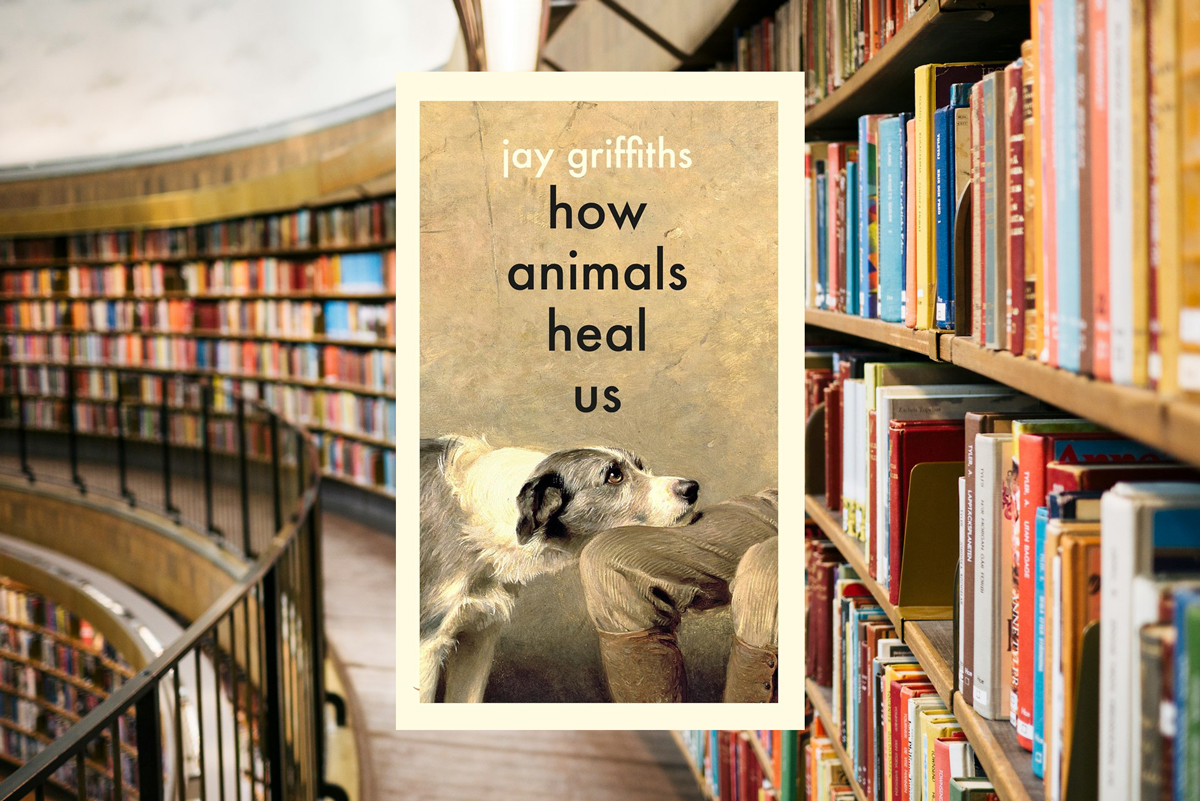
How Animals Heal Us is a deeply heartfelt work from an author with lived experience of both devastating mental ill health and the restorative power of animal friendship. It contains uplifting and joyful anecdotes of animal companionship and ministration. It is also, at times, a frustrating read.
My difficulty stems from going in with the wrong expectations — I was anticipating an accessible popular science book that delved into the ways in which animals promote, guard, and contribute to human health. Instead, the book often reads as a free-associative piece linking the many interesting things that Jay Griffiths has learnt on the general subject of animals, rather than discussing specifically how they heal us.
The majority of the book focuses on stories of animals, cultural archetypes of animals, and what animals represent to us conceptually, in various mythic traditions and Indigenous knowledge systems. This, really, is the heart of the book — where Griffiths can fully unleash her imagination, her intuition, and her rapturous style. It becomes clear over the course of these retellings that, for Griffiths, the stories are the medicine.
“There are questionable inclusions, though … retributive justice must surely be the least ‘healing’ of the available judicial paradigms.”
Initial chapters look at animal companionship as an enduring balm against loneliness and its attendant mental, physical, and emotional ills, as well as animals’ role in psychological therapy, including suicide prevention, where they may be able to reach in to psyches so harrowed by pain or trauma that human attempts at connection register as unendurable.
There are uplifting descriptions of assistance and service dogs who help their owners with daily physical tasks or even verify whether a perceived stimulus is, in fact, a hallucination. There are animals — trained and untrained — who alert their human companions to previously unknown diagnoses, or to imminent acute episodes. I found the quotations from people living with chronic, sometimes life-threatening, illness the most insightful parts of the work; likewise their accounts of how transformative an animal companion–guardian has been for them.
Animals are also identified as ‘natural physicians’ for their role in cortisol regulation and endorphin stimulation, and for the association of pet ownership with better outcomes post-discharge from coronary care. There are also inspirational tales of animals rescuing humans, from the more familiar dolphins and whales to the less expected lions.
There are questionable inclusions, though. The uncritical retelling of positive anecdotes about Koko the gorilla bespeaks a lack of rigour and balance; here the power of the story trumps the muddier reality.1 Griffiths spends a long paragraph telling us about how Russia’s current president goes gooey over puppies — an inclusion that tells us nothing of healing, and is particularly distasteful for taking more page-time than the life-changing impact of Hearing Dogs, a paragraph earlier. There is also a roughly 6-page section in The Fair Play of Justice, wherein increasingly violent instances of animal ‘revenge’ against humans are detailed, culminating in a description of the corpse of a notorious tiger hunter as ‘thoroughly and gruesomely annihilated’. There is a gesture towards this having relevance to societal health, but retributive justice must surely be the least ‘healing’ of the available judicial paradigms.
My lasting impression of the book is that it is undoubtedly heartfelt, widely referential, and exuberantly open to joy; if what you are seeking is a reflective and poetic work to bolster your intuitive sense of the wonder of animals, How Animals Heal Us could be for you.
Content warning
I provide content warnings to help readers make informed choices about what they consume, but these warnings are unavoidably subjective and likely to be non-comprehensive: depression; suicide; suicidal ideation; suicide attempt; grief; chronic illness; sexual violence; child abuse; child neglect; animal death; animal cruelty; gore; injury; violence; war; post-traumatic stress disorder; alcohol use; and addiction.
Reference
1. Hu JC. What do talking apes really tell us? The strange, disturbing world of Koko the gorilla and Kanzi the bonobo. Slate 2014; 20 Aug: https://slate.com/technology/2014/08/koko-kanzi-and-ape-language-research-criticism-of-working-conditions-and-animal-care.html (accessed 21 Jan 2026).
Featured photo by Susan Q Yin on Unsplash.