

 David Hill is a GP at the Health Hub Project New Zealand. He is still angry after all these years because we seem to go around in circles ending up in the same place with no change
In 1959, Kind of Blue did more than innovate jazz—it tore down the scaffolding. Miles Davis erased rules, allowed improvisation, and redefined what music could even be. Health care needs the same radical leap—not a tune‑up, but a full re‑composition, with equity and Indigenous sovereignty at its core. As you read, listen to Miles Davis’s “So What” on the album Kind of Blue
Inequity is not a glitch—It’s the system working as designed. Health disparities persist not from ignorance, but by design. Nancy Fraser (2010)1 describes this as a mis-framing—our systems systematically ignore those outside the dominant frame or worldview. Those most harmed—Māori, Pasifika, LGBTQIA+, disability, rural—are not system failures – the system is.
Inequity is not a glitch—It’s the system working as designed.
We’ve all seen the pictures at lectures describing reality, equality, equity, what Amartya Sen (2009)2 demands, is that justice removes fences—not just apportion boxes. This is borne out globally:
- Aotearoa New Zealand: Māori men live ~7.5 fewer years than non‑Māori; Pasifika ~6 years (Ministry of Health, 2024)3. Māori cardiovascular mortality is twice that of others (Drummond et al., 2023).4
- Aotearoa New Zealand: Pasifika children are 2.5× more likely to be hospitalised for respiratory conditions; Māori children 1.8× more likely (Cure Kids, 2023).5
- Australia: First Nations males live 8.8 years less than non‑Indigenous men; females 8.1 years (ABS, 2023).6 In remote areas the gap reaches ~12 years (ABS, 2023a).7
- USA: Black Americans have a life expectancy 4 years shorter than white Americans; maternal mortality rate for Black women is 2.5–4.5× higher (CDC, 2010; NIH, 2023).8,9
- UK: Black women are 3.7× more likely to die in childbirth than white women; 65% report prejudice in NHS care (ONS, 2021; The BMJ, 2022; Healthomic, 2024).10,11
These are not statistics— this is systemic, structural violence disguised as care.
The World Health Organisation’s (WHO) vision is rewriting the operating system. WHO (2018)12 calls for primary health care that is transformative, not cosmetic. Its pillars speak louder than any incremental reform:
- Comprehensive, people-centred care
- Tackling social and environmental determinants
- Empowering communities as creators, not clients, giving voice to the silenced
This mirrors both Te Tiriti o Waitangi and the Alma-Ata (1978) /Declaration of Astana (2018) vision: health as a right, not a privilege.
Primary health care is justice work. General practitioners are not gatekeepers—they are culture-workers. They synthesise stories, context, and science. Reeve (2018)13 calls them knowledge workers—positioned to lead decolonial, place-based reform. If we stay inside biomedical boxes, we reinforce failure. If we consciously build around relationships and rights as the principles of Te Tiriti demands, participation, protection, partnership, we can remodel, redesign and remake care.
Modal shifts are already underway. Global systems are showing the way:
- Brazil’s Estratégia Saúde da Família replaces clinics with neighbourhood teams.
- Cuba’s family doctors live in the communities they serve.
- Canada and Aotearoa now host Indigenous-led models (e.g., Whānau Ora, see Whānau Ora Commissioning Agency. About Whānau Ora [Internet]. Auckland: WOCA; [cited Aug 8, 2025]. Available from: https://whanauora.nz/about/) grounding care in trust, sovereignty, and culture.
These aren’t tweaks— they are built on completely different foundations.
Justice and health are two faces of the same colonial Project. In Aotearoa New Zealand, Māori make up ~16% of the population yet ~50% of prison inmates (Department of Corrections, 2023).14 Criminal justice overserves; health systems underserve. Scholars like Martin & Norris (2024),15 Agozino (2003),16 Cunneen & Tauri (2017),17 and Valdez et al (2020),18 show justice systems apply epistemic violence—while health systems apply epistemic erasure. One sees too much; the other too little.
These have the same roots: colonial infrastructure built for control, not human flourishing.
What Must Change— we need a moral pivot, not policy fine-tuning. We must:
- Embed indigenous documents like Te Tiriti o Waitangi in governance, and outcomes not just ethos, they are not just symbolic: insert and observe the principles: participation, protection, partnership
- Make co‑design with silenced communities non-negotiable
- Prioritise relationships over metrics, not throughput
- Use data to liberate, to highlight inequity, and direct policy, not survey
- Elevate Indigenous wellbeing frameworks like Te Whare Tapa Whā and Fonofale and the Indigenous Health Framework of Canada and frameworks in the US that acknowledge the impact of historical trauma, including forced assimilation and displacement, on the health and well-being of Native Americans.
- Understand that 15-minute or shorter appointments in a structurally racist, underfunded system don’t treat—they harm. Such brief encounters fail to meet the needs of patients with complex issues—disproportionately affecting Māori, Pasifika, Indigenous, and racialised communities. In Aotearoa New Zealand, general practice consultations average just under 15 minutes;19 in the UK, it’s 9.2 minutes;20 in Australia, standard appointments are similar, yet inadequate for those with multimorbidity and social disadvantage.21
Short consultations are linked to lower patient satisfaction, poorer chronic disease outcomes, and reduced attention to psychosocial concerns.22 In the US, racial bias further shortens time and reduces care quality for Black patients.23 When care is rushed, it doesn’t heal—it reinforces harm.
Health and justice are not parallel struggles—they are one.
Health Workers have a cultural role. Judith Butler (2009)24 teaches us that vulnerability is not pathology—it is humanity. In primary health care, professionals are culture workers—they carry stories, relationships, trust, and possibility. In that role lies the capacity to rewrite what care can be, system wide.
Let us be the storm. Miles Davis didn’t play within the lines—he erased them. The rhythms of inequity—legal and medical—are too familiar; you can’t fix a failing system by rearranging the same broken parts.
Adharanand Finn’s (Author of The Rise of the Ultra-runners. 2019) poem reminds us:
The demons whispered in my ear:
You’re not strong enough to withstand the storm
In heart’s abyss, where shadows loom,
Adversity’s grip, a relentless gloom.
Through trial fierce, where hope seems torn,
I whispered back: I am the storm.
The poem finishes with these lines:
In every struggle, a strength is born,
The demons may have whispered in my ear:
You’re not strong enough to withstand the storm,
I yelled back: I am the fucking storm!
Health and justice are not parallel struggles—they are one. In primary health care, we hold both front lines. Let us be the storm.
References
- Fraser N. Scales of justice: Reimagining political space in a globalizing world. New York: Columbia University Press; 2010.
- Sen A. The idea of justice. Cambridge (MA): Belknap Press of Harvard University Press; 2009.
- Ministry of Health. Health and independence report 2023. Wellington: Ministry of Health NZ; 2024.
- Drummond D, Mikaere J, Tamati H, O’Carroll A, Reti S. Hauora Māori—health equity in primary care. Int J Equity Health. 2023;22(1):19.
- Cure Kids. Child respiratory hospitalisations in New Zealand. Auckland: Cure Kids NZ; 2023.
- Australian Bureau of Statistics (ABS). Life expectancy and deaths of Aboriginal and Torres Strait Islander people: 2020–2022. Canberra: ABS; 2023.
- Australian Institute of Health and Welfare. Deaths in Australia—Indigenous life expectancy by remoteness and disadvantage. Canberra: AIHW; 2023.
- Centers for Disease Control and Prevention (CDC). Black maternal mortality in the United States. Atlanta (GA): CDC; 2010.
- National Institutes of Health (NIH). Racial disparities in maternal mortality. Bethesda (MD): NIH Office of Research on Women’s Health; 2023.
- Office for National Statistics (ONS). Ethnic differences in life expectancy in England and Wales: 2011 to 2014. London: ONS; 2021.
- Healthomic. Maternal mortality and systemic bias in UK healthcare: An investigation of NHS outcomes for Black women. BMJ. 2024;388(2):117–121.
- World Health Organization (WHO). Declaration of Astana: Primary health care from Alma-Ata towards universal health coverage. Geneva: WHO; 2018.
- Reeve J. GPs as knowledge workers: What does it mean? Educ Prim Care. 2018;29(1):3–6.
- Department of Corrections. Māori over-representation in the prison population. Wellington: NZ Government; 2023.
- Martin J, Norris A. Contextualising Indigenous people and the state of exception: New Zealand’s Waikeria Prison protest. Punish Soc. 2024;27(1):55–73.
- Agozino B. Counter-colonial criminology: A critique of imperialist reason. London: Pluto Press; 2003.
- Cunneen C, Tauri J. Indigenous criminology. Bristol: Policy Press; 2017.
- Valdez I, Coleman M, Akbar A. Racialized state violence and the legal state of exception. Theory Event. 2020;23(4):902–934.
- Ministry of Health. Health care users’ experience survey 2023 [Internet]. Wellington: Manatū Hauora – Ministry of Health; 2024 [cited 2025 Aug 3]. Available from: https://www.health.govt.nz/publication/health-care-users-experience-survey-2023
- Irving G, Neves AL, Dambha-Miller H, Oishi A, Tagashira H, Verho A, et al. International variations in primary care physician consultation time: a systematic review of 67 countries. BMJ Open. 2017;7(10):e017902.
- Bayram C, Harrison C, Charles J, Britt H. Bettering the Evaluation and Care of Health (BEACH) program: comparison of patient reasons for encounter in general practice across country, city and remote areas of Australia. Aust Fam Physician. 2016;45(5):336–40.
- Wilson A, Childs S. The relationship between consultation length, process and outcomes in general practice: a systematic review. Br J Gen Pract. 2002;52(485):1012–20.
- Saha S, Freeman M, Toure J, Tippens KM, Weeks C, Ibrahim S. Racial and ethnic disparities in the VA healthcare system: a systematic review. J Gen Intern Med. 2008;23(5):654–71.
- Butler J. Frames of war: When is life grievable? London: Verso; 2009.
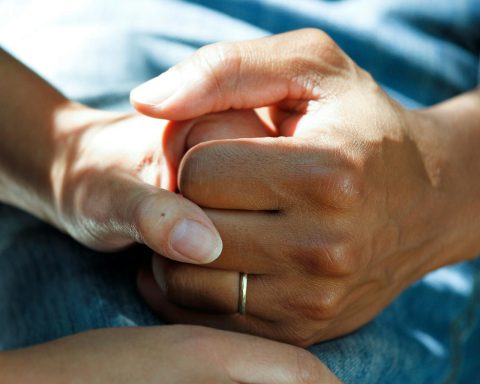
Featured Photo by Denny Müller on Unsplash