

James Latimer is a GP and Occupational Health Physician working throughout the North East of England.
As the rain lashed down on that Friday afternoon, perhaps pre-empting what I would find during the next half hour on my home visit, the scene was set.
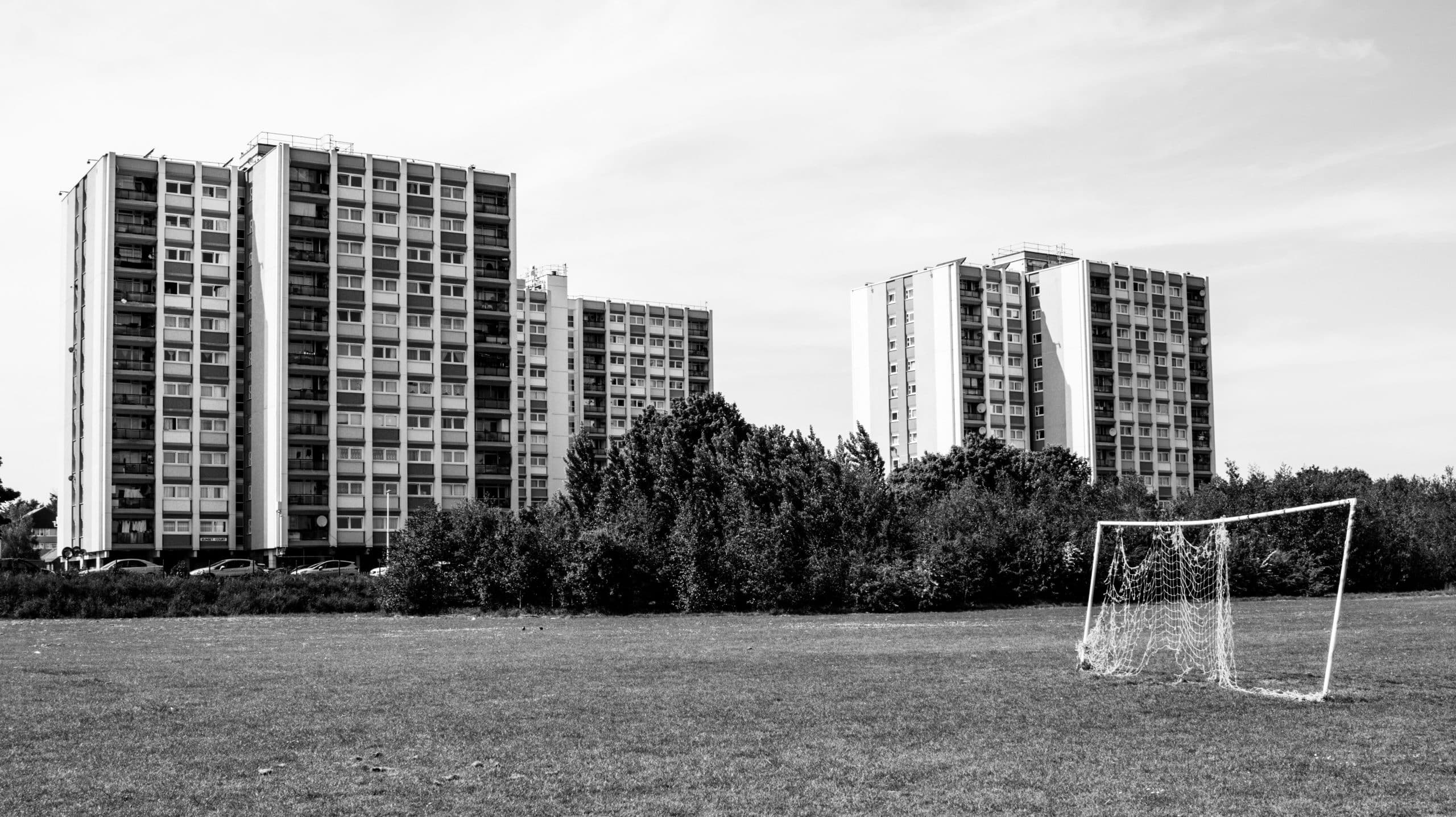
I was approaching a building I had heard plenty about during my short time working as a registrar in the region. Indeed despite this I had heard plenty from the residents at my previous practice but my encounters had mainly been with those asking for letters of fact which I suspect were to be used as a bargaining tool to move away from the building – I am unsure if any actually got their wish. It was abundantly clear now why they all wanted some form of statement that they struggled with mobility as I gazed upon the building that stretched high into the skyline.
The 200 foot tall building has stood firm for six decades now, with a hut for a local drug and alcohol organisation at the base of its building perhaps signifying more about the area that I was about to find out for myself.
The rain got heavier as I approached the door and made my way to the entrance hall where many key locks adorned the left side wall. Clue number two. Ahead of me stood the guide to the building. I needed to make my way up a few floors. The elevator with its overpowering smell of urine and faeces lost in the battle with the stairs. Floor after floor I ascended and wondered what I could find before me when I was before the patient. The triage note had said “feels unwell” – it left a lot to the imagination.*
The triage note had said “feels unwell” – it left a lot to the imagination.
Soon I found my destination after a few wrong turns. The door, unassuming and uniform in nature had seen better days. I knocked. I waited.
The peephole became opaque before a voice behind the door came
“Who is it?”
“The doctor” I replied.
Soon the sound of three separate latches being undone was followed by an open door. Clue number three. The patient’s brother was before me and soon he showed to the patient. We’ll call him Mr D. Mr D had a history of Dementia with apparent main prominent symptoms of taste and smell loss. His daughter, who lived thirty miles away, had called the practice about his symptoms which had been going on for four weeks now. These symptoms were vague – “lack of appetite”. No less and no more. No much to go on.
I asked question after question but Mr D denied any other symptoms – nil cardiac, nil abdominal, nil neurological, ENT, MSK. He was just off his food. His brother offered that he might have had a bit of heartburn. It wasn’t much of a lead.
I turned round to my bag to get my stethoscope out – it was going to be require a lot of cerebral energy to get to the bottom of this.
Loss of appetite. Heartburn. Could the two could conceivably be linked? But each question gave me an answer I didn’t want to hear. I probed further as I rose from my bag which laid upon the threadbare carpet.
“I’ve had heartburn for about ten years doc”.
Great. I thought. That’s one less avenue of exploration. Weight loss? Maybe. Not sure. Looser clothes?
“Oh no doc. If anything they’re a bit tighter”.
He just had loss of appetite. No other symptoms. I was no clearer forward. I felt the abdomen. Fine. Listened to the heart. Normal. Chest? So clear that I could hear the re-run of Wheel of Fortune through my stethoscope. The answer to the phrase was “A Blaze of Glory”. Nothing was quite giving me an avenue to explore.
So I had done what I always go in these situations – took some bloods and hoped they gave me a clear way forward. As I set foot onto the street once again the rain had eased off somewhat, but my brain was still mentally fogged.
The bloods returned later that day and were unremarkable. The tumour markers? Normal. ESR, Thyroid, Liver? Normal.
In the end it was thought that the loss of appetite was a signal of his worsening dementia, but what I remember more from this case is not the diagnostic dilemma and vague symptoms. No, it is the environment that some of our patients live in. I’d spoken to so many residents on the phone but I hadn’t ever quite got the picture of what the living conditions were like. I did now. The poor chests that never truly recovered from antibiotics, the perennial mental health difficulties – they all made sense now.
But what could I do? As I was packing up to go home myself I realised there was very little I could. I don’t think my letters gave them much bargaining power.
Last year the council had furthered plans to mark the buildings for demolition. The process in itself could take two years as accommodation is found for the new residents and anyway who is to guarantee that the next place will be any better for some who have made their roots in the area? For those who have lived in the building all their life? Would we be ripping up these patient’s social fabrics and interactions for worse rather than better. There certainly is a sense of community for most here. On the doctors at my last practice called it Stockholm Syndrome. Me? Well personally I see it as camaraderie
The complex mixture of flooding and fires amidst antisocial behaviour never bodes well for health – both physical and mental and I suspect Mr D paid for it with his diagnosis of Early Onset Dementia in his forties. The cause was never truly found despite specialist investigation, but between the thick smoke-laden air that encompassed his flat where he had been living for the last twenty years and the exposed heavy metalwork around him with lots of lead, nickel and copper I suspect the cause lay not too far away from a budding diagnostician.
But even with in mind I suspect if I offered Mr D a house swap he would still decline….even if it meant that his appetite, just like his sense of smell and taste, never came back. A sense of home sometimes trumps a sense of reason.
*Author’s note: The fictionalised patient in this narrative is based on an accumulation of clinical experiences during my GP training and not any specific individual living nor deceased.





Wonderful summation of the complex interplay of environmental health. I often wonder this too – how many of my patients have subclinical lead poisoning? Or some other form of poisoning
Eloquently put. I think we all underestimate the potential impact of one’s home on health on an individual level – whilst be aware of the issues on a wider scale.