
 Callum Leese is a GPST in NHS Tayside, Scottish Clinical Research Excellence Development Scheme lecturer at University of Dundee with an interest in physical activity for health, and champion for physical activity and lifestyle medicine with the Royal College of General Practitioners.
Cycling isn’t a panacea to the world’s problems. But it is pretty close. It addresses many issues simultaneously: physical inactivity, global warming via decreasing carbon emissions, and traffic congestion. However, less than 8% of the UK population regularly cycle, and despite increasing awareness of its benefits in the majority of local councils (n = 202/348) in England and Wales the number of people cycling to work fell between 2001 and 2011.1
After spending the summer working in Copenhagen I returned home to Scotland in August, just in time for the UCI Cycling World Championships. I’d developed into a bit of a cycling addict, with my bum frequently stuck to a saddle for long hours at weekends, and so coming back to cycle in some proper hills and watch some pros had wetted my appetite.
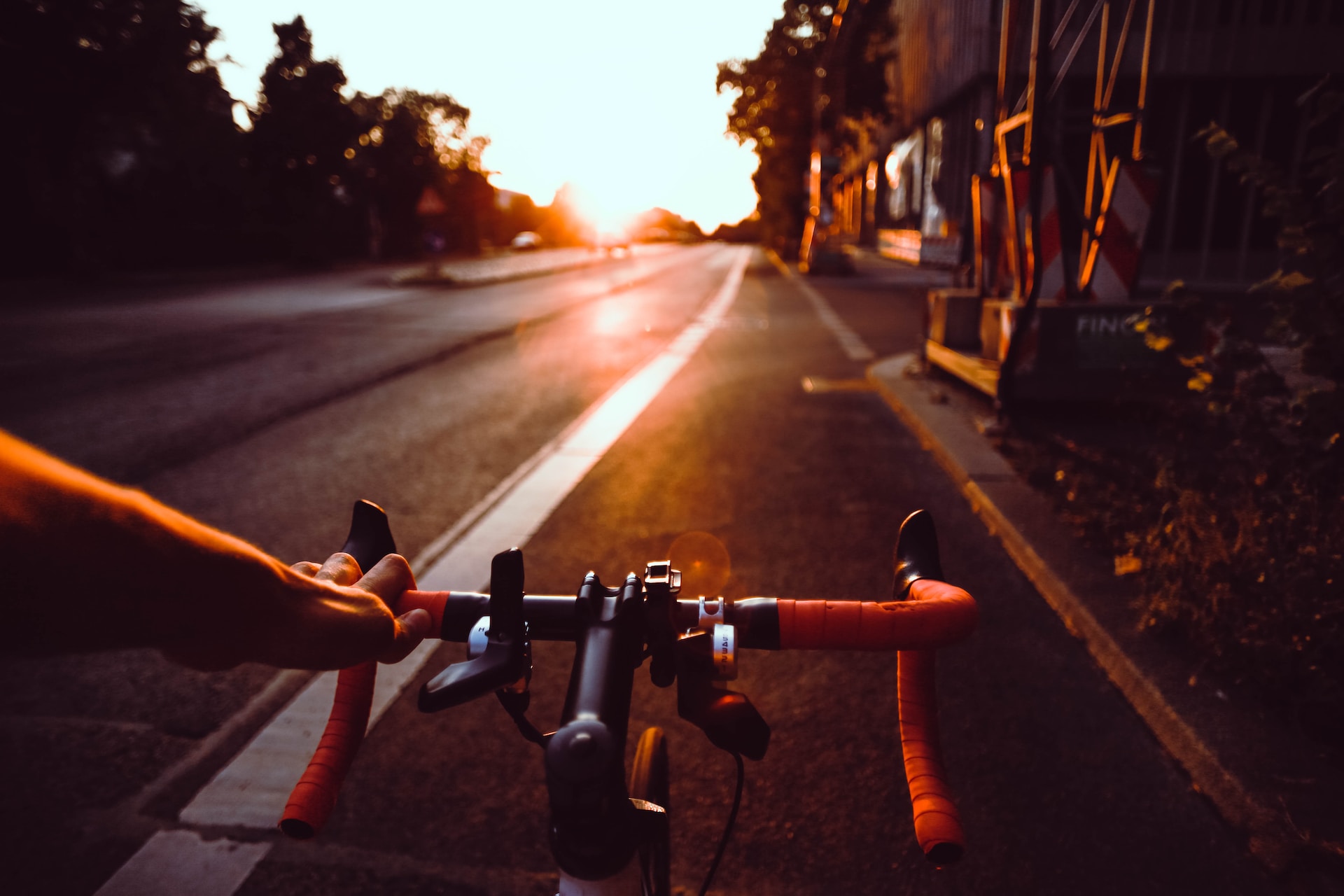
But this was short lived. I set out from Edinburgh down the canal path, and spent the first 40 minutes at a snails space dodging dogs, children, and the occasional other bike. It was a far cry from Denmark, where unidirectional three-bike-wide cycling lanes were separated from both the pavement and road by independent curbs. And this was on almost every road, including much of the countryside. With my fresh insight, the Scottish approach of slapping some paint down or in many cases just a small blue sign felt a bit feeble in comparison.
The number of trips by bicycle in the UK is less than a quarter of Denmark, and a sixth of the Netherlands.1 This is despite the fact these countries have a similar economic situation, and unpredictable northern European weather. In 2012, a Department for Transport survey highlighted than 48% of British cyclists and 65% of non-cyclists felt roads were not safe for bikes.2 And this is not baseless, with (in 2008) almost three times as many cyclists killed in the UK than in Denmark.3
Fotios and colleagues1 highlighted three differences between the UK and our northern European neighbours:
- a lack of dedicated cycle lanes;
- a scarcity of traffic calming measures; and
- a lack of adequate lighting.
Reflecting with a new appreciation of how cycling infrastructure can be done, it’s clear our system needs an overhaul. My cycling in Edinburgh was not overly pleasant, and I can’t imagine it was for those walking either. Active travel, by foot or by pedal, is a priority in policy worldwide due to its combined impact on both human and climate health.4 And Sustrans have made a good start, with over 1643 miles of cycling routes in Scotland, 702 miles of this being free from traffic.5
But work must be done and funding made available to support the development of cycle lanes and walkways that are independent to enable ongoing uptake. However, funding is linked to politics and vis-a-vis votes. And so this is a call for conversation and advocacy, using our role as health promoters to seek investment in infrastructure to increase and upgrade what is available for walkers, cyclists, runners, and many more.
References
1. Fotios S, Castleton HF. Lighting for cycling in the UK — a review. Lighting Research & Technology 2017; 49(3): 381–395.
2. Department for Transport. British Social Attitudes Survey 2012: public attitudes to transport. 2013. https://assets.publishing.service.gov.uk/government/uploads/system/uploads/attachment_data/file/209890/bsa-2012.pdf (accessed 13 Sep 2023).
3. Pucher J, Buehler R. Making cycling irresistible: lessons from the Netherlands, Denmark and Germany. Transport Reviews 2008; 28(4): 495–528.
4. Winters M, Buehler R, Götschi T. Policies to promote active travel: evidence from reviews of the literature. Curr Environ Health Rep 2017; 4(3): 278–285.
5. Sustrans. The National Cycle Network in Scotland. https://www.sustrans.org.uk/national-cycle-network/the-national-cycle-network-in-scotland (accessed 13 Sep 2023).
Featured photo by Florian Kurrasch on Unsplash.