


 Anna Beug is a GP and medical educator in Dublin, Ireland. She Lectures at Trinity College Dublin, is an assistant scheme director on the North Dublin City GP training scheme and a GP trainer.
I have worked for almost a quarter of a century as a GP in the same ‘deep-end’ community. In recent years I have devoted a significant proportion of my time to thinking about and teaching general practitioners and GP trainees in Ireland. In particular, skills that might help them to navigate emotional distress as they encounter it in their day to day work. My interest in this area arose in part from my own struggles to find a way to help that group of patients whose suffering I found hardest to bear and who seemed to benefit least from conventional medical approaches to care. Very limited community mental health services meant that these patients were largely unable to access the kind of talk therapies I imagined might provide ‘real’ help, and general practice was often the only door that remained open to them. Over time I became interested in the idea that listening on its own, even in tiny portions, could make an impact. Increasingly I have explored ways to teach curiosity and listening skills to GPs. I am always searching for ways to convey the nature and value of this work so as to empower doctors in training to risk listening in the moments where it is most difficult and have found certain analogies useful in this regard.
I have learned something crucial about the experience of being listened to and been able to talk about and reflect on the patients I find hardest to care for.
I am also engaged in learning and teaching narrative based practice, principally the method called CIC (Conversations Inviting Change) .1,2 This method has provided me with important new possibilities. It has helped me to listen better and provide more space for my patients narratives. It has been an invaluable teaching tool and has given me access to peer supervision with others using the same approach. I have learned something crucial about the experience of being listened to and been able to talk about and reflect on the patients I find hardest to care for. I imagine every general practitioner who has worked for a long time in one community will be able to relate to what I am describing here. Those patients, much written about,3 who attend the most, suffer the most, challenge us the most and can teach us the most if we have the willingness, time and support to listen to them, even briefly, over long periods.
Marion Milner said: “I must never begin my search by looking in books, never say, ‘I know too little, I must read some before I start,’ but…I must always observe first, express what I observed, and then, if I needed it, see what the books had to say.”4
I will try to express here some of what I have observed and why I have found myself using the analogy of making mosaics to describe the act of listening, by the same doctor, in tiny pieces over long periods of time. The value of listening in general practice has been extensively described.5,6 It is a vital part of the work of holding and containment.7 I hope that by understanding listening in fragments as a creative act, by giving it a name, we might better recognise and acknowledge this often invisible, crucially important and undervalued work.
In my experience the patients for whom this kind of listening is most important are those patients the system has largely given up on. They are patients who have often lived through traumas that I will never know the detail of, traumas that sit largely unspoken between us. I am interested in noticing what can happen when space is made for tiny parts of stories to emerge, over many years and many visits, between headaches, sore throats, flu vaccines and repeat prescriptions. These patients’ medical records tell their own story of endless attempts to supress suffering that won’t be supressed. Their long prescriptions and countless hospital letters are sobering reminders of the fact that it is easier to prescribe and refer than to listen.8 Reminders that providing ‘hope’ in the form of yet another drug or opinion is often preferable to bearing what can often seem unbearable in the moment. I have found a kind of freedom in this apparent hopelessness. The question ‘what does anything look like, if anything is better than nothing?’ has become a helpful guide.
Over time I have come to observe my encounters with these patients more actively. I challenge myself to ask them how they are, again and again, and be open to their responses. Even when it is their third consultation that week, even if I am running late. I have become curious about what might happen if I can find a way to listen to their repeated expressions of hopelessness. I have learned to allow these consultations to become a mixture of practical, physical issues and frequent short exchanges about the bigger, impossible suffering that is always in the background. I try to elicit just one more detail each time. I have spoken in supervision about how to avoid giving up and how to stop wanting good news. All of this has helped me to think of this work as making a mosaic, a picture or part-picture of a human life painstakingly built out of tiny pieces (or tiles) of listening.
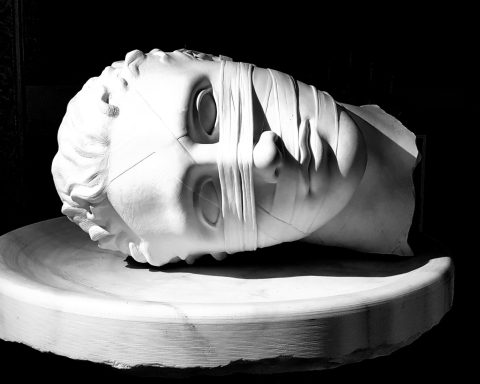
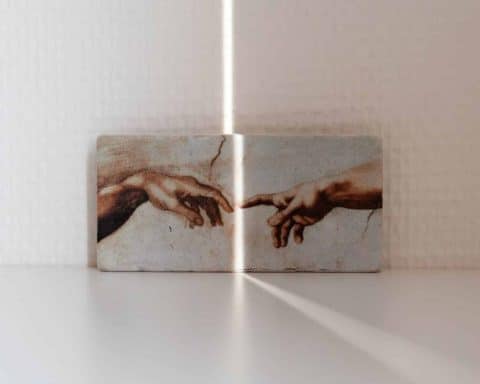
I have visited old churches all over Europe. Sometimes I have seen large intact mosaics. Images so formed that you almost forget they are made of thousands of tiny tiles. Whole scenes that tell whole stories in vivid detail and vibrant colours. More often I have seen little bits of mosaics in old or damaged buildings. A fold of fabric in a woman’s dress, part of a child’s face, God’s hand, most of the scene left to the imagination. I believe that in primary care, with some of the most complex patients, we are working on putting together little pieces of bigger pictures that will never be finished. Little bits of bigger pictures that may be too painful to ever be seen as wholes. Pictures made of fragments of stories put together over decades of short encounters. The impressions I hold of some of my patients’ lives are like mosaics in bombed churches. Little scenes, showing some of the colours and textures of life, big expanses left to the imagination or just too hard to speak of.
I ask myself what value if any this work has. It seems impossible to measure or quantify in any formal sense given that these patients almost never get better in any conventional way. I have had to completely re-imagine what progress looks like. I have learned to see it in the most unlikely places. I have shared these minute observations with my trainees so they might find some joy in this work too. I have largely given up on the idea of cure. My ‘treatments’ are mostly limited to short acknowledgements and the offer of another appointment. I have learned that my wish for ‘better’ answers or a ‘happy endings’ has more to do with my needs than the needs of my patients. I pay attention to any change at all. Often things seem to get worse. I wonder if I am being tested; a bereavement, a new physical symptom, a crisis with housing. These ‘events’ along with everyday physical ailments, provide something to focus on, something for us to engage with and a reminder of my role as a doctor and advocate. They probably also support my need to occasionally feel useful. Sometimes things seem entirely stuck. Maybe that is the hardest of all. Literally years of almost exactly the same words being exchanged – we trade in hopelessness while I grapple with feelings of futility so often experienced as anger or frustration.
Occasionally I notice something new entering these long fragmented dialogues. I look for anything unexpected.
I don’t want to provide an overly optimistic portrayal, but I feel some of the things I have come to see as progress might be worth describing. Occasionally I notice something new entering these long fragmented dialogues. I look for anything unexpected. I imagine sometimes that a piece of the mosaic had been found which allows the picture to be seen in a new way, or creates a new link between scenes. Sometimes a patient will ask for the first time how I am. Sometimes they bring small gifts – sweets for my children, something in a brown paper bag for me to ‘have with my coffee’. I notice that a disagreement between us might be followed for the first time by active reparations. Some of the patients became more reflective, as if they were for the first time looking down at our encounters, a tiny bit of distance between them and their impossible realities – “I could complain doctor, but I won’t today, I’ll save it for next week”. Sometimes I think they sense I am having a difficult day and want to respect that. Surprising new biographical details might emerge; a sibling I didn’t know they had, a vivid description of a better time, a funny story, a childhood memory, the expression of a wish to, ‘Write a book’. Never a substantive improvement, but not nothing. Moments of laughter, gestures of care exchanged, a tiny bit of new perspective.
I am reluctant to analyse. I would rather observe, describe and be curious. I might speculate that when a patient comes to imagine they will be listened to, over many years, even briefly, again and again by the same person whose door is more or less open and who doesn’t need them to get better, something important might be possible. A small portion of a bigger picture, made of tiny mosaic tiles, which, on their own might appear to be of no significance, may emerge. At a time where the continuity of care so vital to these kind of interactions is increasingly threatened,9 we would do well to remember, when faced with stories of seemingly intractable suffering, that all big pictures are made of smaller pictures which are in turn made of tiny pieces.
References
- Launer J.Narrative-based practice in health and social care. London: Routledge; 2018.
- Conversations Inviting Change. [Internet]. Available from:https://www.conversationsinvitingchange.com
- Cocksedge S. Let’s leave “heartsink” behind.BMJ 2015; 351: h6542. https://doi.org/10.1136/bmj.h6542
- Milner M.A life of one’s own. New York: Routledge; 2011.
- Cocksedge S. Listening as work in primary care. Oxford: Radcliffe Publishing; 2005.
- Cocksedge S. Learning to listen in primary care: some educational challenges. Educ Prim Care 2016; 27(6): 434–438. https://doi.org/10.1080/14739879.2016.1217172
- Cocksedge S, Greenfield R, Nugent G, Chew-Graham C. Holding relationships in primary care consultations: a qualitative exploration of doctors’ and patients’ perceptions.Br J Gen Pract 2011; 61(589): e484–e491. https://doi.org/10.3399/bjgp11X588457
- Heath I. Role of fear in overdiagnosis and overtreatment: an essay.BMJ 2014; 349: g6123. https://doi.org/10.1136/bmj.g6123
- Campbell D. Falling NHS continuity of care poses ‘existential threat’ to patient safety; Britain’s top family doctor to warn of ‘most worrying crisis in decades’ with shrinking numbers of GPs and soaring demand.The Guardian[Internet]. 2022. Available from: https://www.theguardian.com/society/2022/jun/29/falling-nhs-continuity-of-care-poses-existential-threat-to-patient-safety
Featured Photo by Steve Barker on Unsplash




Mosaics in bombed churches are exactly it. Thank you!
An excellent paper written with commendable clarity. It communicates the truth of a practice and is not silenced by the censorship imposed by the demand for evidence and outcome – these two obstacles to listening for the sake of listening and letting a patient have the experience of being listened to. This should be required reading – noting Marion Milner’s warning about reading – for not just all GP trainees and practitioners but also for all medical students.