

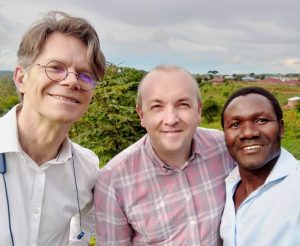
 Joe Gallagher is a GP partner and works at the School of Medicine, University College Dublin, Ireland
Mark Ledwidge is a pharmacist and works at the School of Medicine, University College Dublin, Ireland
Balwani Mbakaya is an associate professor of public health, based at the School of Medicine, University College Dublin, Ireland, and the School of Public Health, University of Livingstonia, Malawi
Healthcare, much like life, presents challenges far too complex for individuals to tackle alone. Patients can fall through the cracks of fragmented services, while clinicians shoulder the burden of systemic inefficiencies. Two concepts—Meitheal from Ireland and Umunthu from Malawi—offer valuable frameworks that could improve healthcare systems for all, including the health workers who work in them.
Meitheal is a traditional Irish concept, originating from rural life, where communities gathered to help each other with labour-intensive tasks, such as harvesting crops. Individuals would come together voluntarily to achieve a common goal, each contributing according to their ability. It recognised that everyone would likely need help from the community at another time and so ultimately all would benefit at some time. However the focus is not only on the work but also on the bonds formed through mutual aid. Cooperation strengthened the social fabric.
Umunthu, an African philosophy meaning “I am because we are,” emphasises interconnectedness and the shared nature of human existence. It promotes compassion, respect, and empathy.
This fragmentation is not only inefficient—it is dangerous. It leads to clinical errors, patient frustration, and escalating costs.
As healthcare professionals working in Ireland and Malawi, we have seen how both systems—despite differences in resources—struggle with similar challenges.
In Ireland, patients can shuttle between specialists focused narrowly on specific diseases, with no one having capacity to see the whole person. In Malawi, we have witnessed patients with HIV or TB receive exemplary care for those conditions, only to suffer complications from untreated hypertension or diabetes. In both contexts, care is fragmented, delivered in silos that rarely communicate, and the focus is on the diseases rather than the person’s health as a whole.
This fragmentation is not only inefficient—it is dangerous. It leads to clinical errors, patient frustration, and escalating costs. For health workers, it leads to moral distress. Overstretched professionals perform disjointed tasks rather than participating in a coordinated, meaningful endeavour. We believe this problem shares a common root: a loss of collective mission.
To restore that mission, we need a fundamental shift—from fragmented work to collaborative care. The principles of Meitheal can be translated into modern healthcare through interdisciplinary teamwork and community involvement.
In Ireland, a national chronic disease management program rooted in interdisciplinary care planning has improved outcomes for patients with multimorbidity at a national scale during the pandemic.1 Similarly, incorporating community stakeholders—such as volunteers or peer educators—into public health initiatives has improved preventive care.2
Where Meitheal informs how we work together, Umunthu speaks to why we work together. It urges us to view patients not as passive recipients of care but as partners in a shared journey and each member of the team as existing not in their own capacity but as a community working together to improve health.
Over the past decade, our clinics in Gorey, Ireland, and Mzuzu, Malawi, have built a partnership based on mutual learning. Our partnership has endured a pandemic, drug shortages, cultural differences, and funding gaps. What sustained it was a shared ethos of collective effort.
The philosophies of Meitheal and Umunthu converge on a shared insight: we need each other.
A particularly successful initiative has been the COMPASS model (Collaborative Medicine and Pharmacy Approaches for Systems).3 We noticed that doctors often prescribed without considering medication availability, while pharmacists dispensed in isolation from clinical decision-making. COMPASS brought everyone—physicians, nurses, pharmacists, administrators, NGOs—around the same table.
Together, we co-designed locally appropriate treatment protocols for chronic disease and aligned pharmacy stock to meet those protocols. This resulted in significantly improved blood pressure control in Malawi at lower cost. In turn, our Irish clinic re-evaluated how we manage chronic illness. Inspired by Mzuzu’s protocols, we began integrating pharmacists into weekly clinical meetings and medication reviews. Silos began to fall apart.
The philosophies of Meitheal and Umunthu converge on a shared insight: we need each other. The Western individualistic philosophy of “I think therefore I am” is replaced by a philosophy of “I am because we are”. Healthcare is not a series of isolated acts; it is a collective endeavour rooted in trust, interdependence, and shared purpose.
At a time when many health systems are struggling with fragmentation, burnout, and inequity, we believe the way forward lies not just in new technologies or new policies—but in remembering something older: that healthcare works best when we work together.
References:
- HSE. The Second Report of the Structured Chronic Disease Management Treatment Programme in General Practice [Internet]. HSE; Available from: https://www.hse.ie/eng/services/publications/the-second-report-of-the-structured-chronic-disease-management-treatment-programme-in-general-practice.pdf
- Victor RG, Lynch K, Li N, Blyler C, Muhammad E, Handler J, et al. A Cluster-Randomized Trial of Blood-Pressure Reduction in Black Barbershops. N Engl J Med. 2018 Apr 5;378(14):1291–301.
- Hastings G, O’Connor R, Hunt M, Harrington P, Gallagher J, Ledwidge M. Sustainable protocol-based management of hypertension in one institution in northern Malawi. Rural Remote Health. 2023 Jan;23(1):7876.
Featured Photo by Eean Chen on Unsplash