


Nick Wooding trained in Oxford, then as a GP before moving to Uganda where he became the medical superintendent of Kiwoko Hospital, a rural hospital. He has also served as vice chancellor of a university in Kampala, where he taught public health. He is now back working as a GP in Oxford.
I’ve watched and enjoyed most of the 1995 BBC adaptation of Pride and Prejudice and the 2005 film twice. I say most: the exception is one character, the irritating Mrs Bennet. One of my friends finds her triggering because she resembles her mother. If she were my patient, I might be tempted to label her as a ‘heartsink’.
Does she resemble our ‘frequent flyer’ patients, who consult repeatedly, with every encounter becoming an impasse? Beyond considering a referral to the personality disorders clinic, caveating the service’s twelve-month waiting list, we feel stuck.
Of course, the term heartsink is now rightly recognised as pejorative, revealing more about our own clinical frustrations than about the patient.1 So, when I catch myself applying this label to Mrs Bennet, I should ask myself: what am I missing? The patient might not be the problem, but my framework for understanding them is.
The clinical gaze in fiction
Mrs Bennet’s … ‘poor nerves’ are not just comic relief but are also a vignette, portraying a woman struggling with mental health issues.
Seen through the primary care lens, Pride and Prejudice becomes a surprisingly rich set of biopsychosocial case studies. For instance, Mary Bennet and Mr Collins might have autism or Asperger’s syndrome; perhaps Lydia Bennet has attention deficit hyperactivity disorder (ADHD).
Mrs Bennet is often dismissed as a figure of comic absurdity — a fluttering, foolish mother obsessed with marrying off her daughters, and, when she cannot have her way, the victim of suffering caused by her ‘nerves’. Perhaps Jane Austen’s description of Mrs Bennet’s emotional volatility, catastrophising, and repeated references to her ‘poor nerves’ are not just comic relief but are also a vignette, portraying a woman struggling with mental health issues.
Her behaviour then raises more profound questions — questions which we often encounter in real consultations: is this a presentation of chronic anxiety? Or disordered personality? Undiagnosed neurodiversity? The neuropsychological effects of menopause? Or is it the psychic toll of a patriarchal societal system rigged against her?
Chronic anxiety and somatic vocabulary
When Mrs Bennet suggests that her husband has no compassion for her poor nerves, he replies that her nerves have been his constant companion for over 20 years.2 Maybe she has generalised anxiety disorder (GAD)? Maybe her nerves are the flutters of palpitations, the pain of fibromyalgia, the spasms of irritable bowel syndrome (IBS), or her collapse is GAD presenting with dizziness.
Seen through the primary care lens, Pride and Prejudice becomes a surprisingly rich set of biopsychosocial case studies.
Perhaps her ‘nerves’ are coded language, a socially permissible way for contemporary women to express emotional distress. Before the advent of therapy, her body becomes her voice. She is signalling distress, demanding attention, and asserting her role within a family and society that otherwise ignores her.
“Nobody can tell what I suffer.”
Her excessive displays of emotion, volatility, and social manipulation may reflect an underlying personality disorder (PD), maybe histrionic (HPD) or borderline/emotionally unstable (BPD/EUPD). Both BPD and HPD fall within the so-called ‘Cluster B’ of personality disorders, characterised by dramatic, emotional, or erratic behaviour. While BPD is marked by unstable relationships, emotional dysregulation, and fear of abandonment, the DSM-5 criteria for HPD include excessive emotionality, suggestibility, dramatic speech, attention seeking, and superficiality.3 She routinely disrupts social situations to draw attention to herself or her daughters.
Whilst Mrs Bennet exhibits traits from both patterns, HPD seems more likely. She ticks several boxes:
- Emotional lability: her mood veers wildly between elation and despair. She celebrates Mr Bingley’s arrival with breathless exhilaration, then collapses in tears when Elizabeth refuses Mr Collins soon after. She speaks in extremes: ‘Nobody can tell what I suffer!‘
- Dramatic language: ‘My poor nerves!‘ becomes both refrain and defence.
- Social performance: she courts the approval of high-status individuals (Lady Catherine, Mr Bingley) and is preoccupied with appearances.
- Inappropriate sexually seductive or provocative behaviour: Austen writes that Mr Bennet had been captivated by her youth and beauty.4 However, when marriage was the key to survival in a patriarchal society, attractiveness shouldn’t imply inappropriate behaviour.
What about drugs?
Laudanum was commonly used at this time. Was Mrs Bennet an addict, which could account for episodes when she seems intoxicated, and then lassitude occurring during drug withdrawal before she can get her next fix?
… perhaps, today, Mrs Bennet would benefit from a conversation about hormonal health.
Menopause and the midlife mind
Mrs Bennet is aware of the march of time: ‘After Lydia elopes with Wickham, the spectacle of Mrs Bennet’s hysterical but non-sexual body replaces the spectacle of Lydia’s sexualised body in her home.’5 Mrs Bennet’s nerves are long-standing, but is the menopause amplifying the pre-existing traits of PD or GAD? Is she going through a midlife neuroendocrine transition? She has had five children and is likely in her mid-to-late forties. Patients describe brain fog, irritability, low mood, anxiety, and emotional volatility, not just flushes, and this can be misdiagnosed as a mood disorder. She may be sleeping poorly. Is she aware of her declining influence in a youth-obsessed society? Her intense focus on her daughters’ marriages may also reflect a woman whose social capital is waning.
In primary care, we can misattribute menopausal symptoms to mental health issues. Austen had no concept of hormone replacement therapy (HRT) — but perhaps, today, Mrs Bennet would benefit from a conversation about hormonal health, not just mental health. It is now recognised that there are more appropriate treatments than antidepressants for the menopause.
Neurodiversity and executive dysfunction
Female ADHD often goes undiagnosed, so considering neurodiversity offers another perspective. Mrs Bennet may have passed on neurodivergent traits to her children. Lydia Bennet is impulsive, thrill-seeking, socially uninhibited, and inattentive to consequences, which could serve as a typical example of ADHD. Conversely, Mary Bennet is socially awkward, overly formal, and fixated on solitary interests, such as music and books, and she struggles to pick up on social cues. This might reflect traits of autism.
While it is speculative, there are scattered traits in Mrs Bennet’s character that might align with inattentive ADHD. She is distractible, inconsistent, and struggles to follow the thread of more extended conversations:
- Impulsivity: blurting out inappropriate remarks and cannot filter in social situations.
- Emotional dysregulation: reacting disproportionately and often escalating situations.
- Difficulty with long-term planning: focusing on the immediate (the next ball, the next match) but lacking strategic foresight.
While it is speculative, there are scattered traits in Mrs Bennet’s character that might align with inattentive ADHD.
A trauma-informed hypothesis
Although ADHD has a recognised genetic link, nurture and not just nature are involved in its development.6 There is no explicit mention in Pride and Prejudice of Mrs Bennet having experienced abuse or trauma. A trauma-informed lens encourages us to ask not only ‘what’s wrong with this patient?’ but ‘what might have happened to her?’ Do her current experiences trigger memories of emotional neglect, chaotic relationships, or early life instability? In general practice, we regularly see patients whose disproportionate reactions stem from hypervigilance born of earlier vulnerability.6,7
A role for relate?
The Bennet marriage itself is instructive. Both are stuck. Her husband, Mr Bennet, while witty and intelligent, is emotionally distant and often mocking. He avoids conflict and hides in his study. In response, Mrs Bennet escalates — becoming louder, more anxious, more demanding. The more she demands engagement, the more he retreats; the more he retreats, the more she performs with distress. The marriage is described as one in which ‘all real affection’ has died. Maybe they need couples therapy? Or even family therapy? Children adapt in different ways — Elizabeth is sarcastic, Jane stoical, and Lydia reckless. If we viewed Mrs Bennet not as a problem but as a symptom of a broken family system, our intervention would look very different. Chronic emotional invalidation can be traumatising, particularly for someone already predisposed to anxiety or with an underlying PD.
Perhaps Mrs Bennet’s emotional fragility is adaptive — a form of self-protection in a world where she may have repeatedly been ignored, dismissed, or left to cope alone. Her fixation on her daughters’ marriages is a kind of survival strategy: if they are not safe and married, no one will protect them. This perspective should deepen our empathy, her apparent challenging behaviour being a set of coping mechanisms developed in response to an earlier lack of safety or control.
DSM labels: fit or failure?
We GPs might find a diagnostic label helpful (if only to justify our inability to help), but the rigidity of diagnostic labels often ignores the historical, social, and cultural context. Unlike many with HPD, Mrs Bennet is not calculating or manipulative. Her distress is genuine, even if expressed in a performative manner. She’s not malicious, she’s overwhelmed.
Mrs Bennet’s social worth, and perhaps her self-worth, is tied to the success of her five daughters because there is no son. There is a genuine mother’s fear that on her husband’s death, their property, the Longbourn Estate, will be entailed away from her daughters: all six women will be homeless and financially ruined. Mrs Bennet’s fears are not irrational.
There is gendered structural violence. Mrs Bennet lives in a world where a woman’s worth is defined by whom she marries, not what she does or thinks …
In Regency England, marriage was often the primary means of securing women’s financial stability. When Elizabeth rejects Mr Collins, Mrs Bennet seeks to persuade her, saying to him: ‘She is a very headstrong, foolish girl, and does not know her own interest but I will make her know it.‘7,8 Her manipulation of her daughters may be understood as a maladaptive coping mechanism, micromanaging her environment by expressing distress. However, her mission to marry off her girls is not romantic; it’s a matter of survival.
Patriarchy as pathology
There is gendered structural violence. Mrs Bennet lives in a world where a woman’s worth is defined by whom she marries, not what she does or thinks. Elizabeth Bennet is the exception. Mrs Bennet invests her entire identity in her daughters’ social ascent, for there is no viable alternative.
In the clinic today, we see this kind of existential anxiety among women navigating insecure immigration, domestic violence, or economic precarity. They may present in distress, but asking ‘What’s wrong with you?’ is the wrong question. The better one is: ‘What world are you trying to survive in?’
Not silly – but resilient
Despite everything, Mrs Bennet functions. She is not paralysed by depression. She attends social events. She secures her daughters’ futures. She maintains a home and participates in community life. She is not dangerous to herself or others. She is coping, albeit noisily. Many of our patients present in distress but are surviving immense adversity. The tone of the consultation — the drama, the emotion, the repetition — may mask a profound capacity for resilience.
Clinical takeaways
If Mrs Bennet were my patient, I hope I would pause before coding ‘personality disorder traits.’ I might begin with curiosity:
- Could this be chronic anxiety, shaped by social inequality?
- Could perimenopause be amplifying emotional lability?
- Could ADHD traits or neurodivergence be contributing to her being overwhelmed?
- What are her relational dynamics? Who listens to her, and who dismisses her?
- What sources of strength and agency remain?
I might still refer to talking therapy or offer short-term medication, but I would want to hold her distress within a broader story. The goal wouldn’t be to quieten her, but to listen to her and to understand her.
We should reflect on the unjust structures of our own society, if we can see them …
A final word
Mrs Bennet risks being dismissed as a caricature rather than understood as a complex figure shaped by fear, love, and personal constraints. Ultimately, Austen offers us more than satire: she doesn’t ask us to love Mrs Bennet, but neither can we ignore her. We are invited to see Mrs Bennet not as a ridiculous human being, but as one who is recognisably human: flawed, frightened, and desperately trying to save her family. We see the injustice of a world where women’s security depends entirely on marriage. We should reflect on the unjust structures of our own society, if we can see them, since it is hard to critique one’s culture from within, when everything seems normal to us, because it is all we have known.
Mrs Bennet does the best she can with the language, tools, and roles available to her. And when we listen carefully, we realise that the person who unsettles us may be the person we most need to understand. In the clinic as on the page, we are called to look past surface behaviour and ask not just ‘what is wrong with her?’ but ‘what happened to her?’
References
- Rickenbach M. Reframing the “heartsink” feeling can help doctors find a resolution. BMJ 2024; 385: q1427.
- Jane Austen, Pride and Prejudice, Thomas Nelson and Sons: London, Chapter 1.
- Spielman RM, Dumper K, Jenkins W, et al. Personality Disorders — Introduction to Psychology (A critical approach). BCcampus: Victoria, B.C, 2021. https://pressbooks.cuny.edu/jsevitt/chapter/personality-disorders/ (accessed 12 Aug 2025).
- Austen, Chapters 41–42.
- Stuart S. “My Poor Nerves”: Women of a certain age on the page. The 18th-Century Common, 2019. https://www.18thcenturycommon.org/tags/menopause/ (accessed 12 Aug 2025).
- Hallowell EM, Ratey JJ. ADHD 2.0: New science and essential strategies for thriving with distraction–from childhood through adulthood. Ballantine Books, 2022. In: Chapter 4, The Healing Power of Connection.
- Angus W. A patient who changed my life. BMJ 1996; 313(7051): 210.
- Austen, Chapter 20.
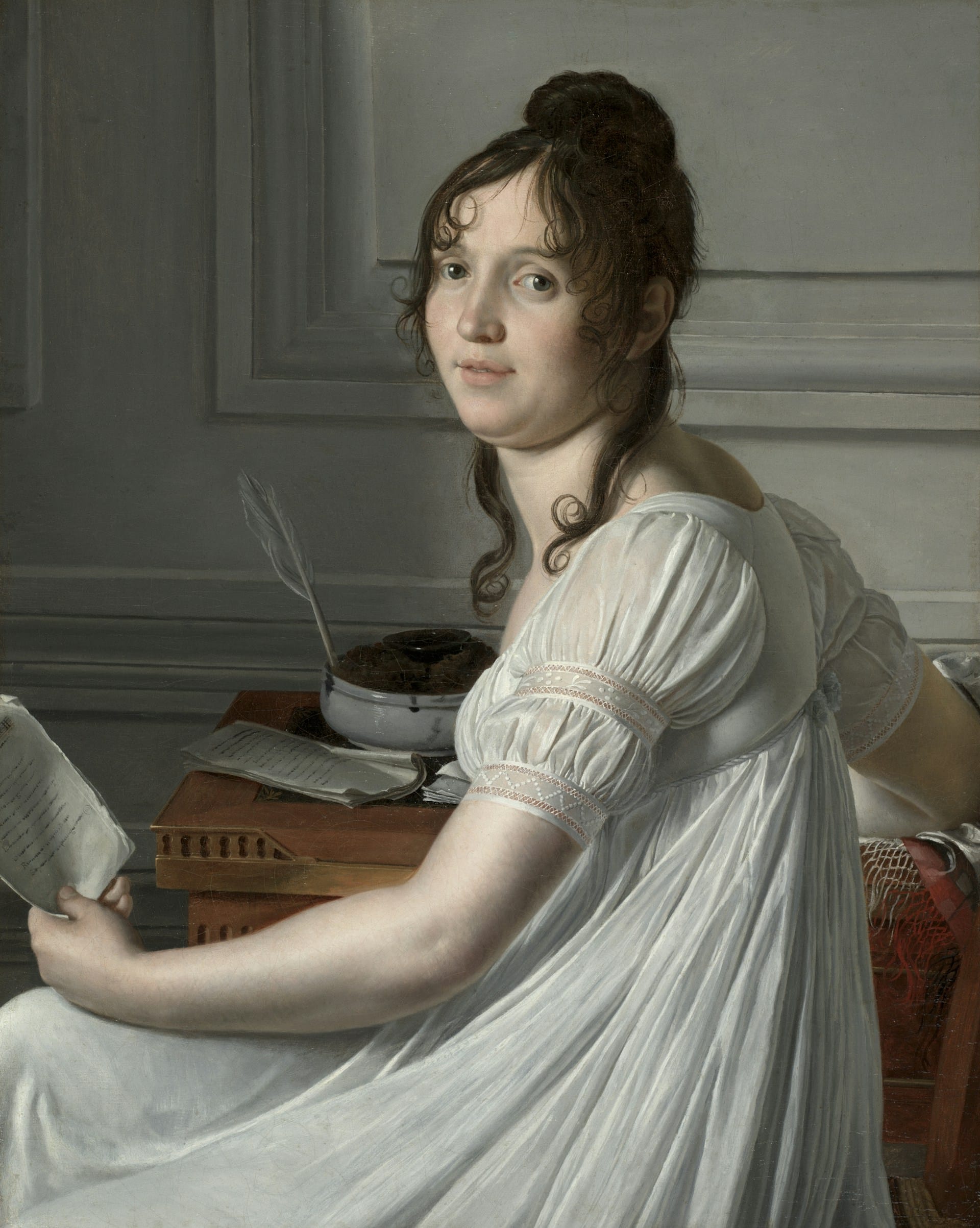
Featured photo by The Cleveland Museum of Art on Unsplash





This is a beautifully thought through analysis and such a humane conclusion. You must be a great doctor and the more so as informed by your close reading.
Thank you.
Emily Trueman