


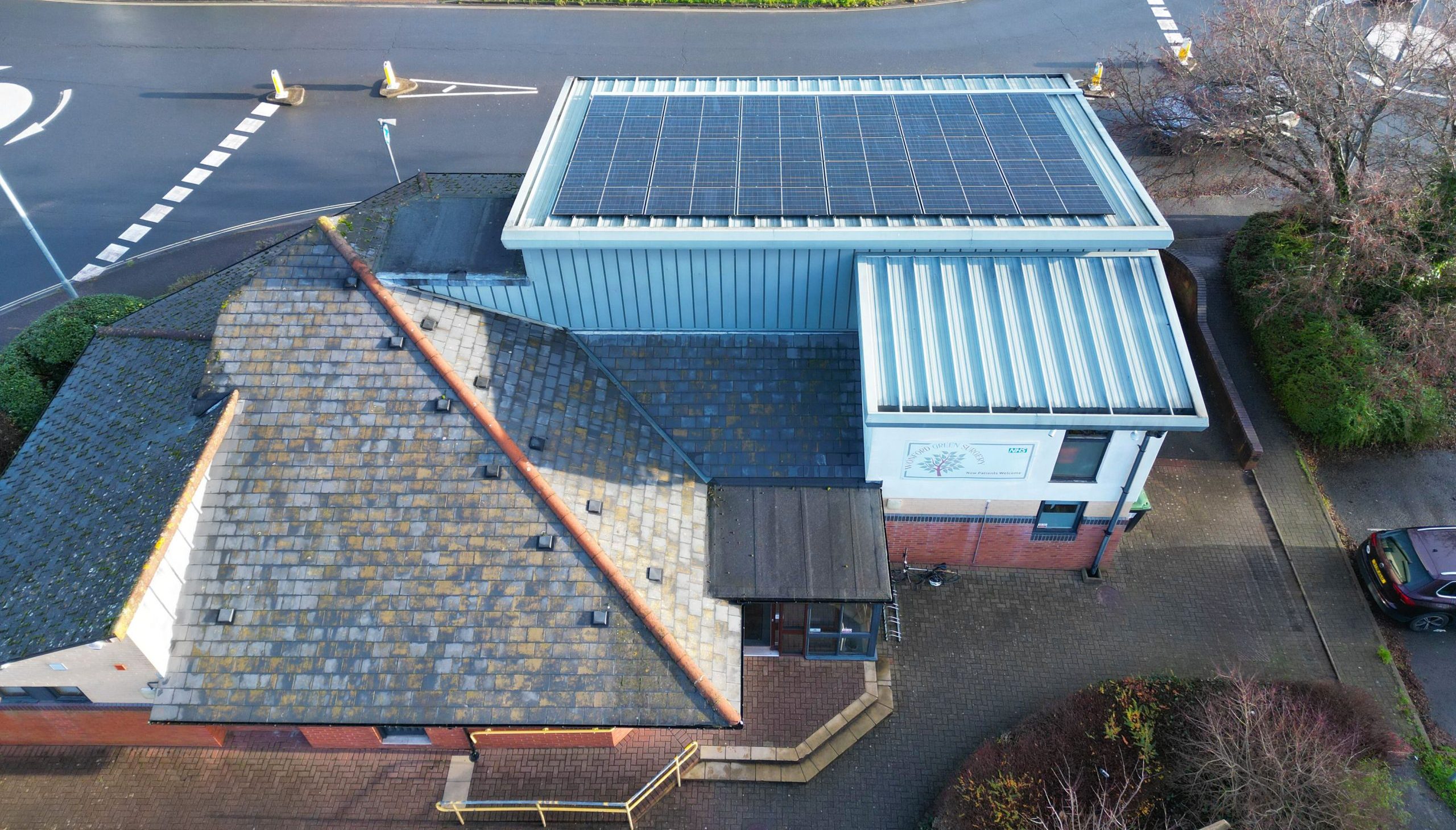
Julia Knott is practice manager at Wonford Green Surgery, Exeter
Tomasz Stefanski, is director at Green Earth Solutions, Exeter
The NHS Net Zero targets are ambitious, necessary, and—for the average GP partner—daunting. While the central NHS can plan multi-million-pound retrofits for secondary care hubs,1,2 the independent contractor model often leaves primary care estates in a capital wilderness. We are expected to decarbonise, yet the grant funding required to do so is often non-existent3 or buried under layers of impenetrable bureaucracy.
For many practices, the strategy has become “wait and hope”: wait for a grant, or hope the energy markets stabilise. But at Wonford Green Surgery in Exeter, we decided that waiting was a risk we could no longer afford.
The Grant Trap
The traditional approach to estate upgrades relies on capital grants. However, in the current economic climate, waiting for a central windfall is a strategy of diminishing returns. Every month spent waiting for a grant that may never arrive is a month of high carbon emissions and even higher energy bills.
We need to move away from the “grant mindset” and toward an “innovation mindset.” If the capital isn’t coming from the center, we must look at service-based models that allow us to upgrade our infrastructure without touching the practice’s capital reserves or the partners’ drawings.
The Exeter Model: “Solar-as-a-Service”
Wonford Green Surgery recently installed a 14kW solar array paired with 20kWh of battery storage – while costing the NHS and the partners zero pounds upfront.4
For many practices, the strategy has become “wait and hope”: wait for a grant, or hope the energy markets stabilise. But at Wonford Green Surgery in Exeter, we decided that waiting was a risk we could no longer afford.
We achieved this by moving away from the traditional “buy and maintain” approach, opting instead for a managed Solar Service. Unlike a standard Power Purchase Agreement (PPA)—where a third party sells you the energy from your own roof—this model allows the practice to use all the electricity generated for free. The practice also keeps the revenues from surplus energy exported back to the grid.
In exchange, the practice pays a fixed service fee. Crucially, this comes with a “Positive Value Guarantee”: the combined financial benefits of energy savings and export income are guaranteed to be higher than the service fee from day one. This turns a complex engineering project into a simple, cash-positive utility service.
 The Business Case for Sustainability
We often frame decarbonisation as a moral obligation, but for the modern GP partnership, it is a core business necessity. Environmental upgrades shouldn’t be a luxury; they are a tool for long-term financial resilience against rising energy costs5.
Energy price volatility is a direct threat to the partnership model. By generating our own power and optimising it through battery storage, we aren’t just “being green”; we are fixing our costs and protecting the practice against future market shocks. In this context, sustainability is the business case. A practice that reduces its reliance on the volatile energy grid is a practice that is more resilient and more attractive to the next generation of GPs.
Community Synergy over Central Procurement
Energy price volatility is a direct threat to the partnership model. By generating our own power and optimising it through battery storage, we aren’t just “being green”; we are fixing our costs…
Perhaps the most important lesson from Wonford Green is the power of Community Synergy. The solution didn’t come from a national procurement framework or a top-down mandate. Tapping into innovation in local communities and embracing private-public partnerships can unlock solutions that the traditional NHS procurement route misses.
By engaging with a local provider (in our case, Exeter-based Green Earth Solutions), we unlocked a solution that traditional estate routes often ignore. There is a wealth of innovation in the UK’s green-tech sector eager to work with primary care. By looking outward at our own communities, we can find bespoke, agile partners who understand the specific needs of a local surgery in a way a national framework never can.
The Blueprint
We don’t have to wait for the grant, or choose between the planet and the practice’s bottom line. By embracing innovative delivery models, we can decarbonise our estates while simultaneously strengthening our financial foundations. The success at Wonford Green proves that Net Zero is achievable now, without capital risk. It is an investment in the long-term viability of our surgeries, ensuring they remain efficient, stable, and attractive places to work for the next generation of GPs.
References:
- NHS England (2022), Delivering a ‘Net Zero’ National Health Service (July 2022 update). https://www.england.nhs.uk/greenernhs/publication/delivering-a-net-zero-national-health-service/
- NHS England (2025), Five years of a greener NHS: progress and forward look. https://www.england.nhs.uk/publication/five-years-of-a-greener-nhs-progress-and-forward-look/
- Royal College of General Practitioners (2024), Written Evidence to Public Accounts Committee (PAC) Inquiry on NHS financial sustainability. https://www.rcgp.org.uk/getmedia/1a504da3-7c2e-4c70-ab7e-e375546b7acc/RCGP-Written-Evidence-PAC-Inquiry-NHS-financial-sustainability.pdf
- Green Earth Solutions (2025), Case Study: Wonford Green Surgery. https://greenearthsolutions.co.uk/#Wonford-Green-Case-Study
- Care England (2025), Care Sector Energy Price Outlook: 2025-2030. https://www.careengland.org.uk/care-sector-energy-price-outlook-2025-2030/
Featured images: Wonford Green Surgery, Exeter, by Karis Lang (SunGift Solar), 2025