

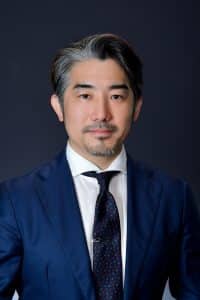
 So Sakamoto is an emergency physician in Japan focused on high-quality emergency department care, transitions of care, bedside decision-making, and education at the emergency–primary care interface in ageing populations.
The opening scenario below is a fictionalised composite, drawn from recurring patterns in emergency care rather than any single identifiable patient.
Over several winter mornings in the emergency department, a pattern becomes difficult to ignore. Older patients arrive with low body temperatures, often discovered when the day is supposed to begin.
This has not been a sudden collapse into hypothermia. It is the end point of a process that has unfolded slowly and largely unseen.
Accidental hypothermia is rarely dramatic. It does not announce itself with urgency or spectacle. Instead, it accumulates quietly through the night, until it finally becomes visible in the early hours, when someone realises that something is wrong.
In many cases, the initial reassurance is the same: the person is not living alone. Family members are involved—sometimes sharing the same home, sometimes living nearby, sometimes visiting almost every day. Yet when a hand is placed on the patient’s skin, the cold is unmistakable. This has not been a sudden collapse into hypothermia. It is the end point of a process that has unfolded slowly and largely unseen.
The problem, and why it matters.
There is always a plausible medical explanation waiting to be found. A stroke dulling awareness. An infection eroding energy and appetite. A fall that left someone immobile longer than intended. Eventually, a diagnosis would be named. But hypothermia has arrived before that label. It has arrived during the hours when no one realised that “something is not right” had already become “something is dangerous.”
Among older adults, vulnerability to hypothermia is rarely defined by living arrangements alone. Reduced activities of daily living, frailty, cognitive impairment, and social isolation all increase risk. Many people do live alone. But others live in multigenerational households, or receive frequent family visits, or appear socially connected on the surface. What these situations share is not absence of people, but limits to recognition. Declining function and subtle behavioural change are often interpreted as expected features of ageing, rather than early warning signs of physiological danger.
Encountering hypothermia as an emergency physician often brings a particular sadness. Alongside the urgency of treatment comes a quiet question: could this have been prevented? Rewarming stabilises the patient, but it does not answer what happens next. And rewarming is not instantaneous. It takes time—sometimes long enough for the room to change temperature, for hands to regain colour, for words to return.
Rewarming is treatment, but time is the consultation.
In that interval, we are given a rare clinical space to think: to look for the cause, to anticipate deterioration, and to plan what must follow the emergency—support, monitoring, and a safer transition back to life outside the hospital.
For trainees and junior clinicians in the emergency department, there is also a risk of misinterpretation. Families may be viewed through a lens of failure or neglect. Yet, in many cases, they are present, concerned, and trying. What was missed was not compassion, but recognition. It is important that we teach this distinction: that hypothermia can arise even in the presence of care, and that judgement rarely improves outcomes.
What could address this problem.
At the clinical level, the goal should be to treat hypothermia and use the rewarming window to reduce recurrence risk. That means active warming and physiological support, while simultaneously assessing functional status, cognition, nutrition, medication use, and home heating. The destination should not be “rewarmed and discharged,” but “rewarmed with a plan.” Even brief actions—confirming who will check in that evening, arranging a timely review, or ensuring a clear threshold for re-contact—can change the trajectory.
For trainees and junior clinicians in the emergency department, there is also a risk of misinterpretation.
At the interface with primary care, hypothermia should be read as a social and functional signal, not merely an emergency diagnosis. It reflects a gap between physical proximity and meaningful attention. For clinicians who know patients longitudinally, the early stages of “cooling”—physical, behavioural, and social—may be visible long before body temperature is measured in the emergency department. Earlier recognition, before temperature falls, will matter more than any single intervention once hypothermia is established.
At a community and policy level, Japan’s contrast between heatstroke and hypothermia is telling. Heatstroke is widely forecasted and publicly addressed; hypothermia is often treated as incidental or purely environmental. Yet national data show that accidental hypothermia predominantly affects older adults and most often occurs indoors, at home—including among those who are not living alone.1 This is not a wilderness problem. It is a domestic one. A prevention frame that acknowledges frailty and isolation—rather than only “cold exposure”—would help make risk visible to families and professionals alike.
Rewarming a patient does not resolve frailty, cognitive decline, or ageing. But it can create a pause—a moment in which a life is gently redirected back toward safety and awareness. Hypothermia is quiet. That is precisely why it demands to be seen.
Reference
- Matsuyama T, Morita S, Ehara N, et al. Characteristics and outcomes of accidental hypothermia in Japan: the J-Point registry. Emerg Med J. 2018;35(11):659–666. doi:10.1136/emermed-2017-207238.
Featured Photo by Luigi Ritchie on Unsplash