
 Nic Dickson is a researcher, visual artist, and adult educator who creates hand-drawn and digital images to capture and disseminate research. Her visual note projects can be found at: https://visualinquiry.co.uk.
Lynsay Crawford is a GP and Senior Clinical Lecturer at the University of Glasgow. She is a GP partner and in her academic role she combines teaching and medical education research with a focus on lived experience.
Andrea E Williamson is a GP and Professor of General Practice at the University of Glasgow. She combines clinical, teaching, and research practice focused on applying a missingness lens to health care and wider inclusion health.
‘The comic is a unique way to inform professionals about the realities of addiction and recovery. The fact that we, as people with lived experience, were at the forefront of its development makes it real, honest, and powerful.’ — Steff Kerr, Recovery Project Manager, NHS Greater Glasgow and Clyde.
How can GPs better understand the lived realities of substance dependence and recovery? One answer lies in the power of storytelling; especially when those stories are co-created with the communities they aim to serve.
“Launched in September 2025, the comic has been praised for authentically amplifying the voices of those with lived experience.”
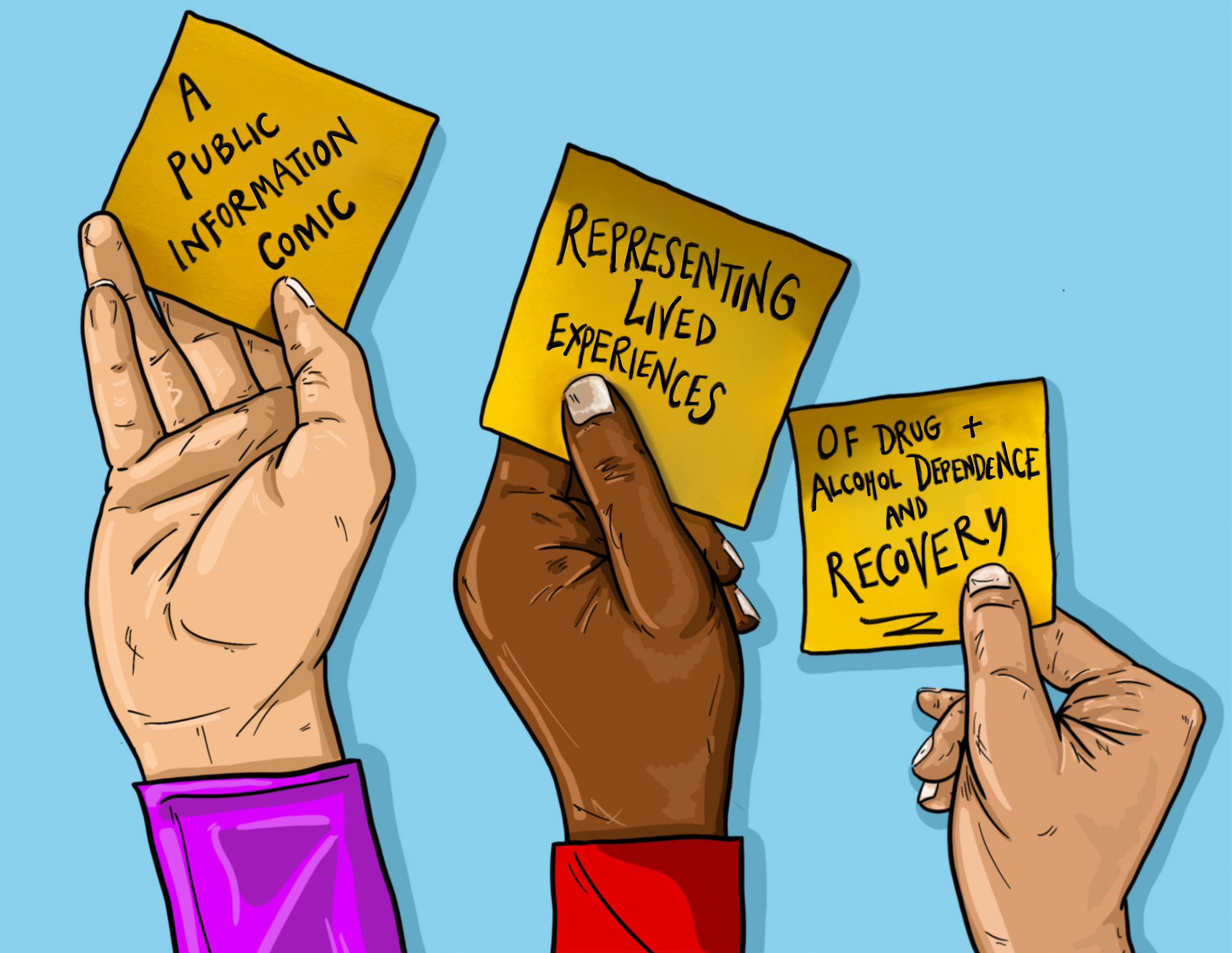
Pathways of Hope: Lived Experience of Drug + Alcohol Dependence, and Recovery is a public information comic developed through a collaboration between the University of Glasgow, Humanising Healthcare (a community interest company), and members of the recovery community. Launched in September 2025, the comic has been praised for authentically amplifying the voices of those with lived experience. It is increasingly recognised as a powerful educational tool, has already been endorsed by the Royal College of General Practitioners, and now features in the Health Inequalities Hub as a learning resource.
The comic emerged from a series of ‘conversation cafés’; roundtable discussions between medical students and people with lived experience of substance dependence. These cafés, devised and delivered by Humanising Healthcare (Hugo Jobst, Allan Houston, and Seonaid Anderson), run in four of Scotland’s five medical schools.1 They offer a rare opportunity for students to engage in small-group dialogue with community members, gaining insight into recovery journeys that are often invisible in clinical training.
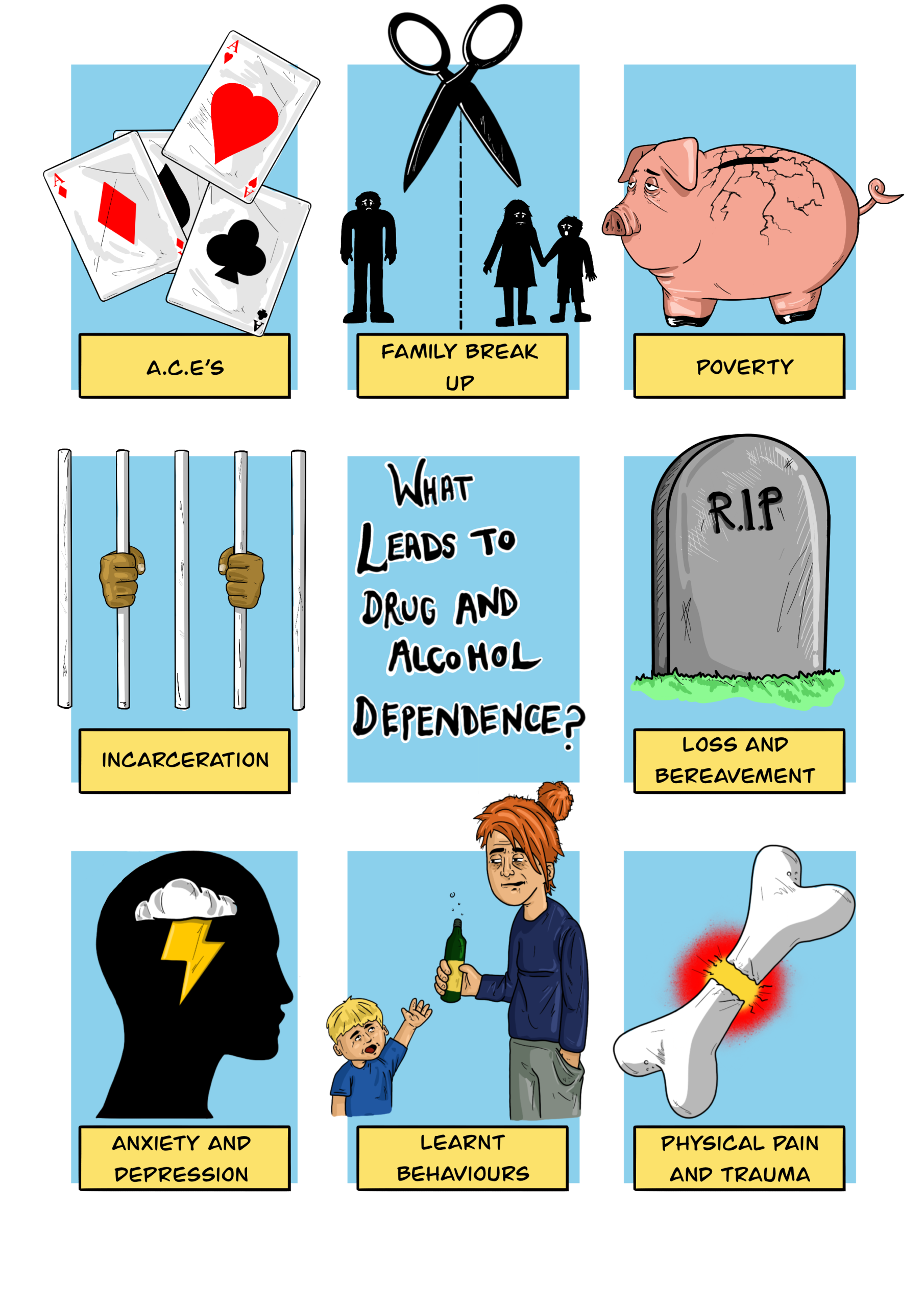
Visual notes, created during these cafés by arts-based researcher Nic Dickson, formed the foundation of the comic’s narrative. The themes were refined with GP academics Lynsay Crawford and Andrea Williamson. The visual content (example shown in Figure 1) was shaped through collaborative workshops with members of the recovery community, medical students, and clinicians, helping to ensure the final comic felt both appropriate and impactful.
Humanising Healthcare contributed to both the development and refinement of the comic, ensuring that the final product reflected the realities of clinical practice and community experience.
The comic explores five core themes:
1. what leads to substance dependence;
2. the meaning of recovery;
3. harm reduction strategies;
4. first steps to recovery; and
5. maintaining recovery
A central visual feature of the comic is a two-page panel that follows the story of ‘Dave’. His journey, introduced at the start of the comic, traces the complex factors contributing to substance dependency, including psychological trauma, poverty, isolation, and mental health challenges. These are depicted through layered illustrations and narrative fragments. The comic concludes with Dave’s transition into recovery, as he accesses harm reduction and treatment services, finds peer support, and begins to rebuild trust and connection. His journey is not linear, but it is hopeful and a testament to the resilience found in lived experience.
Alongside the narrative, the comic includes help pages listing Glasgow-based and national services available to practitioners, clinicians, and those in recovery. These resources support trauma-informed care and improve access to support networks.
“… comics and visual notes offer a meaningful way to bridge the gap between clinical knowledge and lived experience.”
Arts-based methods such as comics and visual notes offer a meaningful way to bridge the gap between clinical knowledge and lived experience. This work aligns with the field of graphic medicine,2 where illustrated narratives are used to explore and communicate experiences of health, illness, and care.
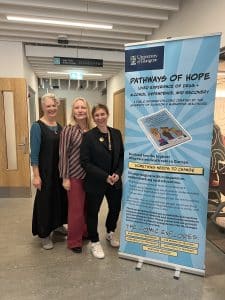
The comic was launched at an event attended by policymakers, clinicians, third-sector organisations, and members of the recovery community. Feedback has been overwhelmingly positive, with praise for its authenticity, accessibility, and potential to support trauma-informed practice across sectors. A flipbook version is available online in addition to the PDF on the University of Glasgow repository.3
For GPs, this comic is more than an educational tool — it is a reminder of the power of listening. Recovery is rarely linear, and substance dependence often intersects with housing insecurity, poverty, relationship breakdown, trauma, and poor mental health. As the first point of contact, GPs who offer non-judgemental, person-centred care can make a real difference to those most affected by alcohol and substance dependence, often when it matters most.
References
1. Jobst H, Anderson S, Houston A, Crawford LE. Conversation café: lived experience in undergraduate addictions teaching. Med Edu 2024; 58(5): 625–626.
2. Williams I. What is “graphic medicine”? https://www.graphicmedicine.org/why-graphic-medicine (accessed 14 Nov 2025).
3. Dickson N, Dickson O, Crawford L, et al. Pathways of Hope – Lived Experience of Drug + Alcohol Dependence, and Recovery. A Public Information Comic. 2025. https://eprints.gla.ac.uk/361962/1/361962.pdf (accessed 14 Nov 2025).
Featured photo: Front cover of Pathways of Hope – Lived Experience of Drug + Alcohol Dependence, and Recovery. A Public Information Comic, 2025. Used with permission from Nic Dickson.

[…] has sparked incredible momentum. Our reflections on the process and its impact were featured in BJGP Life, highlighting how arts-based approaches can transform healthcare education and policy […]