
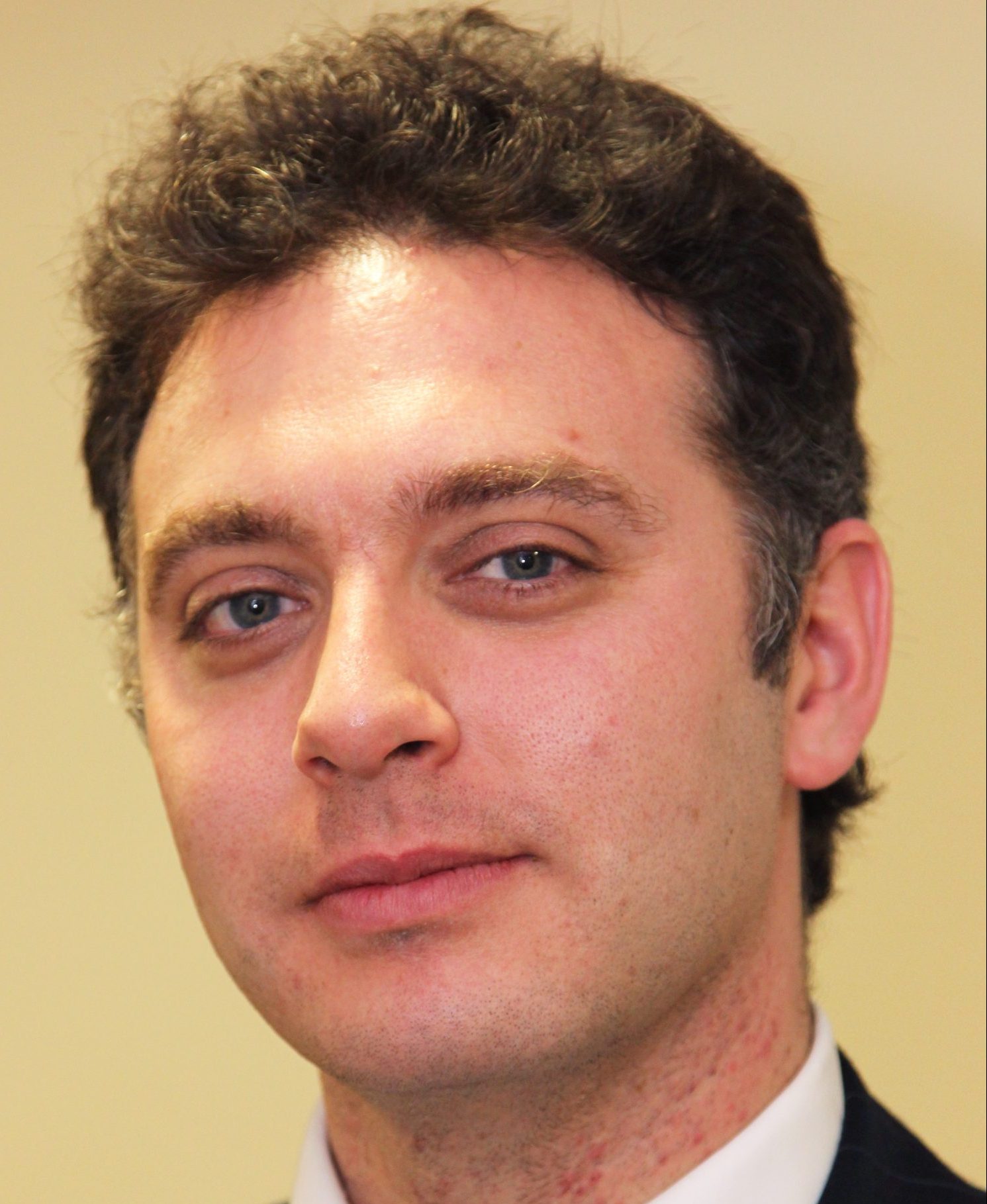

 Andrew Papanikitas is Deputy Editor of the BJGP.
‘What is a Carel?’ I thought to myself a few years ago as I reviewed a PowerPoint slide on ‘whole-person medicine’ for a general practice fellowship programme. Not a what but a who. Havi Carel is a notable philsosopher from the University of Bristol, whose writings on understanding medicine in the context of the patient and on epistemic injustice resonate with a general practice ethic.1 Chris Dowrick and Joanne Reeve (among others) describe the claim that GPs should be ‘person-centred’, and interested in the whole person, as a pillar of good generalist medicine. They have argued that we need to recover a sense of ‘self’ for both patients and professionals if ideas of the whole person are to be deployed with sincerity.2 Implicit here is the idea that the self can be overwhelmed or lost in the complex and powerful interplay of people and things. Understanding the whole person also means understanding who and what affects that person — who and what enables and inhibits a person’s ability to respond creatively to the ups and downs of daily life. Such spheres of influence and their effects are the stuff of our BJGP Life and Times articles.
“Implicit here is the idea that the self can be overwhelmed or lost in the complex and powerful interplay of people and things.”
The influence of bodies in motion
Ben Hoban uses a science fiction metaphor — the three suns of Cixin Liu’s alien world in The Three-Body Problem make it a hazardous place to live. Similarly the consultation can sometimes also feel like a minefield of hidden agendas, competing interests, and impossible choices.3 Roger Neighbour illustrates this with reference to the introduction of artificial intelligence (AI) to the clinic. He warns, ‘we cannot assume that AI is nothing more than a neutral and transparent information source within the consultation, as inert and objective as a drug formulary or NICE guideline. Like the two human beings in the consulting room, AI has — or behaves as if it has — covert motivations and hidden agendas.’4 Elke Hausmann reviews a book with full disclosure in its very title: Psychology’s Quiet Conservatism: How a Supposedly Woke Science Promotes Capitalism and Protects Privilege.5 Having a holistic view of humankind may well be what sustains us in the worst of times. Sati Heer-Stavert reviews 28 Years Later: The Bone Temple, a sci-fi-horror movie set in the UK after a ‘rage virus’ apocalypse, and finds a GP surviving among the ruins of a decivilised society.6
Health care as a complex adaptive system
Alex Burrell reaches into the ‘Yonder’ of healthcare literature to to discover that poverty is a factor driving patients towards emergency hospital care, that training in hospitals for GP residents needs to be meaningful to them, that medical schools need to understand the pressures that deter practice from offering placements to medical students, and importance of communicating test results to patients meaningfully.7 Kirsty Shires reviews The Leopard In My House: One Man’s Adventures in Cancerland by comedian Mark Steel. She finds a candid account of his cancer journey: noticing a lump in his neck, reticence of seeking medical attention, consequences and complications of treatmen,t and the impact on his relationships and work.8 Saul Miller reflects on the attempt to clarify the actions required from general practice in hospital letters, hoping that better understanding of general practice will result in clearer and kinder delegation of work to the GP.9
The elements of a person
“… alongside the patient’s transactional persona is another ‘person’, invisible and nameless. This is the person shaped by fear, experience, and memory …”
‘Whole person’ requires that we see the composition of a person in both a psychosocial sense and a physical one. Charlotte Sidebotham reminds us that alongside the patient’s transactional persona is another ‘person’, invisible and nameless. This is the person shaped by fear, experience, and memory; by what they have learned it is safe to say, and what it costs to say more. She confesses that the pressures of practice can make it hard to give time and allow this aspect of a nation their voice.10 Reviewing The Elements by John Boyne, David Misselbrook observes, ‘As GPs we are the naturalists of the human jungle. This is where we practise, not the tidy spaces of the secondary care zoo. Our jungle has dark and hidden thickets. How are we to help those caught up in such pain?’11
The certainty of physical diagnosis can be elusive in general practice. Kees van Boven writes that medicine is remarkably effective at identifying disease. Yet when symptoms persist without a clear diagnosis, it often falters — not because knowledge is lacking, but because legitimacy quietly evaporates.12 Tests themselves are often not as certain as they are cracked up to be, as Alex Burns makes lyrical in an ‘Ode to Diagnosis’.13
Back to the philosophers
John Goldie offers a key to our whole-person medicine syllabus. Health care, he argues, is built on classification, protocols, and standardisation. For acute problems this model is essential. It also structures disease management. But for multimorbidity, mental health, and long-term illness, it struggles to capture the whole patient. He reflects, ‘What I felt as moral distress was not failure, but philosophy calling — reminding me that general practice is medicine’s living philosophy.’14
References
- Carel H. Illness. Abingdon: Routledge, 2008.
- Reeve J. Medical Generalism, Now! Reclaiming the Knowledge Work of Modern Practice. Abingdon: CRC Press, 2024.
- Hoban B. The three-body problem. Br J Gen Pract 2026; DOI: https://doi.org/10.3399/bjgp26X744393.
- Neighbour R. Two’s company, three’s a crowd: AI in the consultation. Br J Gen Pract 2026; DOI: https://doi.org/10.3399/bjgp26X744357.
- Hausmann E. Books: Psychology’s Quiet Conservatism: How a Supposedly Woke Science Promotes Capitalism and Protects Privilege. Br J Gen Pract 2026; DOI: https://doi.org/10.3399/bjgp26X744429.
- Heer-Stavert S. Film review: 28 Years Later: The Bone Temple. Br J Gen Pract 2026; DOI: https://doi.org/10.3399/bjgp26X744489.
- Burrell A. Yonder: Emergency care access, hospital rotations in GP training, undergraduate GP placements, and communicating test results. Br J Gen Pract 2026; DOI: https://doi.org/10.3399/bjgp26X744417.
- Shires K. Books: The Leopard in My House: One Man’s Adventures in Cancerland. Br J Gen Pract 2026; DOI: https://doi.org/10.3399/bjgp26X744441.
- Miller S. Action required. Br J Gen Pract 2026; DOI: https://doi.org/10.3399/bjgp26X744465.
- Sidebotham C. Seeing double. Br J Gen Pract 2026; DOI: https://doi.org/10.3399/bjgp26X744369.
- Misselbrook D. Books: The Elements. Br J Gen Pract 2026; DOI: https://doi.org/10.3399/bjgp26X744453.
- Van Boven K. When normal tests end care too early. Br J Gen Pract 2026; DOI: https://doi.org/10.3399/bjgp26X744381.
- Burns A. Poem: Ode to Diagnosis. Br J Gen Pract 2026; DOI: https://doi.org/10.3399/bjgp26X744405.
- Goldie J. General practice: medicine’s living philosophy. Br J Gen Pract 2026; DOI: https://doi.org/10.3399/bjgp26X744345.
Featured Photo by Greg Rakozy on Unsplash