
James Latimer is a GP and Occupational Health Physician working throughout the North East of England.
“You done the second best job you could have, James, and for that, I’m eternally grateful.”
I don’t think that many would take solace from that statement above, but I did. After all I knew what the best job would have entailed and it was not something was ever going to consider.*
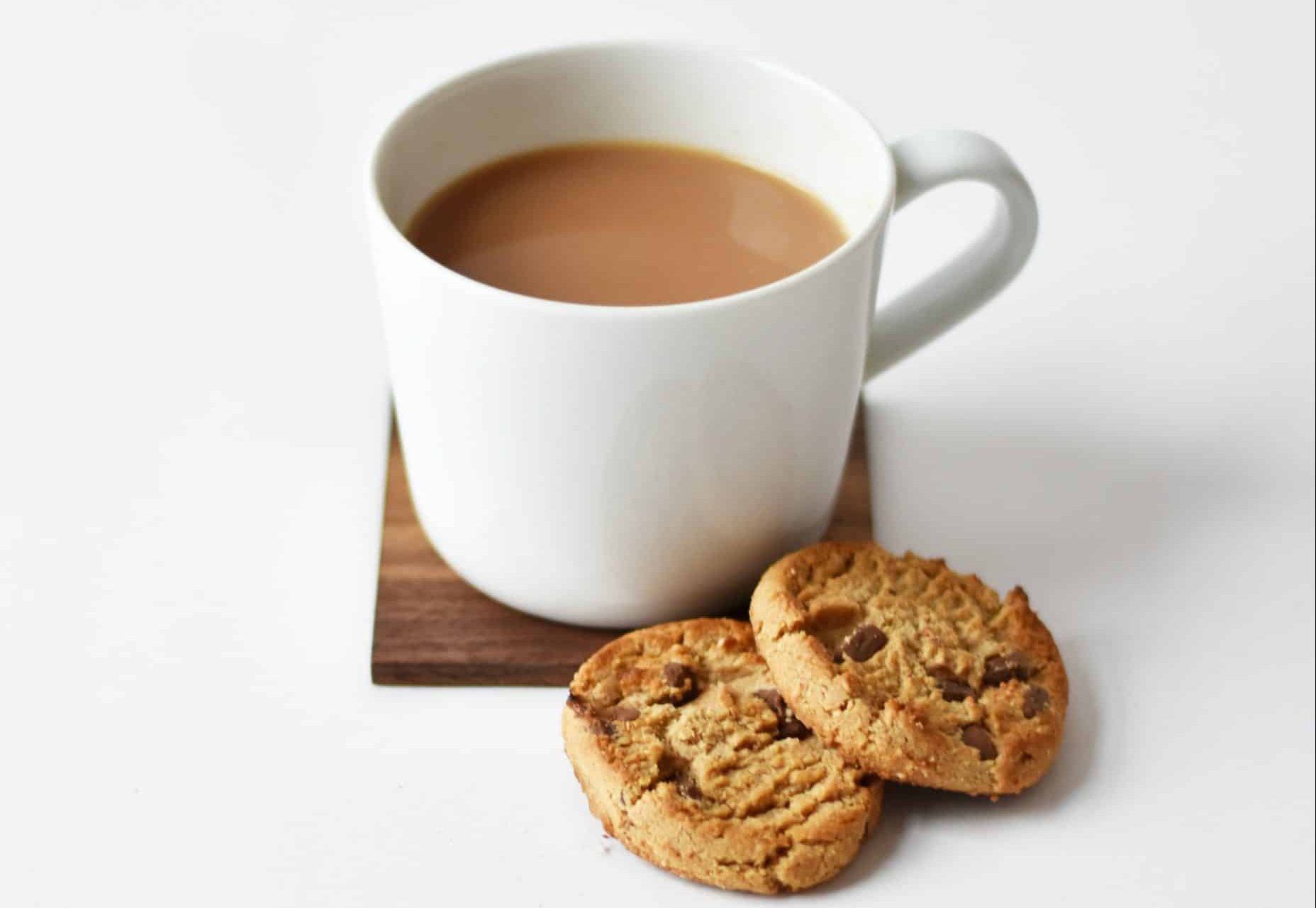
I was at the front doors of Hospice which I had ran to as the paramedics got ready to transfer Mr “Shoulder” to a new place of care. I couldn’t have missed a chance to say goodbye to what had become my favourite patient as he made his next steps in life. I would miss his endless chatter and hourly requests for cups of tea with two sweeteners and a drop of milk (“…if there’s more milk than sugar then you’re doing it wrong…”) seemingly conforming to every English stereotype I had come to know.
I don’t think that many would take solace from that statement above, but I did.
It was only four weeks prior that I had first met him. Mr Shoulder had come into the hospice with a diagnosis of metastatic hepatocellular carcinoma spreading to his humerus and causing a tremendous amount of pain. The first signs that something was wrong had come earlier in October of that year when he had began to have some shoulder pain without trauma. COVID was prevalent at the time and he had only phone call appointment and came away with a diagnosis of frozen shoulder. A stoic man who had worked a manual job for all his life, he didn’t question the diagnosis.
“Doctor knows best,” he would tell me.
Yet the pain persisted and about a month or so later he rang back to his GP – the outcome from this phone appointment was a shoulder injection. Yet when Mr Shoulder turned up for his injection it was clear that this was not frozen shoulder. A series of imaging later confirmed that he had metastatic disease and soon thereafter he was planned for radiotherapy.
Radiotherapy made things worse as the inflammation around the joint became more prevalent; he became immobile, tearful, angry and in so much pain that he was admitted to hospital. After a few days at the acute hospital he was transferred to the hospice for analgesia and psychological support.
Now there’s an old Buddhist proverb that goes, ‘Pain is inevitable but suffering is optional,’ and I can still picture the first time I passed Mr Shoulder’s room because I have never seen someone suffering as much and very quickly I learned what chronic pain can do to someone who has never experienced long lasting pain before.
Over the following weeks I got to know Mr Shoulder quite well. Time can pass slowly in the isolation of inpatient healthcare and he got by in telling me stories of his past. I would get histea order eventually after much trial and error and with each passing sip I began to get to know his family and their backgrounds and naturally, above all else, Mr Shoulder’s background and beliefs.
On the increasingly frequent occasions I would see him he would reel me in and regale me of stories from the South Africa ganglands, the police chases in Zambia where he had went towork or the times he almost died in Spain. Perhaps it was the loneliness of the room or the isolation of condition, but he had clearly done a lot of thinking about his life and what lay ahead. This became clear in the weeks after admission.
“I’ve come to terms with it now James” he would often say, “It’s just a waiting game now”
But it was on a Tuesday in February that I was entrusted with the information about the “Best Job” I could have done for him. Looking back now I see the hints, the signs, the solemn look and really I should have guessed but alas I did not.
“James, I just want it all to be over” he said “and I know you can’t do it, but if there was anything you could do then just know I’d be all for it.”
He didn’t make eye contact when he said this. His voice was sullen. It was the voice of a man who had lived through pain for four months, who could no longer walk, no longer eat, no longer read. He could no longer live.
What would you do as a doctor? How would you react if this was your relative or your friend? What would you want as a patient?
With time and experience as a doctor I have slowly become less interested in the physiologyof disease and more intrigued in the person behind it and Mr Shoulder’s story struck a cord with me. A cord of stigmatisation at the end of life. How often do we hear as health professionals:
“He’s dying so it shouldn’t matter.”
“He’s sad because it’s the end of his life.”
“It’s going to be next to impossible to make a dying man happy.”
There’s an inherent stigma attached to the psychology and mental health of dying. Whether the news come at the age of 20 or the age of 60 the realisation that one is dying is almostuniversally unwelcome news. It’s seen as an inevitability of death.
They say that the first signs of civilisation was the evidence of a healed femoral bone signifying that humans had stayed with and nursed this person back to health. What had previously been an illness that had confined someone to a slow and painful death as they lay on the ground in that instant became curable. Society changed in that instant and perhaps the latest need for change societally is to recognise that the psychologically negative impact of the news of death is also not inevitable.
Medicine is oft a complex subject integrated with both scientific theory and emotional empathy and it was here that their idealisms clashed and my own internal ethical debate arose. He knew I couldn’t. He knew I wouldn’t but that didn’t stop the circling thoughts running round in his head over the next few days. This was certainly one of the bigger moral dilemmas that I would encounter in my working career.
Euthanasia is not an option but what could I do for Mr Shoulder?
I was the only one fighting for him and the moment I gave up could well be the moment that we he would. Sometimes in the medical field we hold the power of hope as a treatment. But should we every give our dying friends, family and colleagues hope? Or are we just stigmatising the inevitable?
When our children fall and hurt their knees, their elbows, their hands we all say the samething “It will get better.”
But what can we say, what can we do when it won’t? I knew Mr Shoulder was not going to get better and perhaps he did too – it was the silent inevitability that hung over our conversations. I still don’t know the answer when the only escape is death. When the only escape is something that, as a doctor, I spend years of study to prevent.
Yet I was going to face this question again I just knew it – and not because I worked at the hospice but because a doctor’s job is to deal with both life and death. Yet 99% of medical school teaching is about life. It leaves one slightly unprepared for death.
When Mr Shoulder left a few weeks later to return to the home of his birth with his pain improved and his humeral metastases drowned in tea with two sugars I saw him smile for the first time.
“You done the second best job you could have James and, for that, I’m eternally grateful.”
Thanks for never letting me lose hope in life… and in your ability to make a decent cup of tea (stick to the day job).
I could put the pieces together and work out exactly what the best job would entail – the words that he was not saying … at least I thought I could.
Three weeks later a letter sat on top of my desk as I returned to the Hospice after a weekend’s rest. Scrawled across the envelope was my name in the large lettering of someone who would certainly struggle to move his shoulder. I knew who it was from, but what I didn’t know was why.
I opened the red envelope to see picture of Mr Shoulder smiling, tea in one hand, biscuit in the other and in his favourite arm chair. The message on the back read “Thanks for never letting me lose hope in life… and in your ability to make a decent cup of tea (stick to the day job).”
My dreams of being a barista appeared to be over for now, but I could come to terms with that.
It was Terry Pratchett that said, “If I knew that I could die, I would live” and Mr Shoulder taught me that in no uncertain terms.
*Author’s note: The fictionalised patient in this narrative is based on an accumulation of clinical experiences during my GP training and not any specific individual living nor deceased.
Featured image by Rumman Amin on Unsplash