
David Misselbrook is a retired academic GP
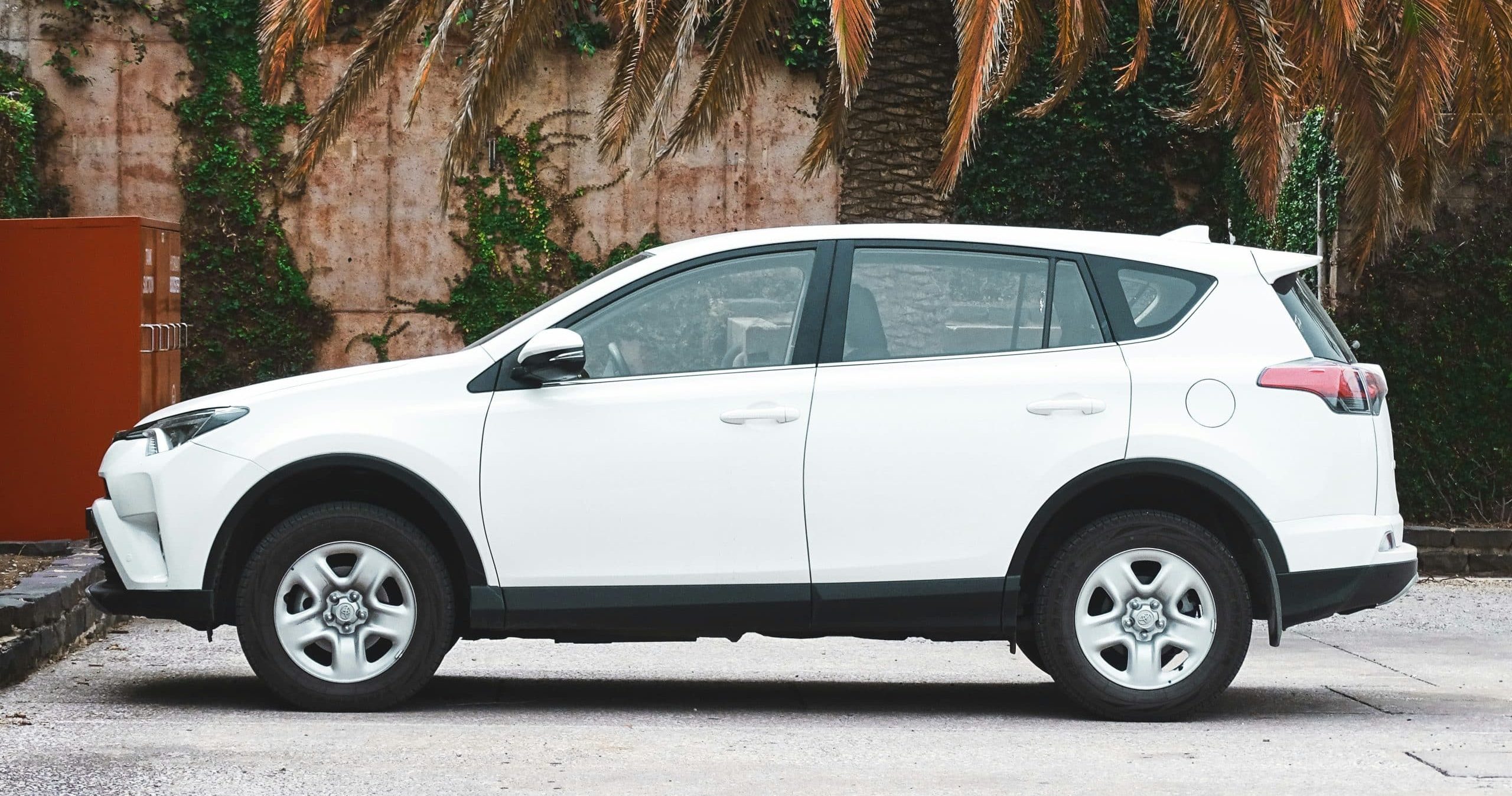
The great thing about using hire cars abroad is that you get to test drive loads of different vehicles, thus adding to the list of cars that you can put on your “do not buy” list.
We landed at Toulouse airport on an afternoon in mid-December and were presented with our shiny new hire car. We had about an hour’s drive. Out of the airport, through the city’s rush hour traffic, half an hour on the motorway and twenty minutes on dark country roads in what was now a dark and rainy evening.
The car drives fine, but we are continually assaulted by repeated pings and bongs, or perhaps dings and dongs – I’m not quite sure.
But who cares? Well, it is a distraction, an overload of trivial alarm signals from a built in buffoon while I am trying to drive a car on a dark winter evening in the rain.
The loud repeating bongs mean that I have edged over the speed limit. Fair enough, even if I am merely keeping in the flow of traffic. And the car goes ping every time the speed limit changes – somewhat frequently – despite seeing speed signs clearly. So when a change in the speed limit is coming up, if I speed up just a second too soon, or slow down a second too late, then I get a loud repeated bonging followed by a sharp ping on top. I haven’t so far worked out what some of the other pings and buzzes mean.
On the motorway things get interesting. Every time a road bridge crosses the motorway the car believes that the speed limit on this bit of motorway is 50kph or whatever, not 130kph. So now every time we pass a bridge we get a ping, followed by the loud repeated donging, terminating with another ping. The car has a very narrow agenda, but my, it is bossy.
But who cares? Well, it is a distraction, an overload of trivial alarm signals from a built in buffoon while I am trying to drive a car on a dark winter evening in the rain. Whilst in an individual instance it might increase safety, as a continuing onslaught of unfiltered trivia it will clearly have the opposite effect.
OK, we all know where I am going with this. For at least the last two decades we have all had a DHSS sponsored buffoon sitting in our consulting rooms. We know we can’t live without computers, but now they tussle with us for control of the consultation.
One of my favourite paper titles is “The disappearance of the sick man from medical cosmology 1770-1870” written by Nicholas Jewson in 1976.1 Jewson claimed that “Firstly ….. the universe of discourse of medical theory changed from that of an integrated conception of the whole person to that of a network of bonds between microscopical particles. Secondly, as control [of doctors] was centralized in the hands of its senior members the plethora of theories and therapies, which had previously afforded the sick-man the opportunity to negotiate his own treatment, were replaced by a monolithic consensus of opinion imposed from within the community of medical investigators.”
For at least the last two decades we have all had a DHSS sponsored buffoon sitting in our consulting rooms.
Jewson was largely correct that in the past doctors overrode the patient’s autonomy, and we may well still use the biomedical model rather than seeing the patient as a whole. But I hope that we have been getting a lot better. But now, even if we want to do better, we have the pings and the bongs of regulatory micromanagement and guideline hypertrophy constantly assaulting us from the desktop buffoon who often appears to have become a dominant third person in the consultation. Sure, sometimes they will help. But what is their overall effect on the project of good patient centred medicine?
So am I advocating dangerous driving? No! Am I advocating bad medicine? Again, no! I am advocating the re-appearance of both doctor and patient as the joint driving force in the consulting room. The doctor brings medical knowledge and skill. The patient brings their unique life experience, their fears, their hopes, their goals. And two human beings work together towards a best available outcome.
But bing bang bong. Have humane medicine and civilised cars both entered a one way street, with no chance of a three point turn? Must we stick to a narrow biomedical agenda enforced by bossy IT systems with both patient and doctor disappearing from the consultation? Or might it be time to change direction?
Reference
1. Jewson, N. D. (1976). The Disappearance of the Sick-Man from Medical Cosmology, 1770-1870. Sociology, 10(2), 225-244. https://doi.org/10.1177/003803857601000202
Featured Photo by Vlad Kutepov on Unsplash