

Anuj Chathley is a GP with an extended role in medical and surgical dermatology working in Grimsby.
Earlier this year, we were in discussions with our local Integrated Care Board (ICB) regarding the review of our minor surgery and joint injection Locally Enhanced Service (LES). Following a review of costings, it became clear that we were providing the service at a financial loss.
The ICB informed us that they were not undertaking any local reviews of the costings because a national Directed Enhanced Service (DES) for minor surgery and joint injections was about to be announced. Naturally, we hoped that this new national framework would recognise the concerns raised by many GPs over the years (that the true cost of running such services far exceeds the current tariff) and that it would at last bring some real-world alignment between funding and delivery.
Then the national DES was released.
The new tariffs were £43.54 for joint injections and £87.08 for excisions.
At first glance, these figures seemed unreasonably low. I tried to find how they were derived but found no transparent costing methodology. Out of curiosity, I looked up previous tariffs for comparable services. What I discovered made me feel utterly devalued.
I repeat that again: these tariffs are identical to what GPs were being paid 20 years ago.
These figures were almost identical to those paid to GPs nearly two decades ago. No adjustment for inflation. No recognition of increased premises costs, staff wages, accreditation requirements, equipment, or indemnity. No reflection of the rising complexity of care.
I repeat that again: these tariffs are identical to what GPs were being paid 20 years ago.
A wider pattern of undervaluation
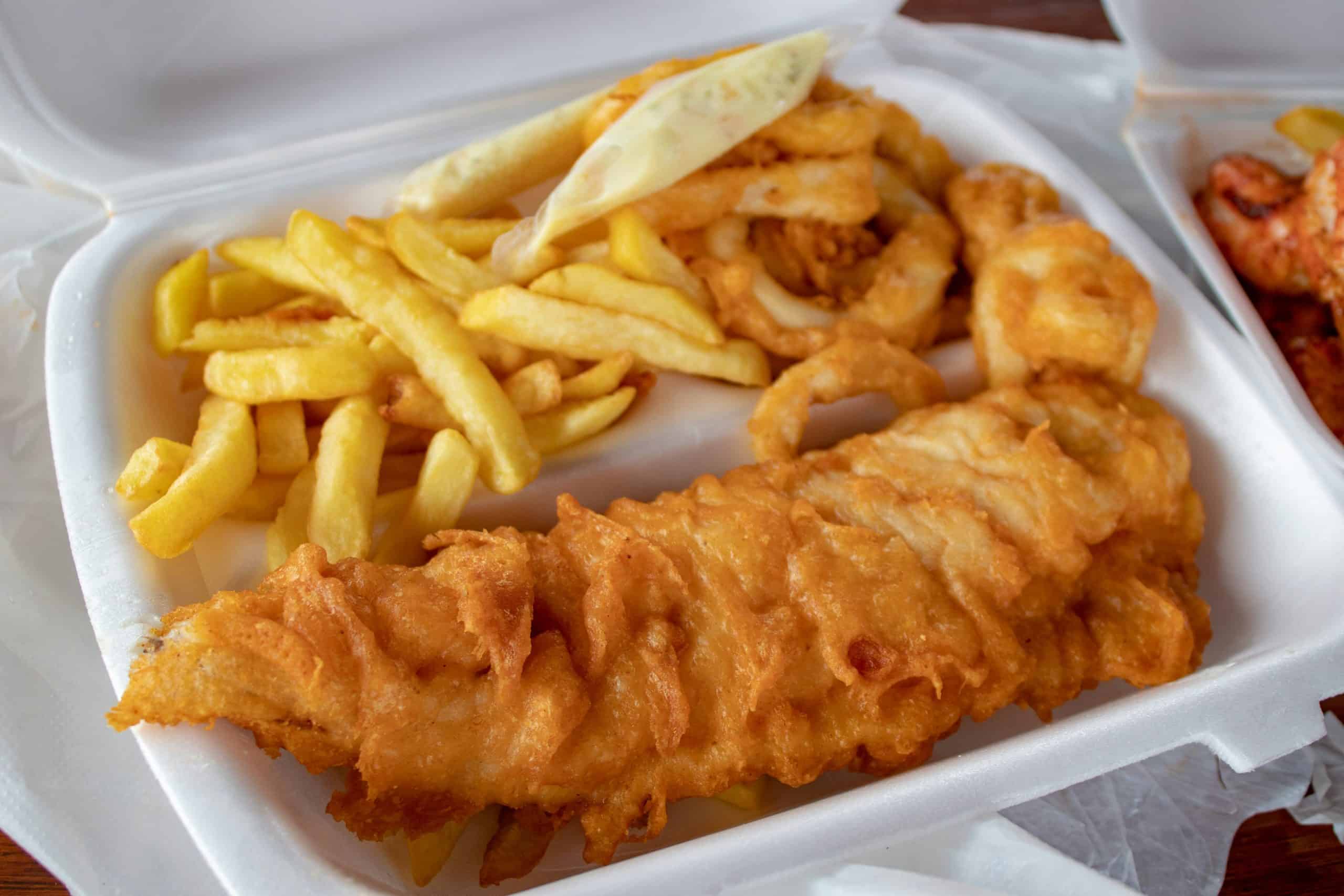
This isn’t just about fish and chips, it’s about how general practice is being systematically undervalued.
The Minor Surgery DES framework is intended to allow practices to deliver minor procedures safely in the community, sparing hospital resources and improving access. However, the new DES tariffs represent an almost 30% cut for injections and a 22% cut for excisions compared to the previous local rates used in many ICBs.²
In one region, the Leicester, Leicestershire & Rutland (LLR) LMC calculated that practices were subsidising the NHS by £21.78 per injection and £42.90 per excision under the previous rates.³ The new national figures simply perpetuate that loss.
Despite the rhetoric of “integrated care”, this DES shows little evidence of collaboration or transparency in its creation. The process behind the tariff calculation is opaque, and there was no meaningful consultation with frontline providers.
The British Medical Association (BMA) has repeatedly emphasised that enhanced and directed services must be properly costed and negotiated, yet many of these schemes have not been inflation-adjusted for over a decade.⁴ By comparison, secondary care contracts and private suppliers within the NHS routinely receive annual inflationary uplifts through the NHS Payment Scheme.
The economics don’t add up
Running a minor surgery service in primary care is not a trivial undertaking. It requires:
- appropriately trained and accredited clinicians,
- aseptic facilities and sterilisation processes compliant with infection control standards,
- resuscitation equipment, audit systems, and data reporting,
- and increasingly, external regulation and inspection.
All of these have become costlier year on year. Even indemnity, while now centrally supported, still brings training, governance, and documentation costs.
The absurdity of this comparison highlights a dangerous reality: while other sectors adapt to inflation and rising costs, general practice has been economically immobilised.
Consequences for care
If these tariffs persist, many practices will withdraw from the service, not out of unwillingness but out of financial necessity. Pulse recently reported that LMCs are advising practices to “stop subsidising minor surgery”, warning that current rates make it unsustainable.³
The likely outcome is reduced access to community minor surgery and an increased flow of referrals into secondary care… where the same procedures cost several times more.6 The system therefore saves nothing; it simply shifts cost and inconvenience from one part of the NHS to another.
These are basic business principles… the same principles that keep every other supplier, from laboratories to fish friers, afloat.
Historically, studies have shown that minor surgery in general practice is both safe and cost-effective compared with hospital provision.7 Yet unless the economics reflect the true cost, the service will quietly vanish… not through lack of skill or demand… but through chronic underfunding.
A constructive way forward
If NHS England wishes to sustain community-based procedures, several principles must be embedded into all DES and LES frameworks:
- Transparent costing based on actual delivery costs (staff, premises, consumables, and governance).
- Annual indexation to inflation and pay growth.
- Mandatory consultation with provider representatives before any tariff changes.
- National minimum tariffs to avoid postcode inequity.
- Regular review cycles to ensure tariffs evolve with clinical and economic reality.
These are basic business principles… the same principles that keep every other supplier, from laboratories to fish friers, afloat.
Conclusion
The minor surgery DES should have been an opportunity to reset the relationship between NHS England and primary care, to recognise that well-resourced GP services save the system money and deliver care closer to home. Instead, it has become a case study in undervaluation.
When the price of a portion of fish and chips has tripled in 20 years but the tariff for a joint injection remains static, something has gone seriously wrong with how we value general practice.
If we continue to treat GP services as a fixed-cost commodity in an inflationary world, we will lose them. And when that happens, the cost to the NHS… and to patients… will be far greater than the price of a bag of chips.
References
-
BBC News. Fish and chips for 20p? The menu frozen in time. BBC News; 2025 Jun 29. Available from: https://www.bbc.co.uk/news/articles/c0r1jnn7pd8o
[accessed 30/1/26], see also: https://www.nfff.co.uk/cost-of-a-chippy-tea-soars-as-energy-bills-batter-britains-favourite-takeaway/ [accessed 29.1.26], https://metro.co.uk/2025/11/29/much-favourite-items-cost-1995-vs-2025-a-price-comparison-24921536/ [accessed 29.1.26]
- NHS England. Primary Medical Services (Directed Enhanced Services) Directions 2025. London: Department of Health and Social Care, 2025.
- Colivicchi A. GPs told to stop ‘subsidising’ minor surgery as part of collective action. Pulse, 19 Dec 2024.
- BMA. Enhanced services GP practices can seek funding for. British Medical Association, 2024.
-
BBC News. Chippy apologises for prices as fish costs surge. BBC News; 2025 Apr 6 [cited 2026 Jan 31]. Available from: https://www.bbc.co.uk/news/articles/cx2w4lqz73no [accessed 29.1.26]
- Lakasing E. Restricting minor surgery in general practice: another example of financial short-termism. Br J Gen Pract. 2010 May;60(574):385-6. doi: 10.3399/bjgp10X502029. PMID: 20423602; PMCID: PMC2858548.
- Pockney P et al. The cost-effectiveness of minor surgery in general practice: a prospective comparison with hospital practice. J Public Health 2004; 26 (3): 264–70.
Featured Photo by Meelan Bawjee on Unsplash





Very articulate, sad and infuriating!!
Please can every one who reads this and who’s keen to keep an NHS where Primary Care remains the cornerstone, share it with their MP. If anyone has the PM’s email send it there too!
If you are unsure who your Member of Parliament is, you can find out using this link: https://members.parliament.uk/members/commons
Excellent article, Dr Chathley.
Unfortunately the erosion of enhanced services in primary care and de-skilling of an adaptable, willing, innovative, and patient-centred workforce seems in direct opposition to the new NHS 10 year plan!
Hopefully the powers at be will see sense one day .. soon …
Your critique is a scathing indictment of NHS “efficiency” through stagnation. Using a fish-and-chips price index brilliantly highlights the absurdity of 2004-era tariffs.
It underscores a paradox: by underfunding GP surgeries to “save” money, the NHS inevitably triggers far more expensive secondary care referrals. NHS Dentistry, core contract erosions etc are affected !
An excellent and timely article highlighting the growing concerns around the erosion of enhanced services within primary care. The gradual withdrawal of such services risks not only reducing access for patients but also contributes to the de-skilling of a workforce that has traditionally been adaptable, innovative, and strongly patient-focused.
If primary care is to remain central to delivering safe, cost-effective procedures closer to home, there must be meaningful engagement with providers and realistic funding structures. One hopes that decision-makers will recognise these challenges and act promptly to ensure that enhanced services remain viable for both clinicians and patients.
Dr. Chathley hits the nail on the head. It is economically illiterate to expect a highly regulated, sterile surgical procedure to be delivered in 2026 on 2004 tariffs. When the NHS ‘saves’ money by underfunding primary care, it’s a false economy; those patients don’t disappear, they just end up in secondary care where the cost to the taxpayer is significantly higher. We are essentially asking GP practices to provide a charitable subsidy to the NHS just to keep community clinics open.
General Practice battered again!
Another example of shortsighted money saving measures, removing cost effective patient-centred care into the hospital & patients having to endure longer waiting times, which leads to more appointments with GP asking for expedite letters!
Devalue – demoralise – destroy!
Very well written article, highlights how primary care is expected to deliver services without adequate funding. Patients and the system will suffer once these enhanced services are handed back by primary care. Intentional destruction of general practice.
Reading “Undervalued and unsustainable: the economic reality of GP minor surgery services” on BJGP Life left me with a deep sense of sadness and quiet anger. It captures the exhausting reality of trying to provide high-quality, community-based care while being chronically underfunded and overlooked. The feeling that our time, skill, and commitment are so casually undervalued is profoundly demoralising. For years we have absorbed the financial strain to keep joint injections available to our patients, believing it was the right thing to do. But the figures no longer add up. With real regret, and a sense of defeat, our practice has decided we can no longer sustain this service.
I fully agree. North East Lincolnshire area is struggling to commission and attract appropriate Dermatology consultants. These group of GP’s with special skills in dermatological surgery perform at secondary care level skills. They should actually be paid over and above national standards but in reality ICB is trying to undervalue them which is not in the best interest of patients of the region.
thanks
Dr Prakash Gowda MD DD FRCP
Lead Consultant Dermatologist
HCRG and HUTH
Ah, there in lies the paradox of the NHS.
If you undertake these procedures you are making a loss and if you don’t , you are making a loss.
If we don’t undertake these procedures and therefore not hep our patient we then have an endless loop of referral to secondary care, rejection of referrals, individual funding requests and repeats consultations- and all of these cost the surgeries way more! Expecting properly funded clinical practice is not anymore my expectation as I have not seen it happen in 25 years and don’t see it changing. Sad but a fact.
I totally agree. No LES or DES funding has ever been costed properly/adequately. The ones which have been ongoing for a while like minor surgery etc, their rate of pay has never been increased relative to inflation or the ever increasing costs. It is true in almost everything that doctors do and get paid for including the provision of core services.
The problem is that we as doctors keep accepting what we get offered and continue to provide such services even though we know it doesn’t even cover the cost of providing such services. Are we right in doing so or is there another way where we do not undervalue ourselves, ask our services to be paid what they should be or just continue to accept that our services and expertise is less valuable than fish and chips.
Thought provoking. However, GPs loose doing minor surgery or not doing 😇😇
You could have added approximate cost of a minor surgical procedure done in secondary care. That could generate a numerical head-to-head comparison of such a procedure to show NHSE how taxpayers’ money is being drained ☹️
A very well-written and timely article. Anuj did an excellent job of highlighting an issue that often goes unnoticed but has significant implications for primary care sustainability.
It raises an important question: if minor surgery in general practice is clinically appropriate and more cost-effective than hospital care, why hasn’t funding kept pace with inflation and rising governance requirements?
Should there be a nationally reviewed tariff linked to real-world costs, or will we continue to rely on practices absorbing losses until services quietly disappear? What would the impact be on patient access and secondary care pressures if GP minor surgery becomes unviable?
Unfortunately, the article carries a bitter truth: for years there has been no meaningful adjustment to tariffs for community-based minor surgery, despite rising costs and increasing complexity. That stagnation speaks volumes.
More than anything, it raises an urgent question about the future of general practice in the UK. Community-based minor surgery has long been one of primary care’s quiet strengths — efficient, accessible, and cost-effective. If services like this become unsustainable, the consequences will ripple far beyond individual practices.
Let’s hope voices like this help drive real change — because the future of general practice, and the wider NHS, depends on it.
I fully agree with this article. What we are witnessing is not simply an administrative oversight in tariff-setting, but a systemic political choice to undervalue general practice.
Freezing minor surgery and injection payments at effectively 2004 prices is indefensible. It reflects a model where primary care is expected to deliver more, regulate more, report more, and carry more risk — while absorbing inflation and rising costs in silence. No other sector would be asked to operate this way.
If NHS England and ICBs continue to treat GP services as a cheap, fixed-cost commodity, practices will inevitably withdraw from enhanced services — not out of unwillingness, but out of financial survival. The result will be reduced access, higher secondary care costs, and further destabilisation of the NHS.
Without transparent costing and inflation-linked tariffs, community provision will wither — and privatisation by default will follow.
This article was beautifully written and truly reflects the sad reality of how things are at the moment. Unfortunately, this situation applies to many community based services that are designed to support secondary care. For example, community rheumatology services help reduce pressure on secondary care and save significant costs, yet primary care is often required to fund these services from its own limited budget. It makes one wonder how long this imbalance can continue.
Excellent article that highlights one of the challenges primary care faces whilst trying to offer services for our patient population. It seems hard to believe that this can be the ICBs position when the NHS 10 Year Plan places such an emphasis on moving care from the hospital to the community setting; sadly this is just one example of the mismatch between the plan and the reality.
excellent article
Clearly the government has no intention of maintaining the NHS.
Dont have to be a rocket scientist to figure out the entire survival of the NHS depends on a strong Genera practice-not defragmented and underfunded.
NHS England isa politically controlled unit and hence is driven by cost cutting and not by quality of services delivered to the patients.
The comparison with fish and chips is uncomfortable precisely because it is so effective! This is not just about minor surgery. It reflects a broader pattern of erosion in enhanced services and the core GP contract, just as it does in resident doctor pay.
The cumulative effect is professional demoralization and strategic fragility, worsened when even among doctors, GPs often experience a particular form of marginalization. As a trainee, it fills me with quiet anger, fear and sadness.
The numbers people need to remember that The NHS cannot function without a strong primary care base, when making policy choices. “Something has gone seriously wrong with how we value general practice”, but is the system is prepared to correct it before the erosion becomes irreversible?
Fantastic article, Dr Chathley!
Totally agree, but I am not surprised about this tariff. NHSE / ICBs has never valued GPs and it has been the upward trend since few years. To me it sounds as if NHSE wants NHS to fail than thrive. No one is happy in the NHS, neither care givers nor receivers.
Very good article Dr Chatley. This shows how general practice is not being valued properly. Costs keep going up, but funding doesn’t match it. If this doesn’t change, the future of GP services is at risk.
Our patients like the convenience of minor surgery performed in general practice rather than waiting months for treatment in secondary care, with continuity of care with a clinician they already know and trust, to take this away would be a step backwards.