

Frances da Cunha is a retired GP and Trustee of the Human Values in Healthcare Forum.
The ageing population, advancements in medicine, the assisted dying bill, and the medicalisation of death and dying have a synergistic effect and push discussion of this important subject into the limelight. Over the last century, dying and death have gradually ceased to be integral parts of our daily lives. Dying has become a medical and physiological process; we go to hospital when we are dying, where the focus is on illness, diagnosis, and cure rather than acceptance and understanding. We use euphemisms for death — ‘passing’, ‘moving on’ — and become fearful and reticent about what to say when faced with raw grief for fear of further upset. The medical profession so often finds it easier to talk about further interventions despite, at times, their futility.
In the UK, dementia is now the leading cause of death among women and cardiovascular disease the leading cause among men, as people live longer and die from age-related conditions.1 But how accessible is palliative care to them? In the volume one report by the Commission of Palliative and End-of-Life Care, a 42% increase in the need for palliative care is anticipated over the next 10–15 years. In 2023, 75%–90% of people at the end of their life would have benefitted from specialist palliative care, but only 51% received any.2
“Palliative care is so often mistakenly thought to be synonymous with end-of-life care, but it isn’t.”
Palliative care both improves quality of life and reduces hospital admissions, yet palliative care still remains pitifully underfunded. A mere one-third of the cost of palliative care comes from the government, the remaining two-thirds from charitable donations.3 It is largely geared towards people with advanced cancer; when treatment is no longer effective, the palliative care team is mobilised. However, in frailty and old age, the palliative care team is less visible, and those looking after this vulnerable group may fail to recognise or diagnose dying.
Last spring, I was invited to give a talk by the British Geriatrics Society about the values that are important to people at the end of their lives when facing a terminal diagnosis. I tried to orientate it, using community as a lens, so that we could see death and dying in the context beyond that of the medical profession. In the talk, I referenced Allan Kellehear, who writes and talks about the 95% rule.4 The NHS and the medical profession actually provides such a small amount of care to the dying person — only around 5%, a tiny part of their reality. The other 95% of the time they are looked after by their families, friends, carers, and the volunteers who have worked to develop experience and knowledge. Yet this so often plays second fiddle to medical knowledge. Such work needs recognition, respect, and support. Sadly, in researching my talk, I learned how our approach to the complexity and uncertainty of old age and frailty is fragmented and siloed, much like the support for people requiring palliative care. Palliative care is so often mistakenly thought to be synonymous with end-of-life care, but it isn’t. Increasingly, there is evidence that it needs to be mobilised at the same time as the diagnosis of a life-limiting condition, whether it be cancer-related or due to chronic multimorbidity.
Structuring my talk, and looking at the evidence on what matters most to people at the end of life, three themes emerged: the need to de-medicalise dying and death and reinstate its place as a natural part of daily life; to diagnose dying and to communicate the process with the patient and their family; and, finally, to demonstrate how asking what matters most to patients makes it possible to tailor future care to their needs. If we can achieve these things, we can bring the patient into the centre of their care at this crucial stage in their lives and deliver support that fits with what matters to them.
We can deconstruct the biomedical model of care by addressing these three themes. Taking dying and death out of the solely medical domain, becoming joint partners in caring for the dying patient in the broadest sense, facilitates personalised and holistic care, and creates opportunity for a more relational and compassionate interaction.
“Normalising death can reduce the sense of isolation that comes with advanced illness and dying.”
De-medicalising death
Kellehear claims that with knowledge and information about dying comes empowerment.4 Death education can lead to prevention, reduce avoidable admission, reduce harm, allow for early intervention, and can assist re-orientation of health services. Kellehear talks about promoting positive solutions. Normalising death can reduce the sense of isolation that comes with advanced illness and dying.
A ‘new you’, someone living with loss and a life-limiting illness, allows others to look after you. Education around dying and death, teaching people these things are neither unusual nor fearful, can help reintegrate them into everyday life, where they belong. In When Breath Becomes Air, Paul Kalinithi describes how, when discovering further treatment was futile, he had to redefine himself.5 He had to discover a way of letting go of the notion of fulfilling his lifelong ambition to be a neurosurgeon. Facing death as a young man, he realised that in accepting his fate, he was able to recognise that he still had life to live. It may have required living with different ambitions — but it was still living.
Katherine Mannix, a palliative care consultant and author of With The End in Mind,6 recounts stories of patients whose lives — and quality of life — had been enhanced by the knowledge and understanding of the course of their illness and of the dying process. She writes movingly about the relief that accompanies explanations about dying. Fear is dispelled, peace can ensue, and people are able to treasure the time they have left. They appreciate small acts of kindness as they live with the reality of the fragility of life. Nothing is taken for granted. Similarly, in his book, A Beginner’s Guide to Dying, Simon Boas, interviewed only weeks before his death, said he was paradoxically never happier than he was when living with a terminal illness.7
Values at the end of life
Recent literature reviews have distilled what is most important to people at the end of their lives.8 These are:
1. time to spend with family and friends, to make amends and to say what needs to be said;
2. effective communication and shared decision making (relevant around choice of investigations and treatment);
3. respectful and compassionate care;
4. trust and confidence in clinicians; and
5. avoidance of unnecessary intervention.
Knowledge, honesty, integrity, and openness are all important to patients, who value time with their families and friends. Time to talk and time to prepare for death while maintaining a quality of life until they die.
Anecdotal reports suggest that some patients can experience improvement in their mood despite a poor prognosis. A recent BMJ article highlights that cancer MDTs, now oversubscribed, risk becoming expensive, time-consuming, and being detrimental to both patients and clinicians.9 Without a patient advocate to relay information and ensure understanding, these processes can feel impersonal. For some people, stepping away from remote MDT discussions can result in honest, open conversations with their doctors and enable a trusting relationship, and proactive care. The palliative team being mobilised promptly, provides comfort and support at a critical time.
“… having a diagnosis of ‘dying’ can shape access to support and facilitate the provision of good care. “
How good are we at structuring services to meet the needs of the patient?
Avoidance of futile interventions, time to be with family and friends, and open and honest discussions with clinicians is important to people at the end of their lives.10 We, the medical profession, can generally do this when cancer relentlessly relapses and a patient starts the familiar journey of decline. It is within our experience and repertoire to be able to communicate what may happen next to patients and their families. But, multimorbidity and frailty create a bigger challenge than cancer or organ failure, as their illness trajectories are so variable. The prognostic uncertainty makes it more complicated. Even greater is the challenge of patients experiencing age-related decline in health and the inherent uncertainty of it all. Unsurprisingly, they are far less likely to be recognised as being at the end of their life.
Since this is important and valued by patients, this group should not be marginalised by the medical profession’s failure to recognise the onset of dying. Patients identified as ‘palliative’ are advantaged. Things happen, their care is prioritised. Whether it through a phone call, a medication request, or a visit, they effectively queue-jump. As such, to not recognise the frail older person as being at the end of their life or as being in need of palliative care is to marginalise them, creating inequality. Lucy Pollock, in her most recent book about ageing, addresses this point. Illustrating how the final phase of life is so often unrecognised, she writes:11
‘Early identification of people at the end of life, irrespective of diagnosis can link them to community resources, for support and information, social prescribing can be accessed, networks of care developed … Identifying patients in need of end of life care is the first step in the provision of high quality care at the end of life.’
Liz Pryor set up the Anne Robson Trust to attend to the importance of diagnosing and recognising dying. Anne Robson, Pryor’s mother, was admitted from her residential home following a fall. She had a rocky time in hospital, her family were kept at arm’s length due to norovirus, and many mixed messages and poor communication. Suddenly, Robson was discharged back to the care home, only to die a few hours later.
Sadly, this scenario and others like it — patients dying on their way to or from hospital, a patient spending their last few hours of life in the back of an ambulance — are all too familiar. Do we think this is acceptable? Humane? Compassionate? Would you want this to happen to one of your relatives?
Diagnosing, recognising, and labelling that a person is dying can reduce the chance of this happening. Had Anne Robson been diagnosed as ‘dying’ she would not have been transferred to the care home.
The Anne Robson Trust trains volunteers to support the families of dying patients and sit with people who are dying, if that is their wish, or if they have no family or support. The charity not only promotes and educates about the dying process, it also provides companionship at the end of life.
| Key points |
|
Diagnosing dying
Why does diagnosing dying have to be so difficult? Paying attention to the course of a person’s history, the relapses and remissions, really hearing the narrative of their illness journey, is more difficult to track with the fragmentation of care. In-hours and out-of-hours care, and siloed specialty services in hospitals, are more often geared for diagnosis and cure rather than person-centred, holistic, and personalised care. Reviewing such narratives and asking patients what matters most at this stage in their illness — after a recent admission or intervention — and finding out what is most important to them can bring revealing and surprising answers. People may play down symptoms and their feelings about their demise to healthcare professionals, for fear that the doctor may give up on them. They are more likely to open up to auxiliary staff in hospital or medical students. Maybe doctors, strapped for time, prefer to avoid the discomfort of discussing the unknown course of the illness and find it easier, as they have been trained to do, to come up with further intervention, a trial of treatment to avoid the disquiet of not knowing. Just because we can do things, it doesn’t mean that we should.
You may ask, ‘does it matter?’ Of course it does! Because having a diagnosis of ‘dying’ can shape access to support and facilitate the provision of good care. It can enable planning, allowing patients to anticipate care requirements. Prioritising can start. Doors to better care and help begin to open. An end of life diagnosis can lead to those patients being prioritised, which, unless incorporated into best practice, might disadvantage others in similar, as yet undiagnosed, predicaments.
“Being there is essential at any time, but never more poignantly than when someone is facing a terminal illness …”
Referring back to the values that matter most when dying — trust, honesty, good access, and time to prepare for death — underlines why it matters. Additionally, inadequate care of the terminally ill can have a negative impact on those who will be bereaved. Adverse or unscheduled events can complicate bereavement experiences and result in poor health outcomes in the longer term.
What matters most
It is recorded that 95% of patients in their last year of life receive emergency unscheduled care and yet we know that patients value avoiding futile interventions. We know there is an increase in the number of curative care interventions as death approaches.12 Although palliative care is reaching more people with cancer, dementia, organ failure, and even frailty, and it is starting earlier, both planned and emergency care continue to expand in hospital and primary care. We also know that low-value, high-cost care causes suffering. By contrast, an early palliative approach can prevent or ameliorate suffering.
So how can we get better at recognising dying and identify those patients who are ready for these conversations? In general, they are frequent users of health care, across all sectors and all disciplines, and are often in and out of hospital in the last few months of life, evidenced by the the rise in curative care.
Compassionate communities: a model of enhanced primary care
Establishing an integrated health and wellbeing hub on behalf of five practices, with a patient population of 52 000, we — a collaboration of GPs in Somerset — developed a model of enhanced primary care. Working closely with the Frome medical practice who had initiated this model, the hub was staffed by an admin team, health connectors, care co-ordinators, and a nurse, and a discharge liaison team forged links with all community teams and secondary care, as well as social care and the third (or voluntary) sector.13
The hub serves the whole adult population, but is utilised especially by those with complex problems, multimorbidity, frailty, and those in need of palliative care. Designed to be both proactive and reactive, it supports and works collaboratively with the multiple community agencies. From its foundation, it put patients at the centre, giving them a say in what matters to them, which could then be communicated to health connectors. Patients could be referred from multiple agencies, district nurses, GPs, social services, and community mental health teams, to name a few avenues. MDT case discussions were held, meaning a person’s needs could be understood by all those involved in their care. Proactively, we called patients who had been discharged from hospital. We could ask how they felt about their illness, about their understanding of their situation, or whether they were in need of support, such as medication, physio or occupational therapy, or social services. We consciously contacted people who had fallen but not been conveyed to hospital — so often a sign heralding frailty.
Patients were grateful for the intervention. They appreciated being heard and were empowered to communicate their wishes. We discussed those patients most in need at any of the weekly frailty, palliative, and complex MDT meetings, connecting all the teams involved with any particular patient. Multidisciplinary working additionally improved the lives of the professionals, and a mutual understanding evolved as to what other healthcare professionals (HCPs) could do, with an understanding of their inherent constraints. In parallel, using the community resource directory that had been previously compiled by the health connectors and made available to all HCPs, as well as the general population, ensured community support remained relevant and accessible. This meant different conversations could be initiated.
“There exists a paradox in life — happiness can only survive alongside sadness; laughter and joy alongside tears.”
Such enterprises reveal that by completing ‘life plans’ for patients we can, for example, document information such as next of kin and power of attorney. More importantly, however, they allow us to ask the question of what matters to the patient at this time.
‘How are you feeling about your illness?’ ‘What is your understanding of your illness?’ ‘Have things changed since your last visit to hospital?’ ‘What are your hopes and fears?’ Opening the channels of communication makes signposting to community assets and mobilisation of resources possible, and initiates the mapping of networks of care and social support. Responses could be medical, social, or spiritual, and, if the need arose, created to attend to the myriad of wishes potentially uncovered. On the other hand, missed opportunities to intervene deny patients the chance to create supportive networks, collaborate with community resources, or connect with religious or spiritual support in preparation for death.
‘Inner and outer circles of care, with neighbourhood support, are the basis of resilient networks in caring for people at home. Together, they form a compassionate community, which can bring networks to a person in need.’ 14 Subtly shifting the emphasis (from the bio-medical to person-centred) means that what happens next is much less likely to be health care-led. Gone are the tick-box exercises looking to address ‘needs’. Questions are open and patient-centred, allowing people to voice what is important to them so that more appropriate help can be delivered. Consequently, patients become part of any decision making, such that they are no longer ‘acted on’ or ‘done to’.7
Kalinithi writes that when you acknowledge and understand that your prognosis is poor, nothing really changes, in that, we know we will die one day.5 But, when you get a terminal diagnosis, while still knowing the inevitability of death approaching (and from what), you are still living. That patients are indeed still living is exactly the reason we, HCPs, have to be present. It is why we are obliged to listen and hear what it is that matters most to patients at this point in their lives, and respond accordingly. ‘Living with a terminal illness is a process’ 5 — time spent with a patient, having honest, open, and compassionate discussions, results in trust and allows room for hope. Medicine is therefore less likely to be transactional and becomes about caring — ‘Caregiving … defines human value … [and is] central … to what it means to be human.’ 15
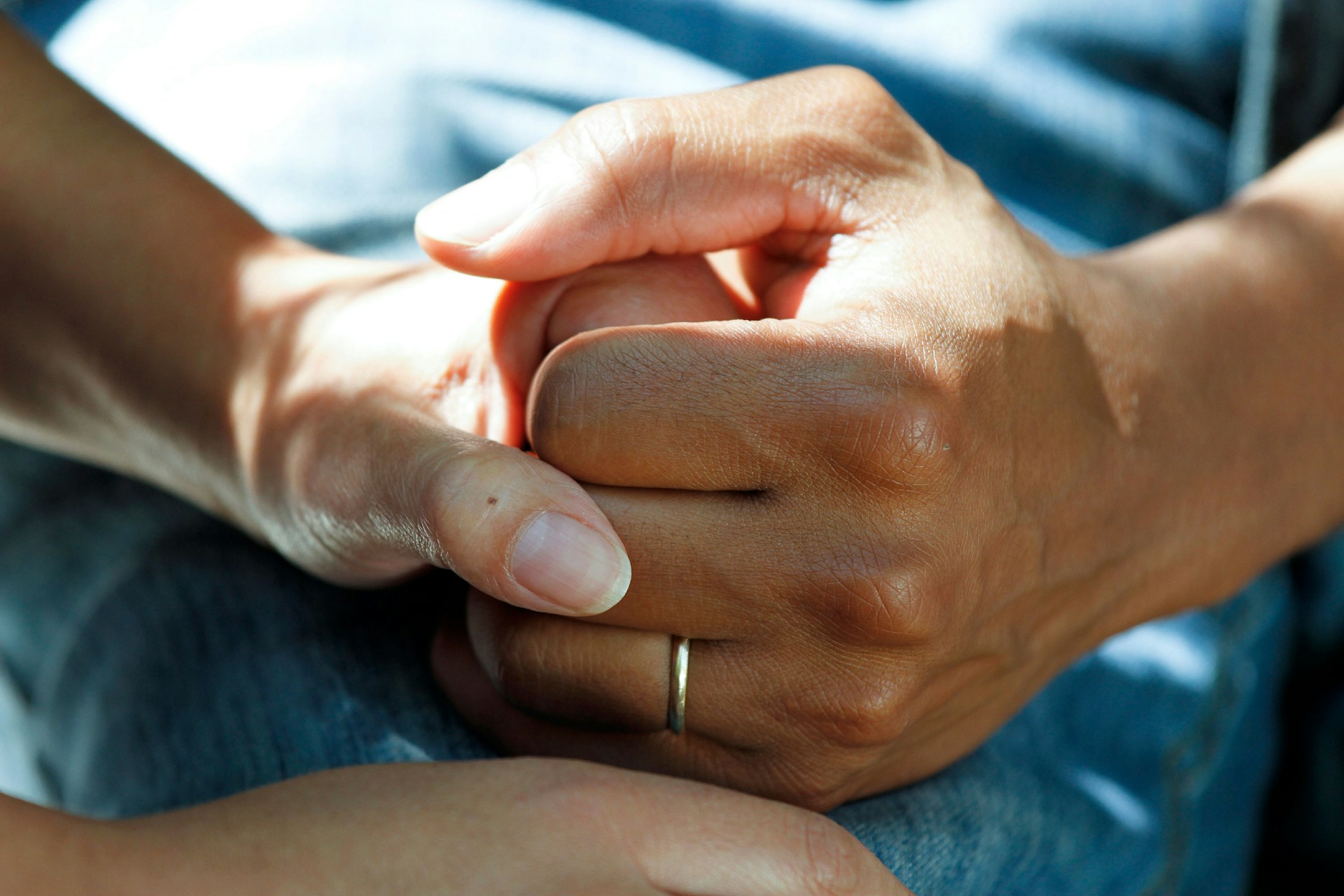
Acknowledgement of the person, affirmation of their condition and struggle, listening, empathy, really hearing the narrative — these are all part of ‘presence’. Being there is essential at any time, but never more poignantly than when someone is facing a terminal illness — ‘It is … interpersonal, relational practice that resonates with … both carer and sufferer about living, about self, and about dignity.’ 15
There exists a paradox in life — happiness can only survive alongside sadness; laughter and joy alongside tears. In the afterword of Kalinithi’s book, his wife movingly writes about her acute observations of the humdrum nature of Paul, her own, and their daughter’s life:5
‘… such simple moments swelled with grace and beauty, and even luck, if such a concept can said to exist at all. And yet we did feel lucky, grateful — for family, community, for opportunity, for our daughter, for having risen to meet each other at a time when absolute trust and acceptance were required. Although these last few years have been wrenching and difficult — sometimes almost impossible — they have also been the most beautiful and profound of my life, requiring the daily act of holding life and death, joy and pain in balance, and exploring new depths of gratitude and love.’
Without honest, open communication with patients and trusting relational care there is the potential that we prevent our patients from having the opportunity to experience similar heights and depths of emotions when nearing the end of their lives.
References
1. World Health Organization. World health statistics 2025: monitoring health for the SDGs, Sustainable Development Goals. 2025. https://iris.who.int/server/api/core/bitstreams/c992fbdc-11ef-43db-a478-7e7a195403ae/content (accessed 21 Jan 2026).
2. Finlay I, Richards M, Maskell R, et al. Palliative care and end-of-life care: opportunities for England. Volume one. 2025. https://img1.wsimg.com/blobby/go/e5bbd9ef-01fd-45c0-b4f4-1cf6b62157b9/VOLUME%201%20REPORT%20FINAL%20170625.pdf (accessed 15 Jan 2026).
3. Hospice UK. Hospice funding falls short by £47m. 2023. https://www.hospiceuk.org/latest-from-hospice-uk/hospice-funding-falls-short-ps47m (accessed 21 Jan 2026).
4. Kellehear A. The social nature of dying and the social model of health. In: Abel J, Kellehear A. Oxford textbook of public health palliative care. Oxford: Oxford University Press, 2022; 22–29.
5. Kalinithi P. When breath becomes air. London: Vintage, 2017.
6. Mannix K. With the end in mind: how to live and die well. London: William Collins, 2017.
7. Boas S. A beginner’s guide to dying. London: Vintage, 2025.
8. Virdun C, Luckett T, Davidson PM, Phillips J. Dying in the hospital setting: a systematic review of quantitative studies identifying the elements of end-of-life care that patients and their families rank as being most important. Palliat Med 2015; 29(9): 774–796.
9. Roques T, Thorp N, Harden S, Halliday K. Cancer decision making needs a radical rethink. BMJ 2025; 391: r2243.
10. Steinhauser KE, Christakis NA, Clipp EC, et al. Factors considered important at the end of life by patients, family, physicians, and other care providers. JAMA 2000; 284(19): 2476–2482.
11. Pollock L. The golden rule: lessons in living from a doctor of ageing. London: Penguin Michael Joseph, 2024.
12. Murray S, Amblàs J. Palliative care is increasing, but curative care is growing even faster in the last months of life. Br J Gen Pract 2021; DOI: https://doi.org/10.3399/bjgp21X716921.
13. Kingston HM, da Cunha F. Embedding social relations into primary care: a population-based approach. What matters most? Population practice of social ecology in medicine and communities. Lifestyle Medicine 2022; 3(4): e71.
14. Abel J, Kellehear A, Karapliagou A. Palliative care — the new essentials. Ann Palliat Med 2018; 7(Suppl 2): S3–S14.
15. Kleinman A. Caregiving as moral experience. Lancet 2012; 380(9853): 1550–1551.
Featured photo by National Cancer Institute on Unsplash.