

John Goldie is a retired GP and medical educator
Who gets to decide what counts as illness? The question sits at the heart of every clinical encounter, especially when symptoms resist neat biomedical categories. Diagnosis is never just a matter of science; it is a negotiation between patients, clinicians, and increasingly, digital tools — a negotiation that determines whose suffering is recognised and whose is quietly dismissed.
Her previous tests were “all normal’ -a phrase that often lands like a quiet accusation.
A patient enters the consulting room, unsure whether she truly belongs there.
“I don’t want to waste anyone’s time,” she says, before describing exhaustion, unpredictable pain, and a growing sense of failure as a teacher. Her previous tests were “all normal’ -a phrase that often lands like a quiet accusation. “I’ve looked on the internet, and AI says it’s likely to be ME.”
As she speaks, the GP feels a familiar tension: the clinical urge to anchor her story to something measurable, set against the irritation provoked by algorithmic diagnoses. It is a distinctly modern clash of authorities. Where the GP looks for biomarkers and clinical signs—the ‘clinical gaze’ that Foucault described¹—the patient offers a diagnosis derived from a different epistemic system. This is not simply disagreement about symptoms; it is a struggle over who gets to decide what counts as real. As Michel Foucault observed, the medical gaze does more than see disease; it judges and confers meaning. Doctors therefore do more than identify pathology—they decide what counts as illness.
For clinicians, algorithmic predictions often feel like noise. For patients who have felt unheard, they can feel like the first voice willing to listen.
In a system that struggles with contested illnesses—conditions that sit uneasily within biomedical categories—the algorithm’s willingness to name a condition based on symptoms alone offers a fragile currency of legitimacy. Naming confers recognition even when certainty is absent.
This is not simply disagreement about symptoms; it is a struggle over who gets to decide what counts as real.
“I know it sounds vague,” she says, watching the GP’s face. “Maybe it’s just me, but I need to know what’s going on.”
When the GP validates that her experience is real, her shoulders soften. Nothing about her biology has changed, but the power dynamic has. Illness is never just biology; it is something we grant, negotiate, or withhold.
These encounters reveal how deeply social construction permeates medical practice. This does not deny biological reality, but recognises that biology never arrives “naked.”2 Diagnosis functions as a form of social authority, sorting suffering into the legitimate and the suspect.³ Kleinman reminds us that patients bring illness narratives shaped by culture and experience, while clinicians bring disease frameworks shaped by training.⁴ What presents as objective science, however is never free of interpretation.⁵
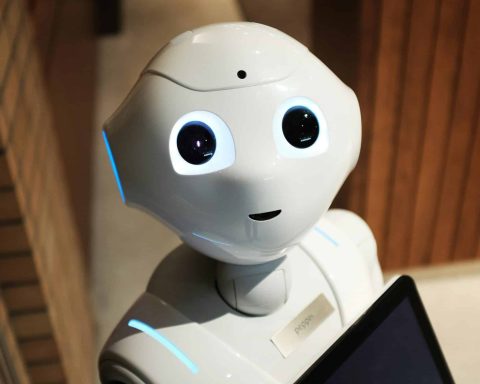
Digital health tools have changed how patients interpret and legitimise their symptoms. For those whose conditions do not fit neatly into biomedical boxes, an algorithm’s label can feel like a lifeline. Yet these tools can be wrong and lack the relational understanding that clinical encounters require. The challenge is helping patients appreciate both the value and the limits of digital knowledge. ⁶
Power in diagnosis is shared, but not equally. Patients, digital tools, and institutions shape narratives, but clinicians retain distinctive authority: they are accountable for the decision. Algorithms may suggest, and patients may advocate, but clinicians must answer for what is named, delayed, or missed.
Patients’ apologies for “wasting time” are not personal quirks but learned responses to a system that often treats unexplained symptoms as data rather than lived experience. To diagnose is not simply to classify disease, but to exercise moral and interpretive authority.
For clinicians, this requires a difficult balance:
• recognising suffering without rushing to premature closure
• tolerating uncertainty without abandoning responsibility
• communicating openly about the limits of both clinical and digital knowledge
• using authority with care, knowing that what is named—or left unnamed—shapes patients’ lives
Diagnosis is a collaborative, interpretive act. By acknowledging the social dimensions of illness and the evolving role of AI, we can better support patients through the fog of the unexplained, helping them find meaning and legitimacy in their experiences.
If diagnosis is a form of power, its most ethical use is not to categorise disease, but to recognise the person who is asking to be believed.
References
1. Foucault M. The Birth of the Clinic: An Archaeology of Medical Perception. London: Routledge. 2003.
2. Conrad P. The Medicalization of Society. Johns Hopkins University Press, 2007.
3. Jutel A. Putting a Name to It: Diagnosis in Contemporary Society. Johns Hopkins University Press, 2011.
4. Kleinman A. The Illness Narratives: Suffering, Healing, and the Human Condition. Basic Books, 1988.
5. Good B. Medicine, Rationality and Experience: An Anthropological Perspective. Cambridge University Press, 1994.
6. Lupton D. Digital Health: Critical and Cross-Disciplinary Perspectives. Routledge, 2017.
Featured photo by Toa Heftiba on Unsplash