



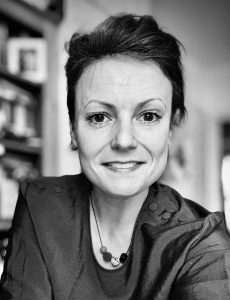
 Emilie Couchman is an NIHR Clinical Lecturer in General Practice with the Division of Primary Care Palliative Care and Public Health at Leeds University, and a salaried GP with Sarum Health Group in Wiltshire. She has recently completed her PhD relating to continuity within the primary palliative care context.
Burnout. A small word with huge emotive connotations and, at times, stifling stigma. Like any health condition, it seems to me that burnout does not discriminate. It can plant its seed in anyone and grow like wildfire; irrespective of how self-aware they are, how much social support they have, or whether they engage in stress-relieving activities.
I am a clinical academic.* Boundaries are hugely important. It does not come naturally to me to implement and maintain boundaries (as I’m sure is the case for many of my likeminded colleagues) but it is absolutely imperative to ensure survival. The weight of managing two components of a full-time job whose sum far exceeds 100% is heavy. I remind myself that to let my work surpass 100% is surely a choice, and must take into account the energy required at any given time in my roles as a mother of young children; a wife to a resplendent husband; daughter; granddaughter; sister; friend; and neighbour. But it is not simple when the two roles are interconnected like chewing gum stubbornly entangled in hair.
It can be hideously distracting being so aware of the ‘bigger-picture’ political context, when also trying to provide the best care to an individual human being who is anxiously seeking help.
The combination of my role as a GP and my role as a Clinical Lecturer sometimes feels synergistic, and sometimes antagonistic. It can be hideously distracting being so aware of the ‘bigger-picture’ political context, when also trying to provide the best care to an individual human being who is anxiously seeking help. It is never a difficult choice for me: the patient will always ‘win’, but it can be disconcerting and uncomfortable, regardless. We are expected, and we desperately want, to care without counting cost; to provide without pondering profit. But the price of everything looms large and, at times, service provision feels dictated by non-clinical managers, far-removed from the front-line. The constant balancing act has reminded me that perspective is so important. The way we think about something has the potential for so much more impact than does the actual ‘thing’. I can choose to view my roles as contradictory or complementary.
Honestly, the pressure of being a GP within the current under-resourced system is mounting. The buck stops with us. We are navigating uncertainty about our own role as the system around us becomes increasingly multidisciplinary; we are containing patients for whom no appropriate referral can be made (either because a service they need does not exist locally, or because there will be a years-long waiting list); we do not have the luxury of opting out by claiming that we are not specialists in a particular area, because our remit is generalism. A GP must be broad-shouldered, and ‘cannot take refuge in the limitations of his specialty… Even if the patient’s illness has been “negotiated” out of medicine by other physicians, someone must remain who can help.’1 The burden of responsibility relating to generalism makes my professional satisfaction soar on a good day, and makes me feel like I’m trudging through treacle on a bad day.
I am not a robot, nor a lone wolf. I sometimes ache for the shared responsibility and team-working vibe of my house officer days in secondary care.
Holding people’s hands through uncertainty is a GP’s game. It’s what I have been trained to do, and what I do exceptionally well. However, I am not a robot, nor a lone wolf. I sometimes ache for the shared responsibility and team-working vibe of my house officer days in secondary care. Nothing hammers the discrepancy across the primary-secondary care interface home more than the potential threat that ‘as a GP you’ll be sued as an individual; as a hospital doctor the hospital or trust will be sued on your behalf’. We are comparatively more vulnerable, laid bare. Autonomy is important to enable GPs to feel that they can deviate from clinical guidelines to provide appropriate, personalised care for the patient in front of them, but the ‘behind closed doors’ aspect of our job can be isolating. Furthermore, people in vocational, caring roles often aspire to perfectionism. Acknowledging burnout might feel shameful, particularly if we believe that we are the only ones feeling like this; a key barrier to reaching out for support. Let’s not make perfection an enemy of all the good that exists in ourselves or in the NHS.
There was a time in the not too distant past that I noticed a change in myself. I now realise that I was experiencing burnout. Most surprisingly, I felt blindsided. This resulted in an initial reaction of denial, despite objective evidence of all the spinning plates I had been maintaining. I am confident that my clinical integrity remained intact: patients were neither compromised by, nor noticed, my frazzled mindset, but that’s the point isn’t it? As articulated in the film ‘Allelujah’, based on the play by Alan Bennett: ‘Our work is other people’s lives. I don’t quite know what happens to our own.’2,3
References
- Braunack-Mayer, A.J. (2006). The Ethics of Primary Health Care. In Principles of Health Care Ethics (eds R.E. Ashcroft, A. Dawson, H. Draper and J.R. McMillan). https://doi.org/10.1002/9780470510544.ch48
- Bennett, A. (2018) Allelujah! Faber and Faber Ltd. (London) ISBN 978-0-571-34986-9
- Eyre, Richard, director. (2023) Allelujah! A Pathé, BBC Film and Ingenious Media Presentation of a DJ Films/Redstart Production. 1 hr., 39 min.
*The opinions shared are the author’s own and do not reflect the views of her employers.
Featured photo by Elia Mazzaro on Unsplash


[…] https://bjgplife.com/balance-boundaries-and-burnout/ […]