
 Jo Maher has been a GP and Medical Educator in Sheffield for 25 years, and works with Move More Sheffield as the place-based Physical Activity Clinical Champion for the city.
Something remarkable has happened that will improve the health of thousands in London, and it doesn’t require a GP review. For the first time since legal limits were introduced in 2010, London’s nitrogen dioxide levels have dropped within legal thresholds.1 Once shrouded in smog and traffic fumes, the megacity has met this air pollution target — which academics thought would take nearly 200 years — in less than a decade.2,3 This change happened with political will, evidence-led policy, and public health ambition.
“Breathe opens with Khan’s personal story: training for the London Marathon in his forties, he developed adult-onset asthma.”
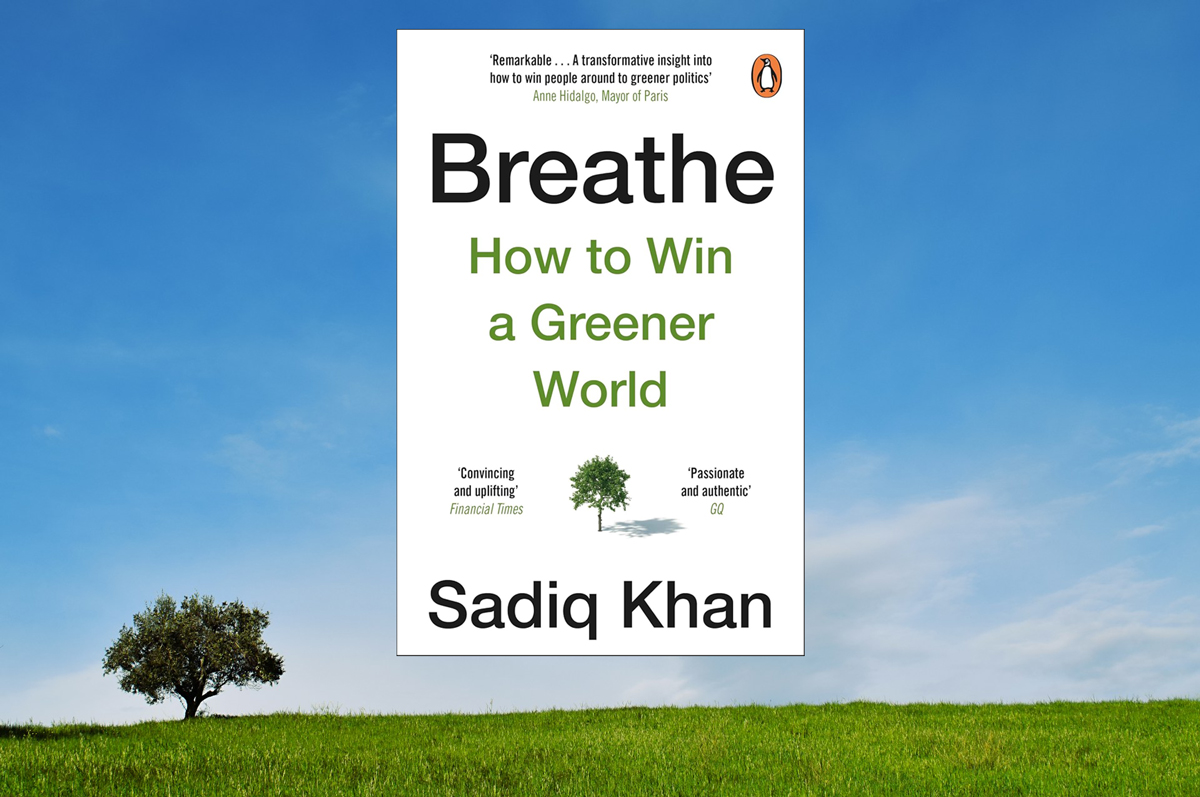
If you’re not familiar with the topic, Breathe by Sadiq Khan is a good place to start.4 It’s a hopeful story but with a tragedy at its heart: Ella Adoo-Kissi-Debrah, a young girl who died at just nine from severe asthma. In 2020, air pollution was recorded on her death certificate, the first time this has happened in the UK.5 The work of her mother, Rosamund Adoo-Kissi-Debrah, alongside Stephen Holgate and others, has helped put air pollution firmly on the public health agenda.
Despite widespread publicity, healthcare professionals across sectors report low confidence and knowledge about air pollution’s health impacts.6
Breathe opens with Khan’s personal story: training for the London Marathon in his forties, he developed adult-onset asthma. It was a wake-up call that shaped his approach as Mayor of London since 2016, linking inequality, environment, and health.
I read Breathe while preparing for a Walkshop at the Living Streets annual walking summit, where we visited the Cholera Monument in Sheffield — a site symbolising progress on clean water. I’d read the Chief Medical Officer’s (CMO’s) 2022 report,7 which is comprehensive but dry. Breathe connects science to lived experience and delivers.
Khan’s policies aren’t always popular, but they have been effective. A recent Royal College of Physicians report, A Breath of Fresh Air, estimates 30 000 UK deaths are attributable to air pollution annually.8 Had London-style measures been implemented nationally, the impact on morbidity and mortality could have been dramatic.
The effects of air pollution are insidious and wide-ranging: cardiovascular and respiratory disease, cognitive decline, and reduced development in children. It affects every stage of life, hitting the most vulnerable hardest — pregnant women, older adults, and people in lower-income communities.
The World Health Organization (WHO) defines air pollution as contamination of the indoor or outdoor environment by any agent that alters the atmosphere’s natural characteristics. WHO data show that 99% of people on Earth now breathe air that exceeds its guidelines.9
“I’d recommend Breathe to any health professional wanting to better understand the politics and potential of clean air.”
In the UK, transport — especially motor vehicles — is a major contributor. As a GP in North Sheffield, where our practice is just half a mile from the M1, I see the impact first-hand. Greener NHS estimate that 3.5% of all road travel in England is NHS-related, producing around 14% of total system emissions.10
In 2024, I contributed to the CMO’s report on Health in Cities, writing about active travel from a GP’s perspective. We often call walking, cycling, and wheeling part of the ‘miracle cure’ for physical inactivity — which remains profoundly protective.11
Throughout Breathe, Khan returns to Ella’s story and his connection with her mother, Rosamund. As a parent, he reflects deeply on her death and the reality that it could have been any child, including his own. His engagement with her family feels sincere, and his commitment to preventing further tragedies is clear.
At its heart, Breathe is about what happens when political leadership meets public health urgency. It’s a pragmatic, hopeful book. Khan outlines a seven-step approach to tackling climate action, warning of traps like fatalism, apathy, and short-termism, and how to overcome them.
I’d recommend Breathe to any health professional wanting to better understand the politics and potential of clean air. It’s accessible, well-paced, and human, balancing policy detail with personal experience. As GPs, we often focus on individual risk factors; this book invites us to consider the bigger picture.
Another excellent read is How Not to Die (Too Soon) by Devi Sridhar. In her chapter Just Breathe, she reports on the 4.2 million annual deaths from air pollution in low- and middle-income countries, highlighting how in places like India, clean air is becoming a luxury rather than a human right.
Books like Breathe remind us that air is more than background — it’s a fundamental determinant of health. Clean air, like clean water, should be a universal right.
Want to do more?
- Greener Practice connects health professionals across the UK to share learning and action: https://www.greenerpractice.co.uk
- The Green Impact for Health Toolkit provides practical, evidence-based changes you can make in your own workplace: https://greenimpact.nus.org.uk/green-impact-for-health
- The Ella Foundation campaign, founded by Rosamund Adoo-Kissi-Debrah: https://www.ellaroberta.org
- Living Streets campaigns for safer cleaner spaces for everyday walking: https://www.livingstreets.org.uk
- Clean Air Day happens each year in June: https://www.actionforcleanair.org.uk/campaigns/clean-air-day
- Mums for Lungs campaigning for clean air for everyone: https://www.mumsforlungs.org
Featured book: Sadiq Khan, Breathe: How to Win a Greener World, Cornerstone, 2024, PB, 240pp, £10.99, 978-1804940112
References
- Department for Environment, Food and Rural Affairs. Air pollution in the UK 2024: compliance assessment summary. 2025. https://www.gov.uk/government/publications/air-pollution-in-the-uk-2024/air-pollution-in-the-uk-2024-compliance-assessment-summary (accessed 16 Oct 2025).
- Dajnak D, Evangelopoulos D, Kitwiroon N, et al. London health burden of current air pollution and future health benefits of mayoral air quality policies. 2021. https://erg.ic.ac.uk/research/home/resources/ERG_ImperialCollegeLondon_HIA_AQ_LDN_11012021.pdf (accessed 16 Oct 2025).
- Foster A. London nitrogen dioxide levels fall to legal limit. BBC News 2025; 1 Oct: https://www.bbc.co.uk/news/articles/c75q9d2pqyeo (accessed 17 Oct 2025).
- Khan S. Breathe: How to Win a Greener World. London: Cornerstone, 2024.
- Barlow P. Regulation 28: report to prevent future deaths. 2021. https://www.judiciary.uk/wp-content/uploads/2021/04/Ella-Kissi-Debrah-2021-0113-1.pdf (accessed 16 Oct 2025).
- Price M, Walker I. Air pollution awareness in health care professionals in Wales: report of findings 2025. 2025. https://phw.nhs.wales/services-and-teams/environmental-public-health/air-quality/air-pollution-awareness-in-hcps-in-wales-2025 (accessed 16 Oct 2025).
- Department of Health and Social Care. Chief Medical Officer’s annual report 2022: air pollution. 2022. https://assets.publishing.service.gov.uk/media/639aeb81e90e0721889bbf2f/chief-medical-officers-annual-report-air-pollution-dec-2022.pdf (accessed 16 Oct 2025).
- Royal College of Physicians. A breath of fresh air: responding to the health challenges of modern air pollution. 2025. https://www.rcp.ac.uk/policy-and-campaigns/policy-documents/a-breath-of-fresh-air-responding-to-the-health-challenges-of-modern-air-pollution (accessed 16 Oct 2025).
- World Health Organization. Air pollution. 2025. https://www.who.int/health-topics/air-pollution (accessed 16 Oct 2025).
- NHS England. Areas of focus. https://www.england.nhs.uk/greenernhs/a-net-zero-nhs/areas-of-focus (accessed 16 Oct 2025).
- Department of Health and Social Care. Chief Medical Officer’s annual report 2024: health in cities. 2024. https://assets.publishing.service.gov.uk/media/6756e67b43b2de5fee8dae87/cmo-annual-report-2024-health-in-cities.pdf (accessed 16 Oct 2025).
Featured photo by Chris Barbalis on Unsplash.