
 Richard Lehman is a retired GP and writer.
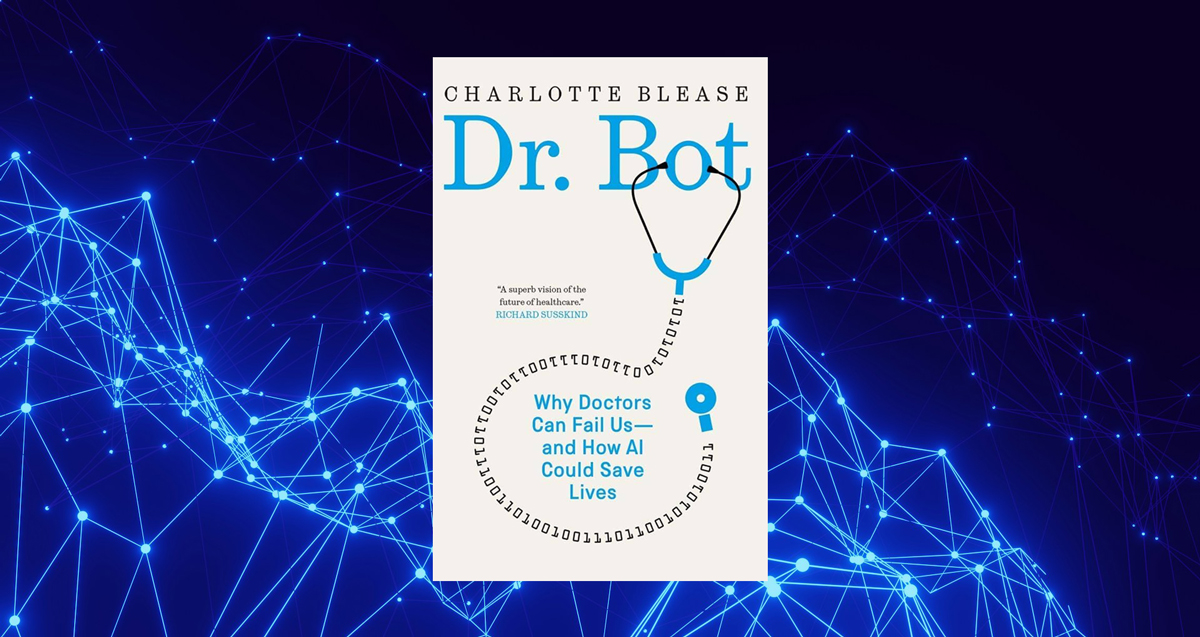
Do you find the title of this book slightly annoying? I think that is rather the point. A book called Dr. Bot will have people pulling it off the shelves and flipping the pages. What you will find is not what you may expect, because this is a book where careful scholarship mixes freely with informal, sometimes wryly humorous story-telling and commentary. Often it goes deep where you might expect shallow, like a deceptive puddle. Splash! Oops, now your shoe is full of water and your coat has mud on it. Yet Charlotte Blease is not doing this to laugh at you, poor doctor. She is just pointing out what medicine is like for those who deliver it and for those who take delivery.
Since generative artificial intelligence (AI) appeared as ChatGPT nearly 3 years ago, a number of books have appeared that discuss its impact on ‘medicine’ in general. But this book is not like any of them. It is far more directly about illness and what it is like to be treated for it — now, and in the putative future. And since most of it was written a year ago, a great deal of what was putative is now actual. The experience of being a patient does not change a great deal (which is the great strength of this book), but the potential of AI is now even greater than what might have sounded like hyperbole even a few months ago.
“What you will find is not what you may expect …”
By weaving patient narratives through the book, Blease sheds light on all the awfulness that we know exists in the advanced health systems of the UK and the US. Our own frequent awfulness as doctors is placed in the context of these systems, but above all the context of our being human beings.
As GPs, we are set a range and depth of tasks that are simply beyond human capacity, however diligently we try. Reading Dr. Bot, I was reminded of how I entered general practice as a conceited young graduate in the 1970s, thinking I could easily meet the basic requirements. In those days they used to be summed up as the ‘Three As’: Able, Amiable, and Accessible. I have spent 50 years since trying to undeceive myself, yet there were passages in this book that still had the power to make me uncomfortable. Was it ever enough just to be kind and keep up to date and to have good intentions?
Blease uses exactly the substance of the Three As to construct her book: Accessing Care; Doctor Deference; Diagnosis and Treatment; plus a final section on the vexed question of empathy. She is a philosopher of science and of mind, so it is her business to look clearly and to speak as she finds. She sets professional pretensions against the lived reality of patients and uses this to set out the many ways in which suprahuman intelligence is bound to serve patients better. For medical readers, it can make Dr. Bot a hard read in places, but the conclusion is clear and generous: ‘ [Doctors] work tirelessly in our service, confronting demands that other professions simply don’t face. Doctors have made, and continue to make, profound personal sacrifices in the line of duty.’ Blease ends by wagering that if patients and doctors could, we would rationally choose to remodel medicine. Not to become the perfect ideal, but to meet patient needs better; ‘This might be all they truly need — or ever wanted.’
I think we should join in that wager. Instead of trying and failing to be all-doing, all-caring, all-knowing personal agents, we can now use generative AI to make medicine more able, amiable, and accessible throughout the world.
Featured book: Charlotte Blease, Dr. Bot: Why Doctors Can Fail Us — and How AI Could Save Lives, Yale University Press, 2025, HB, 352pp, £18.99, 978-0300247145
Featured photo by Conny Schneider on Unsplash.