
 David Misselbrook is a retired academic GP.
John Boyne is best known for his young people’s novel The Boy in The Striped Pyjamas. I next came across him when my brother recommended his satire The Echo Chamber, a dark parody of modern lives dominated and distorted by social media. Boyne is highly readable, and I went on to discover his true hinterland, which is writing about people who have been deeply damaged by abuse.
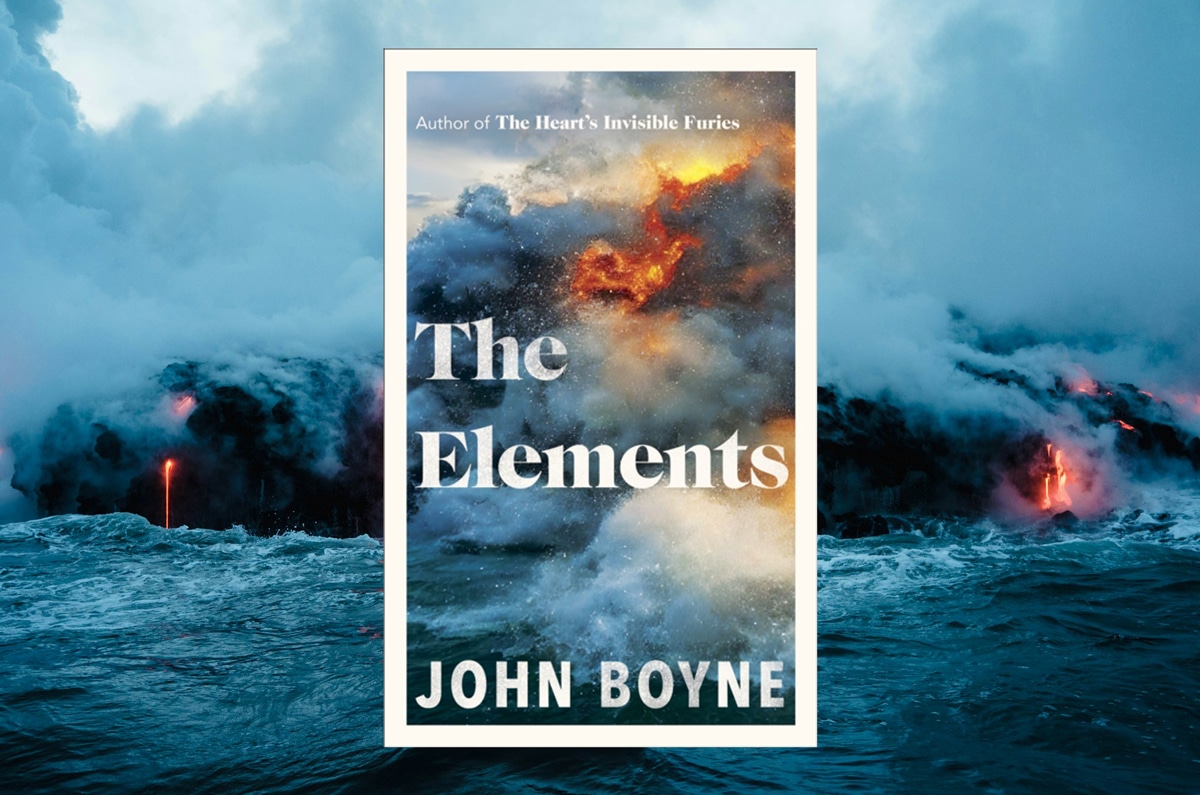
In the last couple of years he has published four short but interlinked novels, Water, Earth, Fire, and Air, each exactly 176 pages long. Characters in these four books appear, crossover, and reappear as victims, as perpetrators, or as accomplices in a never-ending Karpman’s triangle of damage.
“As GPs we are the naturalists of the human jungle. This is where we practice, not the controlled and tidy spaces of the secondary care zoo. Our jungle has dark and hidden thickets.”
As a parent I understand how one might be at the end of one’s tether and hit a child, perhaps even emotionally abuse a child, however I have never understood how anyone could sexually abuse a child. But that’s the point — I was brought up by stable parents within a loving and secure family. Boyne gives some sort of insight into what it is to grow up in a dark and damaging environment. Boyne is in his mid 50s. He was born in Dublin and has put on record that he was physically and sexually abused at Terenure College, a Carmelite-run secondary school in Dublin. He has also spoken of the troubles he encountered growing up then as a gay man in Ireland. It would be patronising to call him a survivor, but he is well placed to help us understand the experiences of those who have been the victims of prejudice and abuse.
Boyne’s plots are always elaborate, intertwining the narratives of people in very different situations. They have been, probably rightly, criticised as relying on elements that are highly unlikely. But Boyne plays with plots only to explore the protagonists themselves in greater depth. His books are prolonged thought experiments. The internal lives of his characters are portrayed in unflinching detail. The damaged become the damaging with a remorseless circularity. The quality of Boyne’s writing makes this endurable — none start as monsters here, only as fellow human beings, albeit appallingly damaged.
Putting Boyne’s preoccupation into its wider context of the deeply ingrained abuses going on in Ireland of the mid and late 20th century, another of his books, A History of Loneliness, is a painful and challenging read. The protagonist is a priest who must come to terms with what many of his colleagues, including his best friend, have been doing. And having to question himself — did he really have no inkling of what was going on?
As GPs we are the naturalists of the human jungle. This is where we practice, not the controlled and tidy spaces of the secondary care zoo. Our jungle has dark and hidden thickets. How are we to help those caught up in such pain, such damage? How are we to help them break such inter-generational curses? Perhaps a modest start, especially for those of us from loving families, would be to deepen our own understanding. Boyne’s quartet is being republished under a single cover, entitled The Elements. It is a memorable read.
Featured book: John Boyne, The Elements, Doubleday, 2025, HB, 512pp, £20.00, 978-0857528872
Featured photo by Buzz Andersen on Unsplash.