


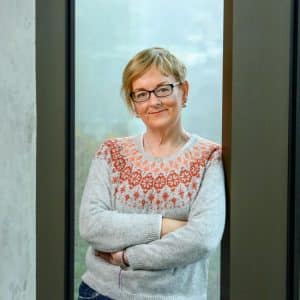
 Pamela Deasy is a patient advocate, living after a pancreatic cancer diagnosis and currently a Masters Student at University College Cork. She is on LinkedIN.
Cancer is usually talked about in medical terms. Clincians discuss treatments, medicines, and survival rates, scientists study cells and genes. Cancer is also a human, personal experience. It changes how people see life, risk, and control. Sociology helps us to understand this human dimension. One sociology concept that might help to do so is the idea of edgework.
Edgework is a concept that describes situations where people exist close to the edge between life and death, safety and danger and must use significant skill to navigate their way across, and survive, this edge.
Edgework is a concept that describes situations where people exist close to the edge between life and death, safety and danger and must use significant skill to navigate their way across, and survive, this edge. The term was developed by the sociologist Stephen Lyng, who used it to explain activities where people voluntarily choose to face risk, such as engaging in extreme sports, an example being skydiving. In these situations, people move close to an existential boundary, they encounter and are aware of danger, but they also experience focus, meaning, and a strong sense of being alive.1
At first, cancer might seem very different from these activities. Cancer is not something people choose to ‘do’, it arrives unexpectedly and can feel frightening and overwhelming. However, when we look at the lived experience of cancer patients, we can see that many people find themselves living in a similar edge space between certainty and uncertainty, life and death. They must confront and navigate existential edges, existential threats, as well as real, immediate serious challenges.
The experience of cancer often pushes patients into forms of edgework, where they must confront the boundary between safety and risk. Patients constantly navigate difficult choices, such as aggressive treatments, clinical trials, or lifestyle changes, that carry uncertain outcomes. In this space, individuals balance fear and hope while managing physical and emotional limits. Edgework highlights how cancer patients actively negotiate these risks rather than passively experiencing illness.1 Through these decisions, they reclaim some sense of control at the edge of vulnerability and survival.
In a similar way, many cancer patients who navigate their way through their experiences talk about learning to live more fully and consciously in the present.
Navigating the risks of cancer requires a range of personal skills and abilities. Patients often need emotional resilience to face uncertainty and fear while making high-stakes decisions about treatment. Strong information and decision-making skills help them weigh medical advice, potential side effects, and possible outcomes. Communication and self-advocacy are also crucial for engaging with healthcare professionals and support networks.2,3 Together, these abilities help patients manage life at the edge between risk, control, and survival.
People who can successfully navigate the edge in activities such as free solo climbing often report an intensification of awareness and focus. In a similar way, many cancer patients who navigate their way through their experiences talk about learning to live more fully and consciously in the present. Do they experience a change in mindset? Time becomes more meaningful and, somewhat paradoxically, more ‘alive’. People who survive edgework activities often report a change in their consciousness.4-6 Cancer can also create new roles for patients in society. Many become advocates for research, earlier detection, and better healthcare systems, and some participate in patient advisory groups or research projects. In doing so, they help shape the future of cancer care, turning a difficult personal experience into social action and change.3,7
Looking at cancer through the idea of edgework does not mean downplaying illness; cancer is still a serious and challenging disease. However, this perspective helps us see the patient as an active presence, someone who is navigating risk with the help of their social networks and health professionals. It encourages us to see the courage and adaptation capacities of patients as they deal with life and death situations, and the new forms of awareness, connection and purpose that can come with their negotiations of the edges that their cancer presents to them.4,5
References
1. Lyng S. Edgework : the sociology of risk-taking. New York, N.Y. ; London: Routledge; 2004.
2. Parsons T. The sick role and the role of the physician reconsidered. The Milbank Memorial Fund Quarterly. Health and Society. 1975 Jul 1:257-78.
3. Lara AA, Salberg L. Patient advocacy: what is its role?. Pacing and Clinical Electrophysiology. 2009 Jul;32:S83-5.
4. Jones C, Porter R, editors. Reassessing Foucault: Power, medicine and the body. Routledge; 2002 Jan 4.
5. Petersen AR, Bunton R, editors. Foucault, health and medicine. Psychology Press; 1997.
6. Turner V, Abrahams RD, Harris A. The Ritual Process. Routledge; 2017.
7. admin. UCAN Ireland | United Cancer Advocates Network – We Are Stronger Together [Internet]. UCAN Ireland. 2026 [cited 2026 Mar 02]. Available from: https://ucanireland.ie [accessed 5/6/26]
Featured photo by Thom Holmes on Unsplash





Well done Pamela. Excellent as usual.
A very interesting take and makes a lot of sense when you think about it! Great work Pamela.
Excellent article -well done Pamela
Excellent summary – as a Stage 4 Prostate cancer exploring with Martin Sweeney and Helen Forristal of the Marie Keating Foundation to shape a solution to help via peer to peer ( stage 4 with another stage 4 PC patient )support for early diagnosed stage 4 PC ….. a horrible, lonely place. You captured so clearly many aspects of that early stage of that journey.
Would be wonderful to extrapolate your experiences with pancreatic cancer patients to our stated objectives
Love to meet up sometime
Great insight
Gearoid