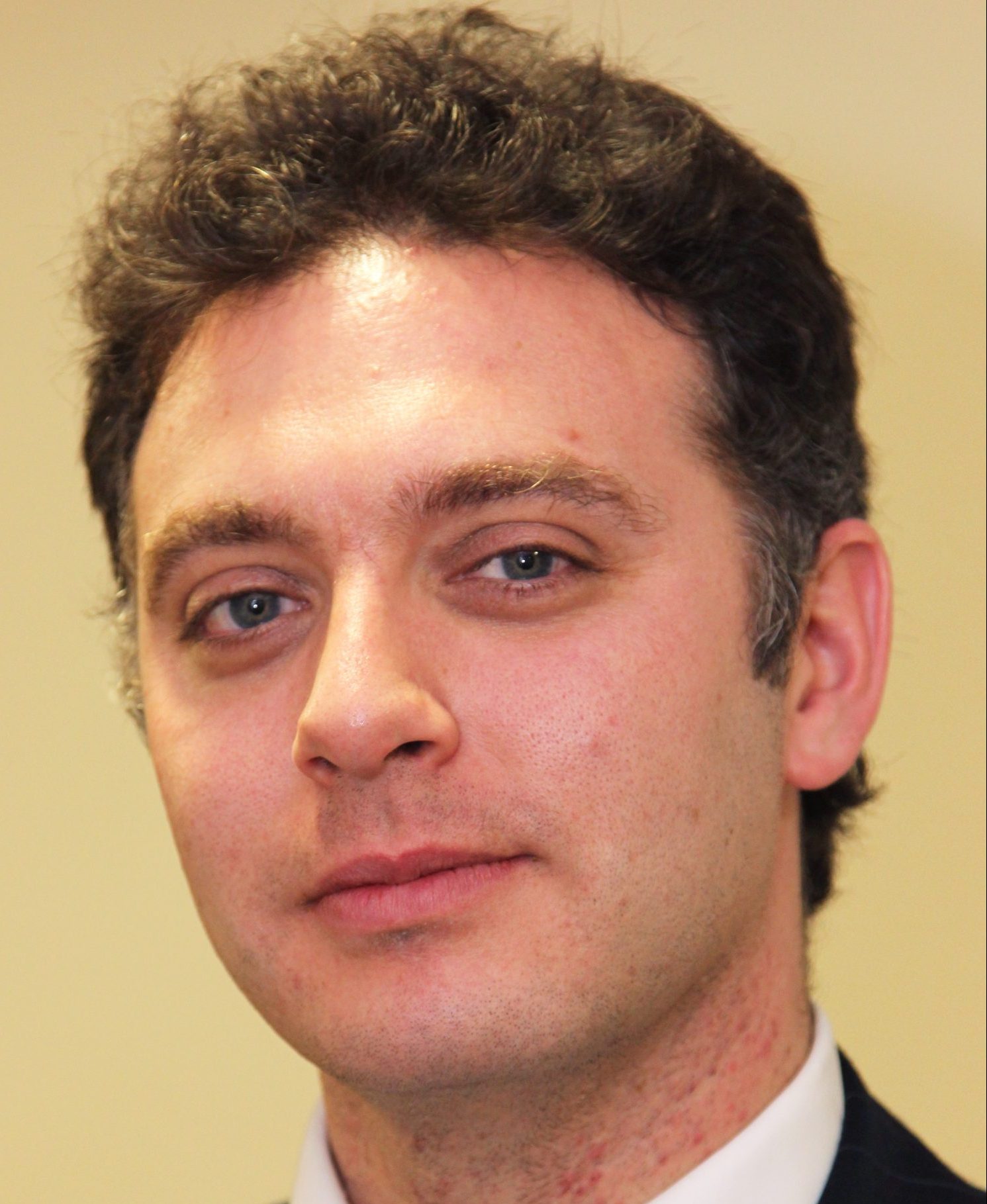

 Andrew Papanikitas is Deputy Editor of the BJGP.
Here is an advanced quiz question for you. What connects the late sci-fi and fantasy author Sir Terry Pratchett with muscled movie star Arnold Schwarzenegger? It is Cohen the (semi-retired) Barbarian, the ageing protagonist of several novels by Pratchett. Arguably inspired by Conan the Barbarian (a character bulkily embodied by Schwarzenegger in two movies), in The Last Hero, Cohen concludes his saga by embarking on a quest to return fire to the gods ‘with interest’.1 Towards the end of the novel, Cohen rages the above sentiment in a final war of words with a collection of anthropomorphic deities. I often urge colleagues to make time to read Pratchett’s novels, and frequently am dismayed to hear that reading in general is another activity that is being put off until retirement, along with painting, or learning about medical ethics. The notion of time to take in the splendour of the universe is something of a recurring theme in BJGP‘s Life and Times. As well as being good for GPs, it is arguably a path to more resilient, knowledgeable, and cosmopolitan practitioners. Well. This month we bring the universe to you.
“The notion of time to take in the splendour of the universe is something of a recurring theme in BJGP‘s Life and Times.”
We look yonder to the world: Rebecca Quinn reviews My Fourth Time, We Drowned, a harrowing journalistic account of the journeys taken by international asylum seekers.2 Knowing how such a person came to our consulting rooms may help us to behave in a more empathic and trauma-informed way. Seyed Aria Nejadghaderi and colleagues educate us about the effect of world events on our ability to prescribe effectively.3 War effectively closed the Strait of Hormuz in March 2026. The waterway carries petrochemical feedstocks that manufacturers in India use to produce active pharmaceutical ingredients for medicines, including antibiotics, worldwide. Alex Burrell looks yonder to other medical journals to discuss how cancer diagnosis is hindered in patients with a learning disability, MMR vaccine rates are affected when families are moving house, the perennial need for musculoskeletal skills in primary care, and how formative assessments at the start of community placement can identify learning needs and support for GP residents.4
Jonathan Sunkersing reminds us that loss of the time to think in the consultation is not the path to administrative efficiency.5 The thinking space is where we see the knowledge that emerges when a clinician holds the whole patient in mind and asks the questions the system was not designed to ask. He suggests that, ‘The GP consultation is the only place in the NHS where everything about a patient exists in the same room simultaneously.’ This may be where particular challenges can be addressed, such as that identified by Koki Kato, who discusses the idea that reassurance is more than giving someone a test result; it results from understanding and addressing the story of the problem that a patient brings with them.6 Pamela Deasy shares a concept from sociology that can help us see the patient as an active presence, someone who is navigating risk with the help of their social networks and health professionals.7 ‘Edgework’ is a concept that describes situations where people exist close to the edge between life and death, safety and danger, and must use significant skill to navigate their way across, and survive, this edge. She sees its relevance in relation to cancer and other illnesses that threaten or limit life. Ben Hoban picks up on embodied skills and knowledge required to be a GP, ‘From before patients even enter the room, we are taught to structure what they tell us, to channel and direct it safely, and yet we regularly find ourselves swamped by real human needs that overflow any bounds we try to set them.’8 His proposal is that we lean in to our skills and experience in navigating the consultation as Polynesian wayfinders navigate the ocean.
“All of our reviews highlight the idea that reading and art can enhance a clinician’s knowledge, skills, and attitudes.”
Our reviews this month offer a worthwhile retreat from the heat. Frances Da Cunha reviews The Golden Rule by Lucy Pollock.9 She finds that systems can harm patients and the workforce when discretion and kindness are squeezed, leaving a legacy of residue of moral distress and a strong argument for humane medicine. I review Immune Health by Daniel M Davis.10 Our immune system is a complex and story-laden set of ideas with implications for how we live our lives. In 2023, the video game Fortnite included a feature whereby characters could go to an immunity station and drink a virtual probiotic yoghurt to boost resilience! Could yoghurt save the medical profession (as opposed to yoga)? Hector Watson and Elizabeth Walton discuss Tracey Emin: A Second Life, an exhibition at Tate Modern that runs until 31 August 2026.11 Emin, through her art, has channelled experiences of sexual abuse and poverty in early life into a beautiful and reflective study of life. All of our reviews highlight the idea that reading and art can enhance a clinician’s knowledge, skills, and attitudes.
The last time a colleague told me that ‘I don’t have time to read’, it made think of another Schwarzenegger movie, the sci-fi action film Predator, which sees a team of elite commandos face off against an invisible alien hunter in the rainforest of Central America. One of the soldiers, played by the WWE wrestler Jesse (The Body) Ventura, is injured in a skirmish, and quips, ‘I ain’t got time to bleed.’ Try not to bleed (if it’s optional), but do try to read.
References
1. Pratchett T. The Last Hero. London: Victor Gollancz, 2001.
2. Quinn R. Books: My Fourth Time, We Drowned: Seeking Refuge on the World’s Deadliest Migration Route. Br J Gen Pract 2026; DOI: https://doi.org/10.3399/bjgp26X746277.
3. Nejadghaderi SA, Moghaddam SS, Razai MS, et al. The Strait of Hormuz and global antibiotic security. Br J Gen Pract 2026; DOI: https://doi.org/10.3399/bjgp26X746217.
4. Burrell A. Yonder: Cancer diagnosis in PWLD, MMR vaccine rates and residential mobility, musculoskeletal consultations, and predicting registrar performance. Br J Gen Pract 2026; DOI: https://doi.org/10.3399/bjgp26X746241.
5. Sunkersing J. The weight of ordinary things. Br J Gen Pract 2026; DOI: https://doi.org/10.3399/bjgp26X746181.
6. Kato K. Correct, but not reassuring. Br J Gen Pract 2026; DOI: https://doi.org/10.3399/bjgp26X746193.
7. Deasy P. Cancer as a form of sociology edgework. Br J Gen Pract 2026; DOI: https://doi.org/10.3399/bjgp26X746205.
8. Hoban B. Letting the island come to you: can GPs be wayfinders? Br J Gen Pract 2026; DOI: https://doi.org/10.3399/bjgp26X746301.
9. Da Cunha F. Books: The Golden Rule: Lessons in Living from a Doctor of Ageing. Br J Gen Pract 2026; DOI: https://doi.org/10.3399/bjgp26X746265.
10. Papanikitas A. Books: Immune Health: A Myth-Busting Guide. Br J Gen Pract 2026; DOI: https://doi.org/10.3399/bjgp26X746289.
11. Watson H, Walton E. Exhibition: Tracey Emin: A Second Life. Br J Gen Pract 2026; DOI: https://doi.org/10.3399/bjgp26X746253.
Featured photo by Greg Rakozy on Unsplash.