
Paul McNamara is a Principal GP at the New Gorbals Health and Care Centre, and an honorary clinical lecturer at the University of Glasgow
Carina Lee is a 4th year medical student at the University of Glasgow
I will never forget that smell…
Thick, metallic, and unmistakable. Deathly pungent. Once you encounter it, it stays with you.
I was a third-year medical student, nearly two decades ago, when I was asked to clerk a woman in her early forties admitted with advanced cervical cancer.* Before I had even drawn the curtain around the bed, I could smell it. The tumour had become fungating. Necrotic and invasive.
At the time, I struggled to understand why she had never attended for cervical screening. She had four young children. She worked constantly. Life, she told me, had simply got in the way.
Now the disease had eroded everything. Her cervix. Her pelvis. Her future.
She was dying from a potentially preventable disease.
Back then, as a medical student, my question was simple: why did she not just go for her smear tests?
Cervical cancer incidence in Scotland has plateaued after years of decline. The rate in the most deprived population of women is double that in the least deprived.Y
ears later, working in Deep End general practice, I realise I was asking the wrong question.
Cervical cancer incidence in Scotland has plateaued after years of decline. The rate in the most deprived population of women is double that in the least deprived.¹ That gap is not narrowing, and if anything, the pandemic made it worse.
Cervical screening coverage in Scotland was 55.3% in 2024/25, against a target of 80%. Uptake, the proportion of those invited who attended within six months, fell from 51.9% in 2023/24 to 41.9% in 2024/25. Coverage in the most deprived areas was 49.6%, compared with 58.8% in the least deprived, a gap of more than nine percentage points.² The HPV vaccination picture is no better. Overall coverage among eligible school pupils aged around 12 was 72.6% in 2024/25, still below the 80% target. The deprivation gap in vaccination has widened sharply: among older secondary pupils, the difference between the most and least deprived was 3.1 percentage points in 2019/20, and 16.1 percentage points by 2024/25.³
The barriers are many. Women in under-screened groups report that the test feels like a low priority against competing demands. Previous uncomfortable experiences, poor communication, language barriers, and clinical indifference have all been documented as reasons for disengagement.⁴,⁵ For survivors of sexual abuse, the speculum examination carries a particular weight.⁶
Self-sampling changes the equation. Removing the speculum and the clinical encounter addresses several of these barriers directly. Evidence shows that HPV testing using self-collected samples can achieve comparable accuracy to clinician-collected samples when appropriate assays are used, while the HPValidate study reported higher detection rates in self-collected samples.⁷,⁸ Crucially, uptake increases. In one English feasibility study, half of non-attenders offered a self-sampling kit returned a sample, with two thirds coming from ethnic minority or more deprived groups.⁹
Scotland’s self-sampling pilot targets women over 30 who have never attended or not been screened in six years, with an ambition to reach 17,000 women in the most deprived areas.¹⁰ The first phase deliberately prioritises women in more deprived areas, where under-screening is greatest. But it will not be sufficient on its own. Opportunistic offering will miss those least engaged with general practice. Older and disabled women may struggle with self-sampling instructions. Widening vaccination gaps risk leaving those already least well served by prevention with even less protection. Screening and vaccination policy need to be adjusted together, not in parallel silos.
The woman I clerked as a student had, on paper, an opportunity to prevent what happened to her.* Cervical screening existed. But the system was not built around her life. Self-sampling will not solve everything. But it is a step towards a programme designed for the people who need it most, rather than the people easiest to reach; prevention only works if the people most at risk can realistically access it.
*Whilst this vignette relates to the clinical experiences of Paul McNamara, it does not relate to any one specific identifiable patient. Sadly the scenario is not as rare as it should be.
References
- https://www.cancerresearchuk.org/health-professional/cancer-statistics/statistics-by-cancer-type/cervical-cancer [accessed 8/9/26]
- https://publichealthscotland.scot/publications/scottish-cervical-screening-programme-statistics/scottish-cervical-screening-programme-statistics-annual-update-to-31-march-2025/ [accessed 9/9/26]
- https://publichealthscotland.scot/publications/hpv-immunisation-statistics-scotland/hpv-immunisation-statistics-scotland-school-year-20242025/ [accessed 8/9/26]
- Bennett KF et al. Barriers to cervical screening and interest in self-sampling among women who actively decline screening. J Med Screen 2018;25(4):211–17. DOI: 10.1177/0969141318767471
- Wearn A, Shepherd L. Determinants of routine cervical screening participation in underserved women: a qualitative systematic review. Psychol Health 2024;39(2):145–70. DOI: 10.1080/08870446.2022.2050230
- Cadman L et al. Barriers to cervical screening in women who have experienced sexual abuse. J Fam Plann Reprod Health Care 2012;38(4):214–20. DOI: 10.1136/jfprhc-2012-100378
- Arbyn M et al. Detecting cervical precancer and reaching underscreened women by using HPV testing on self samples: updated meta-analyses. BMJ 2018;363:k4823. DOI: 10.1136/bmj.k4823
- Mathews CS, Sargent A, Cuschieri K, Rebolj M, Brentnall AR, Mackie A, Mills C, Martinelli C, Wright AM, Hunt K, Bird A, Patel H, Smith D, Johnson T, Ellis K, Hunt M, Denton K. HPValidate-human papillomavirus testing with DNA and mRNA assays on self-collected samples in cervical screening: comparison of test characteristics on three self-sampling devices. Br J Cancer. 2025 Sep;133(5):665-673. DOI: 10.1038/s41416-025-03102-5
- Lim AWW et al. Opportunistic offering of self-sampling to non-attenders within the English cervical screening programme (YouScreen). eClinicalMedicine 2024;73:102672. DOI: 10.1016/j.eclinm.2024.102672
- https://www.gov.scot/news/cervical-cancer-self-sampling-programme-launched/Scottish Government. Cervical cancer self-sampling programme launched. 24 March 2026. [accessed 8/9/26]
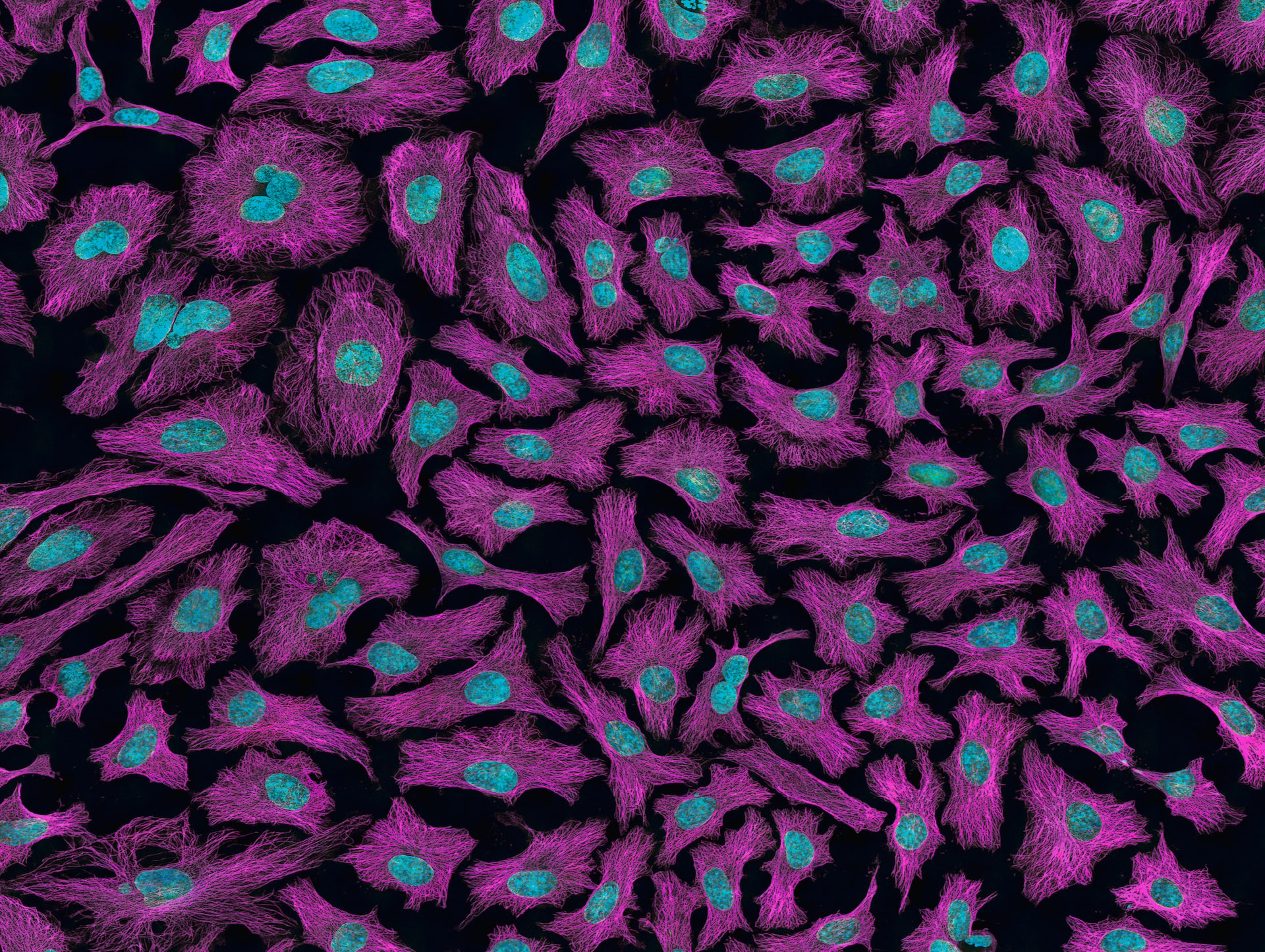
Featured photo (cells from cervical cancer) by National Cancer Institute on Unsplash.