

 Ben Hoban is a GP in Exeter.
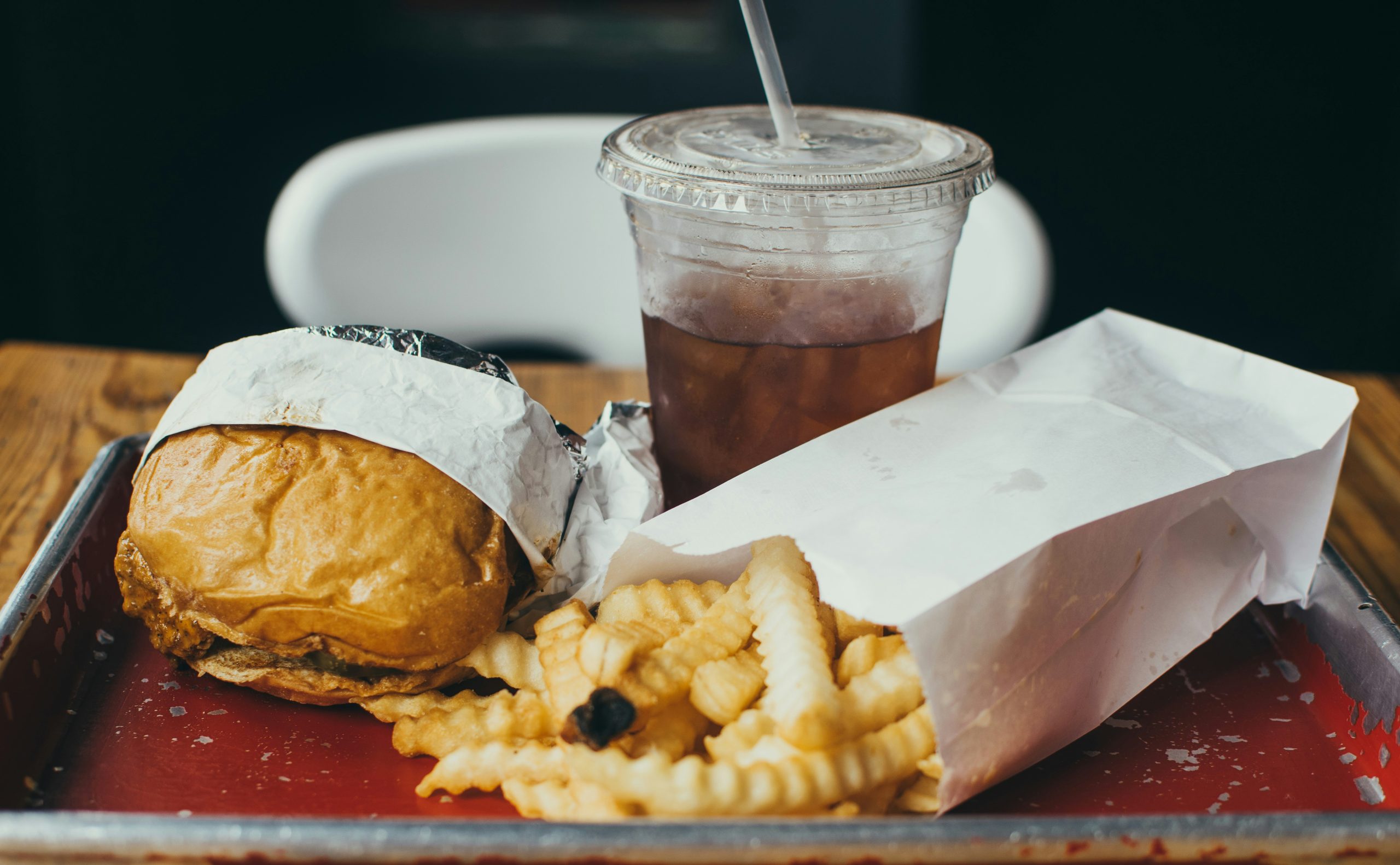
Very little happens quickly in the NHS, whether from the perspective of those providing services or using them. Of course, some things are worth waiting for, and anticipation is a sauce that improves many dishes, but the slow pace of public healthcare feels less like waiting for a perfect roast dinner to arrive at the table and more like queueing outside the only drive-through at the ferry-port before a long ride home. The difference is perhaps worth dwelling on: the main selling point of fast food is after all its availability, its capacity to meet our need for immediate alimentary gratification; fast food that is not fast is simply food, and some of it, barely that.
We talk about “delivering” care as if it were something anonymous packed into an insulated container on the back of an e-bike.
It requires no great feat of imagination to associate fast food with industrial manufacturing or to recognise it as a poor foundation for a healthy diet, whether we consider such late Victorian staples as condensed milk, margarine, and white bread or the ultra-processed foods of today. To someone who is starving, this may be unimportant: food is simply fuel, and the more calorie-dense, the better. Most of us live with a nutrient surplus rather than a deficit, though, and are motivated by more subtle and varied needs than bare survival. We cook and eat to fill our bellies, but also for flavour, variety, social interaction, purposeful activity, and to strengthen the links between people and place and between one generation and another.
Much of what is on offer in general practice certainly resembles fast food, even if it does not happen quickly. We talk about “delivering” care as if it were something anonymous packed into an insulated container on the back of an e-bike. We continually raise awareness of diseases in a way that leaves patients hungry for reassurance, and we fill them up with tests and referrals that regularly leave them bloated with activity but still unsatisfied and craving more. Fast healthcare can be every bit as life-saving as fast food, of course, although most of what we deal with as doctors is not immediately life-threatening, and patients consult us when they feel ill primarily to make sense of their experience and to know what to expect and what to do.1 Just as food should do more than prevent starvation, so medical practice must look beyond the prevention of death from cancer and heart disease. There is a danger that in pursuing this goal as intently as we do, we neglect the concerns of the people who come to see us, which are no less real and often more important to them as individuals. If it is possible to mistake food for love, we can certainly mistake medicine for care; we know that too much food is bad for us, but find it hard to admit that the same is true of medicine.
In recognising the perils of a poor diet, we naturally think of the solution in nutritional terms: more fresh fruit and veg, less processed food, and less that is high in fat, sugar, and salt. Reasonable though this is, it overlooks a much larger problem. The fact is that almost all of what we eat is produced and distributed using industrial methods that pollute the land, water, and air around us, leaving behind a sterile and degraded environment from which we will eventually struggle to feed ourselves at all. Whatever we eat, most of it is the product of intensive farming practices: the routine use of artificial fertilisers and herbicides, growth promoters and pesticides; the opening up of fields to make them accessible to machinery and the concentration of animals into cramped indoor spaces; and in everything, a focus on scale and efficiency. The industrialisation of food-production took place at a time when many in the UK survived on a diet so poor that it restricted their growth, their development, and their ability to carry out physical work, as well as leaving them vulnerable to opportunistic infections.2 It is perhaps difficult for us to appreciate. fully the benefits of our current arrangements because few of us have known anything different, and yet we must recognise also their cost and the need to look beyond them. If we want to eat well, we cannot think only of what is in our shopping trolley.
Industrial medicine operates on the basis of similar assumptions to industrial farming, viewing process and outcome as all-important but neglecting context. We now recognise that soil is not just the medium in which we grow our crops, but an entire ecosystem on whose health the fertility of our fields depends.3 In the same way, effective healthcare requires much more than the application of standard methods to simple problems: general practice in particular is largely about dealing flexibly with complex presentations and depends on healthy relationships, clear communication, trust, and goodwill. Within the health service as a whole, patients are simultaneously over-medicalised and under-helped, and within general practice, it is becoming harder to provide the kind of contextual care which might enable people to make sense of their experience for themselves instead of constantly frightening them into “getting it checked.” If we want good healthcare, we need to acknowledge the potential for harm in what we are currently doing and think more clearly about the benefits we hope to achieve.
…the problem with fast food and intensive farming is not that they are ineffective, but that they rely on methods which work well in the short term while eventually becoming self-defeating
In contrast to fast food, ‘Slow Food’ is an international movement dedicated to the enjoyment of good eating that is based on local, small-scale, sustainable business, connecting people, place, and heritage.4 Perhaps it is difficult to imagine this in practice: in a mobile and predominantly urban society, we can hardly expect to live year-round off the produce of an ancestral plot of land; for many of us, even cooking regularly for ourselves feels unrealistic. People can only eat what is readily available to them, and the majority of city-dwellers have historically had limited access to cooking facilities and depended on more expensive pre-prepared food from hot pie vendors and their successors, just as those living in the countryside have had to manage with what grew in season or could be stored or preserved. At the heart of the slow food movement, though, is an understanding that what we eat is significant for more reasons than its nutrient content, and in this sense, slow food is simply food that does what all food ought to; one group’s diet is not necessarily better than another’s. We might consider that in the UK local chicken shops, selling a calorie-dense and nutritionally unbalanced product, also function as social hubs, bringing their own context of people, place, and stories to a meal that we would otherwise disapprove of: maybe slow food does not need to be slow, just as fast food is not always fast.5
It is tempting to assume that the only limiting factors in healthcare are numeric: too many patients, too few doctors, and not enough time to do the job properly. From this perspective the idea of a slower kind of healthcare is necessarily unachievable, calling to mind private clinics offering hour-long appointments and personalised medicine over a cup of some exotic herbal infusion. We should bear in mind, though, that the problem with fast food and intensive farming is not that they are ineffective, but that they rely on methods which work well in the short term while eventually becoming self-defeating. Our healthcare system as it is currently configured is becoming both less effective and less sustainable for the same reasons: the underlying problem is one of design rather than numbers, with or without the herb tea. The requirement to prioritise access targets over other considerations, for example, leads not just to less effective care, but ultimately to worse access.6
Patients and doctors alike have become used to the taste of high-volume, low-value activity, but still find themselves hungry for something that is both more sustainable and more sustaining. Good medicine, like good food, is inherently satisfying because it does more than just keep us alive. If we can find slow food on sale in chicken shops, we shouldn’t despair of providing slower healthcare in general practice, although we should recognise too that our circumstances are becoming less conducive to it. Continuity of care, relational infrastructure, and neighbourhood health are all in danger of becoming trivialised, forgotten, or subverted in the current race to the bottom.7,8 General practice without them is no longer general practice. We must slow down; we certainly cannot keep going faster.
References
- Cecil Helman, Disease versus illness in general practice, Journal of the Royal College of General Practitioners, 1981, 31, 548-552
- Plenty & Want: A Social History of Food in England From 1815 to the Present Day (3rd edition), John Burnett, Routledge, 1989
- Six Inches of Soil: How to Heal Our Soils, Ourselves, and Our Communities through Regenerative Farming, edited by Molly Foster, Priya Kalia & Jeremy Toynbee, Unbreaking, 2024,
- www.slowfood.org.uk [accessed 28/9/26]
- Fola Olayeye, The good, the bad and the greasy: the enduring social value of chicken shops, Much Ado About Cities, July 3rd 2021 https://muchadoaboutcities.com/p/chickenshops [accessed 28/9/26]
- Steven Wyatt, The decline in care continuity is not inevitable, The Strategy Unit, www.strategyunitwm.nhs.uk/news/decline-care-continuity-not-inevitable [accessed 28/9/26]
- Francesca H Dakin, Ninna Meier, Emma Ladds, Sietse Wieringa, Joseph Wherton, Sarah Rybczynska-Bunt, Asli Kalin, Lucy Moore, Trisha Greenhalgh, Teamwork and relational infrastructure: a qualitative study of modern UK general practice, British Journal of General Practice 2026; 76 (767): e464-e478. DOI: 10.3399/BJGP.2025.0603
- Nina Hemmings & Luisa Pettigrew, The Neighbourhood Health Framework: enabling the ‘left shift’ or entrenching the ‘right drift’?, The Health Foundation, 21.4.26, www.health.org.uk/features-and-opinion/blogs/the-neighbourhood-health-framework-enabling-the-left-shift-or [accessed 28/9/26]
Featured Photo by Christopher Williams on Unsplash