


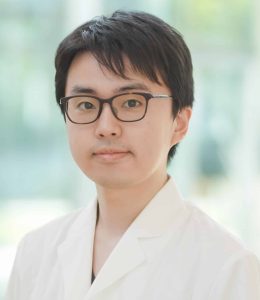
 Yuya Yokota is a GP and Assistant Professor in the Department of General Medicine at the Graduate School of Medicine, Dentistry and Pharmaceutical Sciences at Okayama University, Japan. He is on X: @Yokota_general
A GP’s practice often extends beyond biology, intersecting with the nuances of human experience. I frequently adopt a philosophical stance, questioning health, illness, and well-being’s foundations.
Encounters at the Outpatient Clinic: Where Medicine Meets Philosophy
In Japan, I practice family medicine as a GP in a university hospital outpatient department. A patient, a woman in her fifties, illustrates this intersection.* Her asymptomatic hyperkalemia journey highlights how suspending initial judgments – phenomenological epoché – leads to more beneficial patient care.1 This resonates with Havi Carel’s “Pathology as a phenomenological tool”, where illness catalyzes reflection.2
Applying Epoché: Shifting the Focus from Diagnosis to Well-being
This patient managed elevated potassium (low 5s mEq/L) for years under a local clinic. Despite investigations, the cause was elusive. Attributing it to diet, her previous physician imposed restrictions. For a year, she adhered diligently, yet her potassium remained elevated. Medication had only a partial effect. Without diagnosis, she was referred to our hospital.
“After all my diet sacrifices,” she said, “Why isn’t my potassium going down?”
Upon arrival, her frustration was palpable. “After all my diet sacrifices,” she said, “Why isn’t my potassium going down?” She mentioned a family history of elevated potassium. I acknowledged her efforts and reinvestigated, yet results were inconclusive. I considered the limitations of further investigations. While medically sound, finding a treatable cause seemed unlikely, and the patient burden significant.
Here, the philosophical dimension of family medicine, informed by phenomenology, became apparent. Drawing from Husserl’s epoché, I chose to suspend initial judgment and the medical imperative to diagnose and treat her hyperkalemia.1 Epoché involves bracketing assumptions for a fresh perspective. As Carel argues, illness can prompt reflection.2 Her frustration and my uncertainty created space for this.
Instead of solely focusing on etiology, I shifted attention to this patient’s well-being. This allowed proposing cessation of her restrictive diet. Initially apprehensive, she was reassured by the absence of symptoms or ECG changes, even with slightly elevated potassium. We agreed to monitor her levels as she reintroduced restricted foods.
A Dialogue on Health and Wholeness: GP as Philosopher
Subsequent appointments became collaborative exploration. As her diet expanded, her potassium remained consistently in the low 5s, without spikes. We discontinued medication. Our conversations shifted from lab values to her quality of life. I posed questions such as, “What does a good life look like for you?” and “What are your goals beyond lab reports?” This aligns with Carel’s “pathological phenomenology,” suggesting illness illuminates pathology and normal function.2 Her illness became a lens to explore her values.
Family medicine, by its very nature, often serves as a crucial counterpoint to the potential overreach of the purely biomedical model.
Gradually, her understanding of health evolved. She realized the pursuit of “normal” potassium impeded her enjoyment. The true goal was a healthy and fulfilling life, not just a lab value. Slightly elevated potassium, without adverse effects, became secondary. She returned to her previous diet, liberated from constraints. Her potassium remained stable, her ECG normal, and her well-being improved significantly. This resonates with Carel’s concept of “bodily doubt,” where illness challenges our trust [3], and this journey ultimately led to a re-establishment of trust in her body’s overall health.
This case compels questioning medicine’s objectives. Is it to normalize every deviation? Or facilitate patient health and happiness? Her elevated potassium likely represented a physiological idiosyncrasy, perhaps familial. Further investigation offered little benefit and potential burden. Her situation can be viewed as a “limit case”.2
Family medicine, by its very nature, often serves as a crucial counterpoint to the potential overreach of the purely biomedical model. It compels us to ask: Is this truly beneficial? Are we medicalizing aspects outside disease? Are we diminishing quality of life and autonomy in pursuit of numerical perfection? Reflecting on “what is health?” and “what constitutes a meaningful life?” are philosophical. GPs engage in this daily. Illness compels deeper reflection.2
This patient’s story underscores suspending initial judgments. Employing epoché shifted focus from a biomedical problem to her well-being. This reframing, facilitated by illness’s reflective nature, led to a more positive, patient-centered outcome. Medicine lies not just in diagnosis, but in listening, empathizing, and engaging in philosophical dialogue.
The GP, in this context, is not just a clinician, but a philosopher, guiding patients toward wholeness.
*Author’s note: Written informed consent was obtained from the patient for the publication of this anonymized case report.
References
- Husserl, E. (1960). Cartesian meditations: An introduction to phenomenology. Springer.
- Carel, H. (2021). Pathology as a phenomenological tool. Continental Philosophy Review, 54, 201-217.
- Carel, H. (2013). Bodily doubt. Journal of Consciousness Studies, 20(7-8), 178–197.
Featured image by Faye Cornish at Unsplash





Thank you for the thoughtful and insightful discussion. As a fellow clinician deeply committed to supporting patients in leading meaningful lives, I would like to respectfully offer the following three considerations in response.
First, the argument appears to derive philosophical justification from a single case that, fortunately, resulted in a favorable outcome. However, if an adverse event—such as an unplanned hospitalization—had occurred, one might question whether the patient could have genuinely accepted and remained satisfied with the decision within the same philosophical framework. When a choice grounded in meaning leads to serious or irreversible harm, it may become difficult for patients to maintain the view that their decision was ultimately appropriate.
Second, this question may apply even more acutely to the physician. Physicians bear the responsibility of anticipating potential risks and either supporting or tacitly endorsing the patient’s decisions. Even when patient consent is obtained, it is often the physician who must bear the emotional and ethical burden if an unfavorable outcome occurs—particularly when questioning whether an alternative course might have prevented harm.
Finally, the perspective of the patient’s family appears to be absent from the philosophical dialogue described (unless they were meaningfully included in the decision-making process, in which case this concern may not apply). If the philosophical framework underpinning the care plan is limited to the physician–patient dyad, it may be difficult for family members—especially in the event of an adverse outcome—to understand or accept the rationale. The potential consequences of excluding family voices from the broader context of shared decision-making deserve further attention in clinical practice and ethical discourse.