

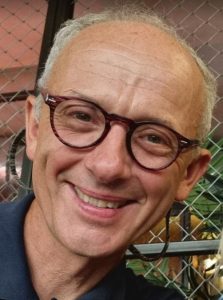
 Trevor Thompson is professor of primary care education at Bristol Medical School and a GP at Wellspring Surgery Bristol
There is a trend in medical education to give a wide berth to anything political. Medicine is an area of civic life that doesn’t take sides, which seeks to treat everyone equally regardless of creed or country. In particular, we are sensitive to the varying perspectives of our students coming, as they do, from such a diversity of backgrounds. I hold firmly to this ethic and also to a parallel truth that it is a moral wrong, for those of us who have a voice in the educational space, to ignore obvious injustice. This problem came acutely to the fore during the conflict in Gaza. I wonder what, if anything, our students might expect of us? Is it acceptable to say nothing and to keep one’s views, whatever they might be, carefully under wraps?
There is a trend in medical education to give a wide berth to anything political. Medicine is an area of civic life that doesn’t take sides…
I have form in this area. As a junior academic, I got a flea in my ear from my then professor for having a letter published in the Glasgow Herald about the 1998 Omagh bombing. This was a traumatising experience for everyone on the island of Ireland, and I couldn’t keep my trap shut, though I can see in hindsight, how my judgement was shaped by my Belfast childhood. I am also one of a few non-Jewish people I know who has been to Israel several times, and who is a fan of that sophisticated, urbane and thoughtful sector of Israeli society which seems to have been squeezed out in the last decade.
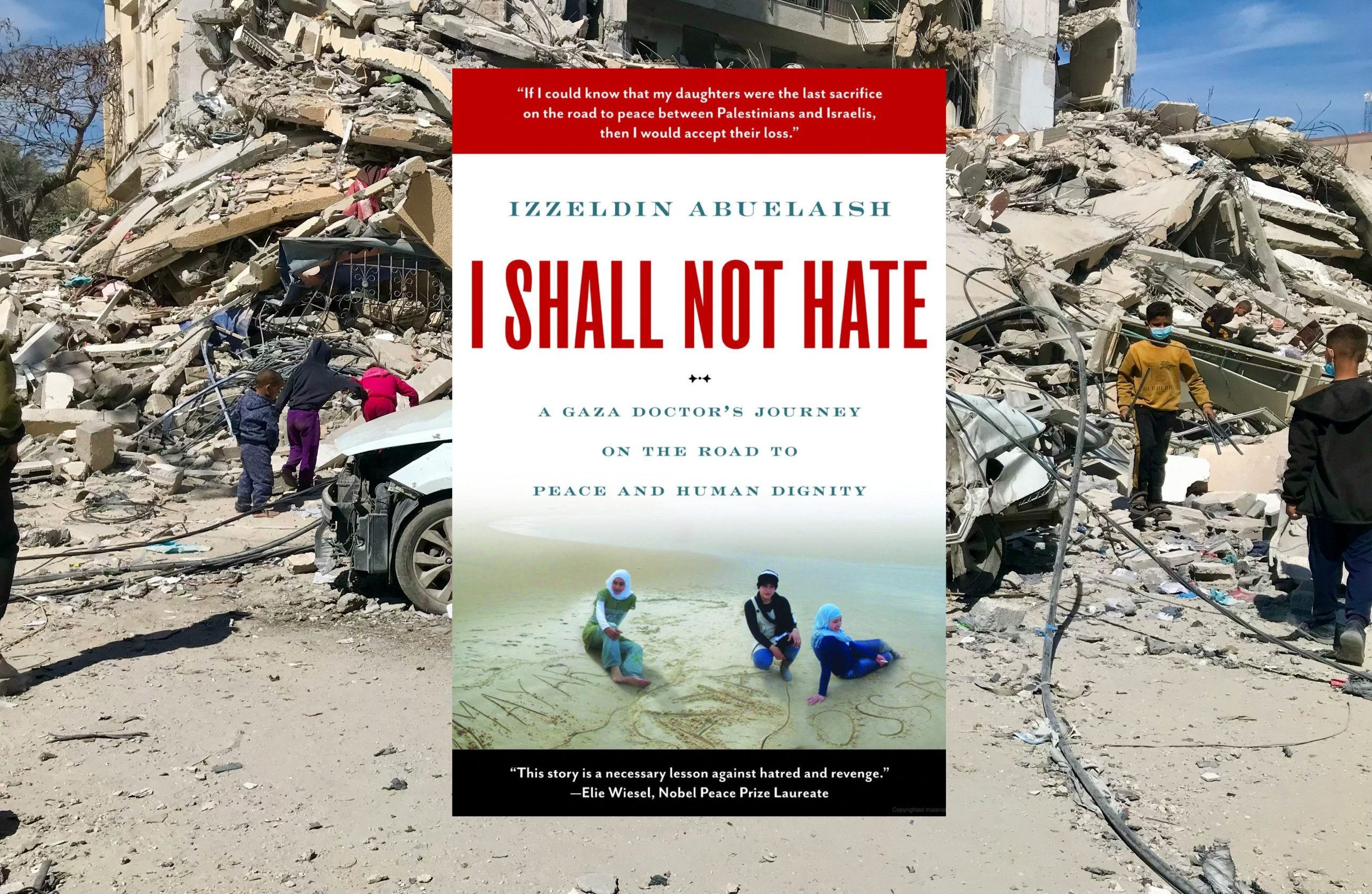
But what is to be said? In June, I found myself unexpectedly sharing a house in the Outer Hebrides with an officer of the British Army.** His was an interesting ear to bend on global affairs. When it was time to go, he pressed a book into my hand: I Shall Not Hate: A Gaza Doctor’s Journey on the Road to Peace and Human Dignity (2012) by the Palestinian obstetrician Izzeldin Abuelaish. I recall a spasm of vicarious grief on hearing, in 2009, that this doctor, who trained and worked in Israel, had seen three of his beloved children killed by a shell from an Israeli tank. Incredibly, he was on a live telephone call to an Israeli television station at the moment of the attack.
The book is an unflinching autobiographical backstory of growing up in poverty in Jabalia refugee camp, about six miles across the border from his family’s ancestral lands, at that time in the possession of Ariel Sharon. He would get up at 3am to earn money for his family and then go to school, with a precocious sense that education was his only ticket. Overcoming ridiculous obstacles, he managed to qualify in medicine in Cairo and many good Israeli doctors helped him pursue his specialist training in fertility medicine at Soroka Medical Centre, Beersheba.
He travelled weekly to Israel from Jabalia, across a frontier where arbitrariness and humiliation were standard issue. But though he faithfully relates his experience, what stands tall is his lack of bitterness, self-pity, or tribalised despair. Izzeldin Abuelaish is a powerful proponent of dialogue across the divide, described as “the only man left… in the Middle East… who refuses to hate”. Of hatred, he says, it is a “blindness and leads to irrational thinking and behaviour. It is a chronic, severe and destructive sickness”.
So back to the question of what to say about a situation like Gaza in the educational space. It is good to acknowledge that for some (perhaps many) students, and not just those with roots in the conflict, the situation is a constant aching concern. Within the acknowledgment of deeply wrong actions on both sides, the current power imbalance can be called out as a devastating injustice. Izzeldin responds to injustice without the usual passionate accusations, which serve only to deepen division. The hardest thing for us humans is to truly acknowledge that the other side has a story too.
This medical ethic is, according to Abuelaish, a powerful force for good, the “engine of peace” as he calls it.
He is a medical doctor who treated Israeli and Palestinian patients without distinction. This medical ethic is, according to Abuelaish, a powerful force for good, the “engine of peace” as he calls it. I think our presence as GPs, for instance in hard-pressed Deep End neighbourhoods is, in itself, a social good, over and above the treatments we provide. GP practices, and all the intelligent kindness they bring, give the message that society hasn’t completely given up on those who don’t have much. Abuelaish takes this non-judgementalism to the next level, an amazing medical role model in traumatic times. He remains active on the world stage as a campaigner for truth and reconciliation.
There are several medical schools in the West Bank, and two in Gaza, their buildings destroyed and key faculty killed. My university and practice colleague Professor Gene Feder (himself Jewish) is working in support of these institutions. Co-existence seems impossible to imagine given the wounds and the devastation. But then I couldn’t have imagined, in the dark days of The Troubles, that the Turas Project for the study of the Irish Language might now exist in the heart of Protestant East Belfast (Turas means journey or pilgrimage in Gaelic).
On a biographical note: I was raised through The Troubles in Northern Ireland, marrying across that sectarian divide. In my twenties I travelled regularly to Israel and count Jews amongst my closest friends. I have longstanding trusted relationships with many of the one third of our practice population of Muslim faith or heritage. Like all in my circle, I was sickened by the barbarous work of Hamas on 7 October 2023 and by the asymmetric destruction of Gaza by the Israeli military. In this article I focus on the peace-building work of one Palestinian doctor and honour too the long heritage of Jewish-Israeli peace writers and activists.
Featured book: Izzeldin Abullaish, I Shall Not Hate: A Gaza Doctor’s Journey on the Road to Peace and Human Dignity, Bloomsbury 2012, £8.99, 264pages, paperback
*Deputy editor’s note: you can read a statement from Gene Feder and colleagues here: https://bjgplife.com/israelpalestinewar/
**Deputy editor’s note: All personal acquaintances mentioned have given permission to the author for inclusion in this article and evidence of this has been provided to the editorial team.
Featured photo by Emad El Byed on Unsplash



[…] https://bjgplife.com/i-shall-not-hate-medical-responses-to-the-crisis-in-gaza/ [accessed 13/11/25] […]