

John Goldie is a retired GP and medical educator
A fundamental of the universe is the existence of networks of reciprocal information between physical states, such as photons reflecting off objects and hitting our retinas, providing us with information. Information exchange between systems enables them to survive, adapt and thrive.1
In general practice reciprocal information is central to consultations. The traditional medical model, based on positivism and realism, views objects as existing externally to the individual. They impose themselves on the individual’s consciousness. The GP/observer is detached from the patient/object. Determinism is assumed and events are considered explicable in terms of their antecedents. Patients are seen as responding mechanically to their environment. Knowledge is judged valuable when objective and tangible. The consultation is mostly a one-way process. While the positivistic approach has led to significant scientific advancements, it has been criticised for its mechanistic and reductionist view, excluding notions of choice, freedom, individuality, and moral responsibility. The complexity of human nature and social phenomena requires a different worldview, especially when considering psychosocial aspects of patient presentations.
GPs cannot be detached as they are situated in the world the patient inhabits.
This alternative worldview is nominalist, focusing on individuals and concrete experiences rather than abstract concepts or generalisations. It rejects the idea that human behaviour is governed by general laws. Knowledge is relational, and the social world is understood from the standpoint of individuals. Observers need a holistic viewpoint, using themselves to understand others and learn about themselves. Consultations become a two-way process with a subject-subject relationship. Patients are interconnected with their doctors who must share their frames of reference to understand their behaviour. GPs cannot be detached as they are situated in the world the patient inhabits. Their observations are filtered through various filters e.g., the limitation of our perceptions, influence of personality, drives, belief systems, current emotional state, and the influence of past experiences and socializations. These potential biases must be recognised.
Patients’ subjectivity includes their consciousness, agency, and ability to describe subjective experiences. They reflect on interactions and give meaning to objects through symbols like language. Patients’ theories about themselves and the world are context-dependent and negotiated during interactions. During consultation negotiations the potential power imbalance must be recognised and steps taken to avoid imposing our own definitions on patients. Within the consultation, meaning, understanding and even identity are not static or isolated phenomena, but are co-constructed and continually renegotiated through dialogue and shared experience. This exchange acknowledges the autonomy and complexity of both participants, where each bring their own narratives, biases and interpretations and where new understandings can emerge not by imposition, but through genuine engagement. Society consists of interacting individuals exchanging information leading to change in both individuals and society. The GP and patient are complex nodes in such rich webs of reciprocal information.
The interaction is no longer about extraction or the one-sided gathering of facts, but about fostering shared understanding -a tapestry woven together from many threads of memory, belief, context, and hope.
By acknowledging the complexity and multiplicity of viewpoints, we avoid the trap of reductionism and instead invite the richness of human experience into the clinical encounter. The interaction is no longer about extraction or the one-sided gathering of facts, but about fostering shared understanding -a tapestry woven together from many threads of memory, belief, context, and hope. This is not an easy path; It demands active listening, patience, and a willingness to dwell in uncertainty. It requires that we honour the patient`s meaning-making while also remaining aware of our own interpretive lenses. Within this process healing becomes not just the alleviation of symptoms, but a collaborative project to restore coherence, agency, and possibility in the face of suffering and ambiguity.
These ideas are not new. Democritus, described by Seneca as “…the most subtle of the ancients,” wrote about them 2500 years ago.2 He proposed that people’s nature is defined by their network of personal, familial, and social interactions, not their internal structure. As humans, we are “…that which others know of us, that which we know of ourselves, and that which others know about our knowledge.”3,4 My experience, both in practice and as a patient, shows that this awareness is applied inconsistently. The positivistic worldview still predominates due to factors like medical socialization in hospitals, time pressures, an ageing population, and the rise in multiple morbidities. It may take many more years for this awareness to be fully acted upon.
References
- Rovelli C. Reality is not what it seems: The journey to quantum gravity. First American Edition. New York. Riverhead Books, Penguin Random House LLC. 2017.
- Seneca, Naturales questiones, VII, 3, 2d.
- Cicero, Academica priora, II, 23, 73.
- Taylor CCW. SY Luria. Democritus: Texts. Translation. Investigations. Nauka Publishers. Leningrad. 1970.
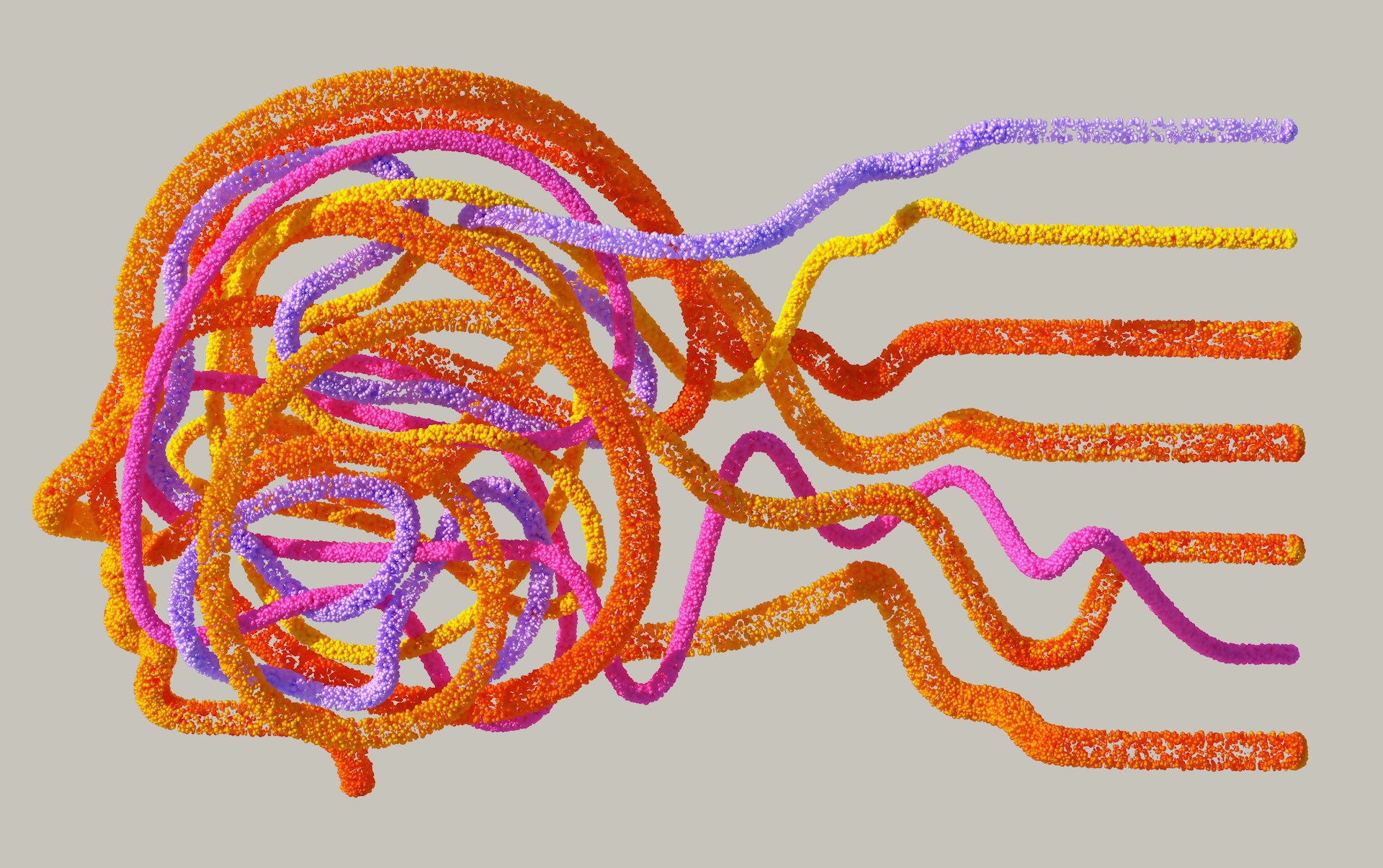
Featured photo by Google DeepMind on Unsplash.