


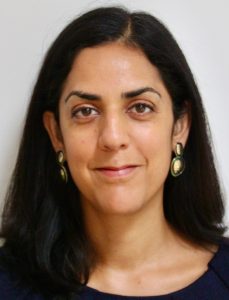
 Nada Khan is an Exeter-based GP and an NIHR Academic Clinical Lecturer in General Practice at the University of Exeter. She is also an Associate Editor at the BJGP.
Goodwill has long been part of the NHS vocabulary.
We talk about it as if it were a warm, binding force that keeps the system together. How often have you heard that the NHS runs on goodwill? It’s a comforting myth about the kindness, dedication and moral duty of NHS staff. But in today’s NHS, particularly in general practice, goodwill has become a euphemism for something far less benign – a workforce increasingly carrying the burden of a chronically strained and under-resourced system through unpaid and under-recognised work. Maybe it’s time to reframe ‘goodwill’ as what it is, the unpaid and extra labour that is increasingly the norm rather than the exception.
The reality of unpaid work
In general practice, ‘goodwill’ has become an operational necessity for the extra hours GPs and their teams put in beyond contracted time to keep the service running.
Joe Hutchinson and colleagues published a paper here in the BJGP in 2024 which showed that GPs are working more time per session alongside an increase in work intensity from 2010 to 2021.1 This research mirrors findings from the British Medical Association Sessional GP Committee survey which suggests that salaried GPs are doing 25% more work than their contracted hours each week.1 As the number of hours worked per ‘session’ increases, the sessional payment model drives down the effective hourly rate, which is a worrying trend against a backdrop of real-terms pay erosion.1,2
…goodwill has become a euphemism for something far less benign – a workforce increasingly carrying the burden of a chronically strained and under-resourced system through unpaid and under-recognised work.
And appointment metrics alone are not an accurate reflection of the work being done in general practice. Much of general practice workload lies in the so-called hidden work of indirect patient care which includes reviewing results, actioning correspondence, writing referral letters, sending tasks and following up on patient contacts with the increasing multi-disciplinary team. This activity is absent from NHS workload estimates.3
The hidden hours
Because it’s not measured, a lot of this ‘goodwill’ comes down to non-patient facing work that is not counted in appointment metrics alone. The 2021 GP Worklife Survey suggested that around 40% of GP time is spent on activities other than face-to-face consultations, activities like administrative tasks, reviewing results and correspondence, clinical meetings, managing practice processes.4 An ethnographic study suggested the figure may be closer to 20%, but both sources show that non-patient-facing work is now a core and growing component of contemporary general practice.5 This administrative workload is particularly acute in the context of rising clinical complexity. One consultation might generate multiple onward actions including advice and guidance requests, safeguarding discussions, medication queries, or an intricate referral letter requiring careful synthesis of years of medical history to construct a coherent narrative to get that referral accepted. Each of these tasks takes time and remains under recognised, under remunerated, or captured in performance indicators. When this work spills outside scheduled hours, it is labelled as goodwill, but in reality is unpaid labour made invisible by omission.
Workload, burnout, and retention: the human cost
Overextending without compensation or boundaries is taking a toll on the general practice workforce. Workload, and especially when job demand exceeds defined limits, has a consistent relationship with burnout.6 I’ve written here in the BJGP before about the GP retention ‘crisis’, and high GP workload is a major contributor to stress, burnout, and retention challenges. The volume and intensity of workload is a major factor for GPs thinking about leaving their patient-facing role or reducing clinical hours.7
Long working hours have implications for patient safety as well. Research from the University of Manchester linked GP burnout and long working hours to higher than expected prescribing of antibiotics and strong opioids, suggesting that GP stressors and wellbeing can influence prescribing choices.8 A system built on ‘goodwill’, or that unpaid and unbounded extra work, compromises both clinician wellbeing and the conditions needed for safe and consistent patient care.
Naming it
Why do we still talk about goodwill as a driver for the work we do? Goodwill is a softer, more palatable framing than ‘unpaid extra labour’. But the language matters, because it shapes how we make sense of policy, reform, and resource allocation. Describing the extra work as goodwill does two things. Firstly, it masks the scale of the work. If we don’t acknowledge, or understand how much ‘hidden’ and unpaid work is going on, it becomes invisible in funding and planning decisions. Secondly, talking about goodwill normalises unsustainable practice. When chronic overwork is framed as a professional virtue, it becomes harder to call for meaningful structural changes that the system actually needs.
A clearer picture demands a clearer language
We need to name our time at work not as goodwill alone. We should name it for what it is: a system that depends on unpaid labour to function, and a service that expects more from its workforce than it formally acknowledges or funds. I know that there are many who see medicine as a vocational calling, but consistently needing the above and beyond is not sustainable.
When chronic overwork is framed as a professional virtue, it becomes harder to call for meaningful structural changes that the system actually needs.
We need to realistically recognise, measure and report the work that happens outside of contracted hours. This means counting the clinical administration, coordination and supervision that form the backbone of modern general practice. There are initiatives, like the next Primary Academic Collaborative (PACT) ‘Hidden Workload Study’ which aims to look at all tasks conducted during a GP’s normal workday to shine a light on what we actually do in a working day.3 Workforce planning needs to account for this work explicitly, rather than relying on funded sessions that bear little resemblance to the real shape of the working day.1
The final ‘extra’ mile
Framing general practice work as ‘going the extra mile’ in the spirit of goodwill obscures the reality of a workforce stretched between the demands of patient care and the limited time available to meet them. GPs are routinely working beyond what they are paid for, with consequences for workforce wellbeing, retention, and the safety and quality of patient care. Naming goodwill for what it is as unpaid and unrecognised work is a necessary step toward clearer recognition of GP workload and ensuring this work is properly acknowledged and accounted for in planning.
References
- Hutchinson J, Gibson J, Kontopantelis E, Checkland K, Spooner S, Parisi R, et al. Trends in full-time working in general practice: a repeated cross-sectional study. Br J Gen Pract. 2024;74(747):e652-e8.
- BMA evidence submission to the DDRB 2025/26 pay round. British Medical Association 2024.
- Woolford SJ, Watson J, Reeve J, Harris T. The real work of general practice: understanding our hidden workload. Br J Gen Pract. 2024;74(742):196-7.
- Odebiyi BW, B.; Gibson, J.; Sutton, M.; Spooner, S.; Checkland, K. Eleventh National GP Worklife Survey 2021. Policy Research Unit in Commissioning and the Healthcare System.
- Sinnott C, Moxey JM, Marjanovic S, Leach B, Hocking L, Ball S, et al. Identifying how GPs spend their time and the obstacles they face: a mixed-methods study. Br J Gen Pract. 2022;72(715):e148-e60.
- Latham HA, Maclaren AS, De Kock JH, Locock L, Murchie P, Skea Z. Exploring rural Scottish GPs’ migration decisions: a secondary qualitative analysis considering burnout. Br J Gen Pract. 2025;75(752):e187-e94.
- Owen K, Hopkins T, Shortland T, Dale J. GP retention in the UK: a worsening crisis. Findings from a cross-sectional survey. BMJ Open. 2019;9(2):e026048.
- Hodkinson A, Zghebi SS, Kontopantelis E, Grigoroglou C, Ashcroft DM, Hann M, et al. Association of strong opioids and antibiotics prescribing with GP burnout: a retrospective cross-sectional study. Br J Gen Pract. 2023;73(733):e634-e43.