

 Terry Kemple is a retired GP, Bristol; has various roles promoting greater sustainability in general practice, including as Director for the Royal College of General Practitioners (RCGP) Green Impact for Health Toolkit; and is past President of the RCGP.
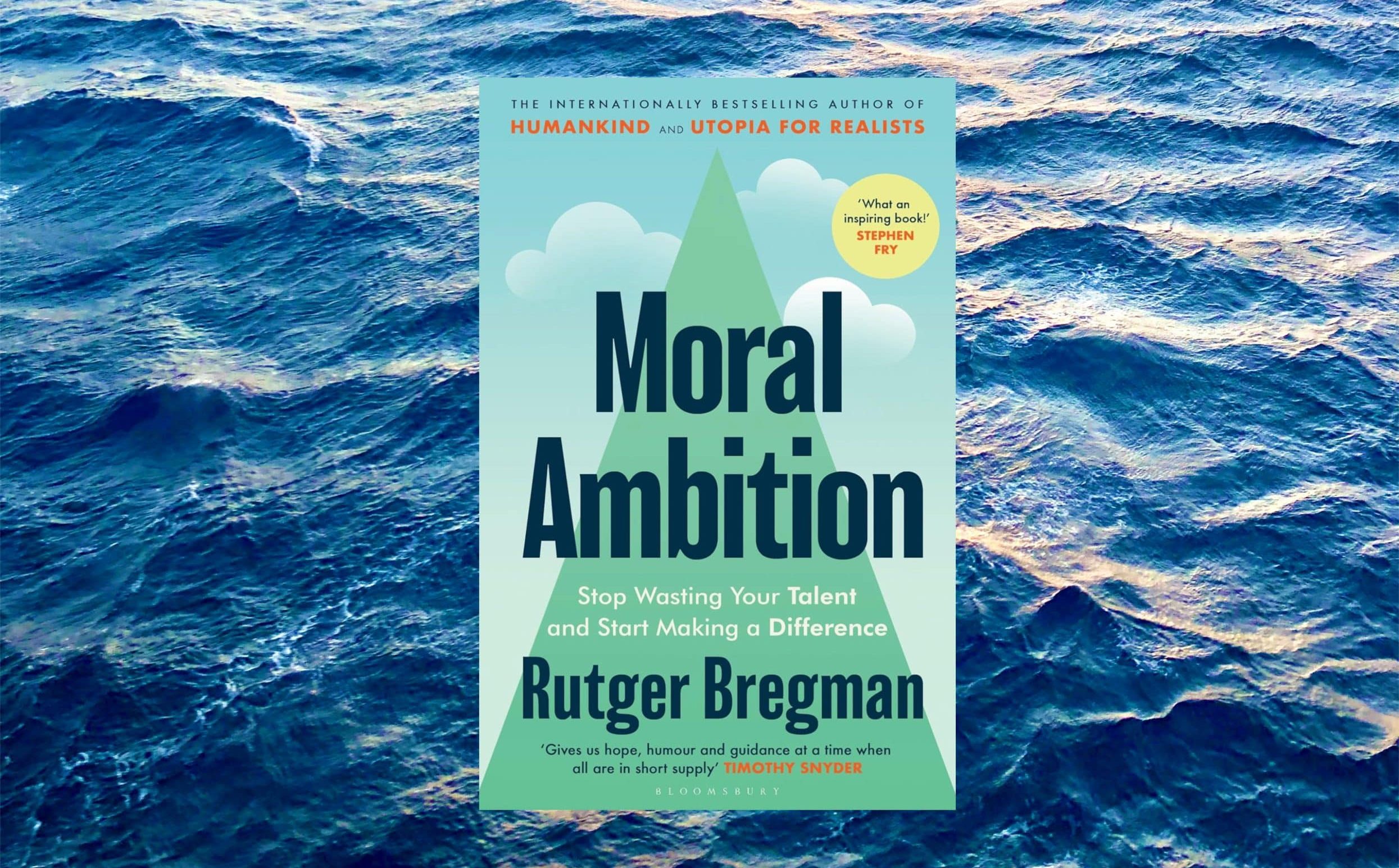
If we enjoy comfortable lives in a world full of peril and pain, it is easy to think, “It’s too hard to know how to help,” and then do nothing. Rutger Bregman argues we should use our talents to find at least one meaningful way to make a difference.
Bregman is a Dutch journalist, historian, and author who writes about history, economics, and how society can be improved. He is the 2025 BBC Reith Lecturer. He feels it’s important to fulfil our moral ambitions – the desire to make the world a better place through our actions.
Moral ambition does not mean trying to be perfect. This book is meant as a practical guide for anyone who wants to be more effective in making a difference.
Bregman believes that future generations will judge us the same way that we judge past generations. We condemn them for accepting past evils like slavery. The future will condemn us for today’s moral failures.
Moral ambition does not mean trying to be perfect. This book is meant as a practical guide for anyone who wants to be more effective in making a difference. It combines idealism with realism, referencing real-life stories, research, and data. It encourages action in ways that are both hopeful and sensible.
Do we chase the wrong goals in life? Bregman quotes Allen Raine: ‘Many people climb the ladder of success only to discover at the top that the ladder was leaning against the wrong wall’.
Talented people can feel trapped in boring or unfulfilling careers. Bregman offers moral ambition as the antidote – to devote time and skills to one of the big problems of our time. You have one life, and limited time. One of your most important moral choices is how you choose to spend your time.
He quotes David Slack: “Many of us think that if we had lived in the past, we would have stood up against injustice. But you are alive now. What you do today shows what you truly would have done back then’.
You may prefer accept the status quo, and be content as you are or you can assess where you are in life and whether you want to change. You should be driven not by guilt but by the desire to live a more meaningful life. You do not do good things because you are a good person. You become a good person by doing good things. Everyone has their own tipping point that pushes them into action.
Only a small group of people—the “zeros”—need no encouragement to act. They start movements on their own. Most of us, are “ones” and “twos.” Once the zeros begin, they inspire the ones, and the ones inspire the twos. To get involved we usually need someone to ask us. This is how movements spread. Bregman encourages people to expose themselves to change, take the first step, and then invite others to join them.
He also challenges myths about how social change works. First, ‘awareness’ of a problem is not enough. What matters is not just what you believe, but what you are willing to do. Second, ‘good intentions’ do not guarantee good results – it’s the outcome of our actions that must be marked. Third, the ‘right reasons’ are not always what wins public support. Sometimes moral reframing is needed. For example, the British anti-slavery movement gained wider backing when activists pointed out that 20% of slave-ship crews died on voyages. The sailors’ lives were seen as less “valuable” than their cargo of enslaved people. Fourth, insisting on the ‘purity’ of the cause can be a trap. All successful movements include people who disagree on many things. Fifth, idealists often believe that ‘everything must change’ – either we get the perfect world or risk total disaster, but real change is gradual and imperfect. Finally, ‘time and history’ do not create justice. People do. If fairness exists, it will only exist because we create it.
The most effective teams usually include four types of people: the idealism of an activist, the drive of an entrepreneur, the careful thinking of a scientist, and the humility of a monk.
Bregman tells stories about the people who made a real difference through their moral ambition. He stresses that teamwork is essential. The most effective teams usually include four types of people: the idealism of an activist, the drive of an entrepreneur, the careful thinking of a scientist, and the humility of a monk.
Finally, Bregman offers six signs that help us recognize today’s moral wrongs that future generations may condemn. These signs are: we have known for a long time that something is wrong; we say, “that’s just how it is”; we avoid uncomfortable facts; we mock or dismiss critics; we struggle to justify the practice to our children; and we suspect that future generations will see it as barbaric.
The world has no shortage of serious problems. The real question is: what are you going to do about it? Perhaps the first step is simply to start thinking differently—and to begin.
Featured Book: Bregman R,
Featured Photo by Olivier Piquer on Unsplash






[…] historian, and author who was the 2025 BBC Reith Lecturer. We aired Terry Kemple’s review of Moral Ambition (the book) yesterday.1 Kemple writes, “The world has no shortage of serious problems. The […]