

 Terry Kemple is a retired GP, Bristol; has various roles promoting greater sustainability in general practice, including as Director for the Royal College of General Practitioners (RCGP) Green Impact for Health Toolkit; and is past President of the RCGP.
It’s a struggle to reconcile what we do with those inner thoughts that we should be doing more and doing it better. Those inner thoughts, our moral sense or conscience of right and wrong, guide our behaviour, and should make us reflect to learn what really matters to us.
It’s a struggle to reconcile what we do with those inner thoughts that we should be doing more and doing it better.
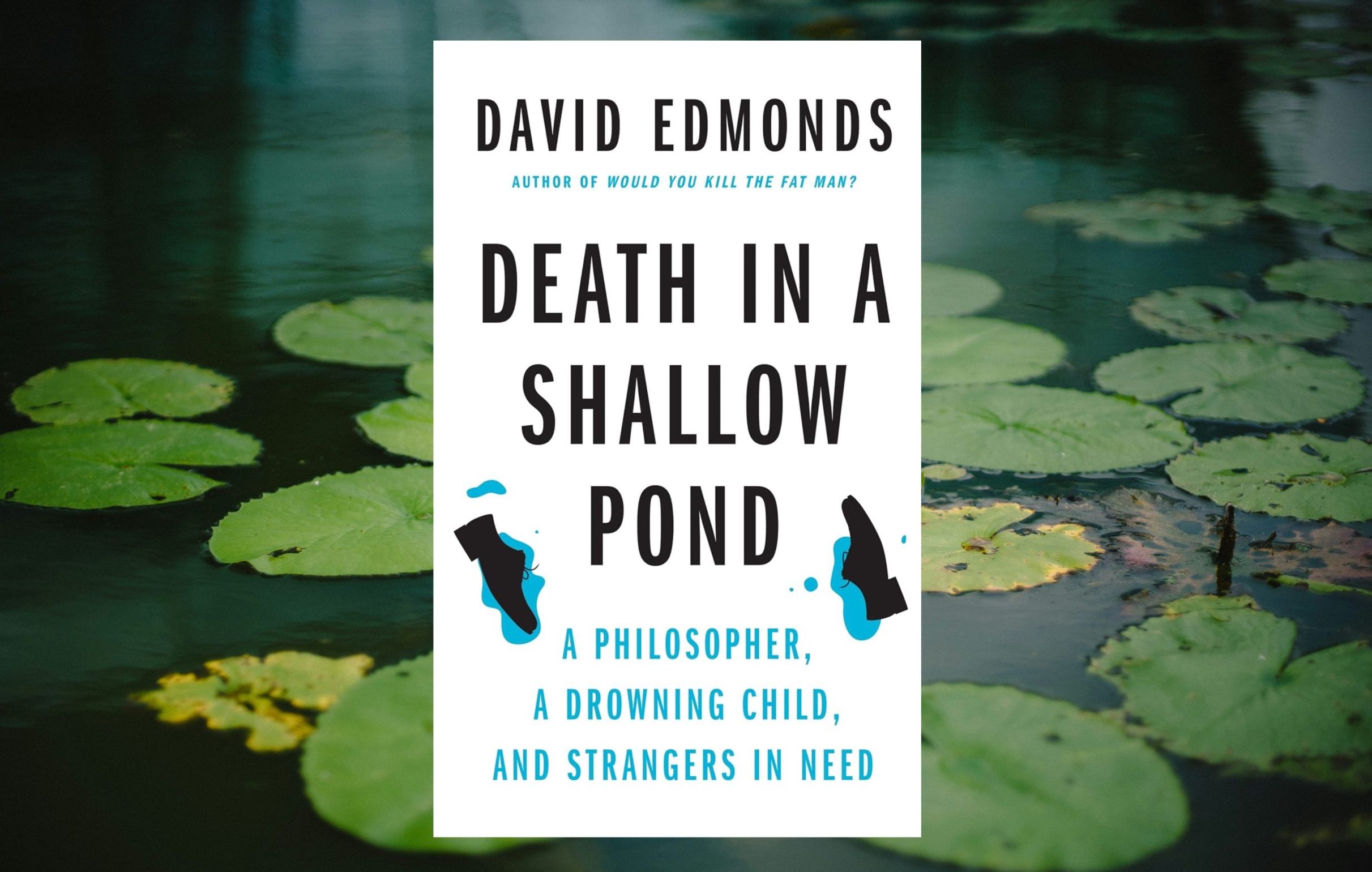
Peter Singer’s 1972 book ‘Famine, Affluence and Morality’ includes the drowning child moral argument and call to action. It asks us to imagine walking past a shallow pond where a child is drowning. Most people would immediately help, even if it meant getting wet or ruining their clothes. Singer’s question is: if we would do that for a nearby child, why don’t we do the same for people in distant countries who need our help just as badly? We could easily provide some aid to save a life or lives. By our inaction are we doing the equivalent of walking past the shallow pond with a drowning child every day? Decades later reconciling this dilemma triggered the ‘effective altruism’ movement.
David Edmonds’ 288-page explainer is informative and thoughtful story telling. He reflects on this classic thought experiment about morality to discover the thinking of philosophers and their critics but also considers many (but not all) the psychological, economic and sociological perspectives for taking or not taking action.
The first half of the book tells the story of how the Shallow Pond thought experiment arose, and its impact. The second half is more focused on the rational and irrational objections to it.
Karl Marx wrote that “The philosophers have only interpreted the world, in various ways; the point however is to change it’. Peter Singer did seek to change the world. He is often described as the world’s most influential moral philosopher. The first chapters follow Singer’s life story from Australia to England and the USA charting his thoughts, those of his contemporaries and show how his ideas evolved alongside world events from the 1970s to today. Along the way Edmonds picks up the origin stories of Quality adjusted Life Years (QALYs) in 1974, building Effective Altruism and Give Well in 2006. Using evidence and reason to figure out how to best help others and match charitable donations with the most effective value for money interventions combines the head and the heart. The background of the main protagonists and the main tools are described along the way. The ‘earning to give’ idea was popularised by ‘Giving what we can’ (2009), ‘80,000 hours’ (2011) and ‘The Centre for Effective Altruism’ (2012). These organisations promote donations like the 10% pledge, and also the idea that philanthropically minded individuals can do more good by working in a high-income career and donating a percentage of their large income each year rather than working directly for a charity.
Edmonds also examines why Effective Altruism attracts both support and criticism. The critiques of effective altruism are full of analogies and references trying to understand the general theory underlying our thinking about these moral issues. Many critics question whether its logic oversimplifies morality or ignores human emotion and context. He looks at why effective altruists sometimes face hostility, and why their approach can seem cold or demanding.
The book ends with an update on Singer’s later work and continuing influence.
The simplest reflection is to ask yourself three questions: What? So What? What now?
There may be some perspectives not discussed in Edmonds’ exposition of the shallow pond argument, that help explain why effective altruism has not changed the world yet. There seems to be little discussion about how the risks of inaction dictate our behaviour. For example, we could become excluded from our social networks if it became known or suspected that we did not rescue the drowning child. There is no similar risk if we fail to address suffering elsewhere. Humans are social animals. This evolutionary advantage has made us the controlling species on the planet. Our brains are hardwired (our nature) to promote group working. In addition we have had rules like versions of the Golden rule (the principle that we should treat others as they would like to be treated ourselves) added in our development (our nurture) to guide our behaviour. We need our supportive network of humans (our family, our community, our tribe etc) to thrive. Another flaw is that individuals may feel they are already making substantial contributions that benefit others both in the UK and abroad. The typical wage-earner in the UK is already committed to pledge >30% of their gross income via direct and indirect tax. The UK currently spends about 0.58% of our Gross National Income (GNI) on official development assistance (foreign aid) but plans to reduce this to 0.3% by 2027.
There is no simple answer to the moral question posed about how you should live your life, but you can become better informed when you make your decisions. The simplest reflection is to ask yourself three questions: What? So What? What now?
Edmonds reflects that the fundamental ethical question is that the Shallow Pond asks for more than almost all of us are prepared to deliver. It therefore poses a challenge. Are we psychologically equipped to embrace an obligation that few of us currently acknowledge?
Featured book: David Edmonds, Death in a Shallow Pond: A Philosopher, a Drowning Child, and Strangers in Need, Princeton University Press, 2025, ISBN 978-0-691-25402-9. Hardback, £20
Featured Photo by bady abbas on Unsplash