
Richard Armitage is a GP, DPhil student at the University of Oxford, Biosecurity Researcher, Honorary Clinical Assistant Professor, and Associate Editor at the Journal of Evaluation in Clinical Practice.
Given the incidence of acute sinusitis in primary care, it’s unsurprising that other presentations are sometimes mistaken for it. But the consequences of one example of such misdiagnosis in the US were both surprising and enormous not only for the patient, but also for public health and even health security.
On 20 September 2014, a man in his 40s arrived in the US from Liberia. Five days later he presented to an emergency department in Dallas County, Texas, with a fever, headache, and abdominal pain. He was thought to have acute sinusitis and discharged. On 28 September he returned to the hospital by ambulance with ongoing symptoms and new onset diarrhoea. Two days later he tested positive for Ebola virus and died shortly afterward. Two nurses who had cared for him were subsequently diagnosed with Ebola but thankfully survived. The episode marks the first cases of Ebola diagnosed in the US, and the first cases of human-to-human transmission of Ebola in the country.1,2
“While a HCID will remain an unlikely diagnosis in any individual surgery … we would all do well to keep the possibility in mind.”
The UK Health Security Agency (UKHSA) recognises particular pathogens as ‘high-consequence infectious diseases’ (HCIDs). These are acute infections with a high case-fatality rate, that may have no effective treatments, and/or that require enhanced public health responses to manage them effectively.3 HCIDs either spread via direct contact with an infected patient or their fluids — such as Ebola virus — or via respiratory droplets or aerosol transmission — such as pneumonic plague.3
The US example of a HCID being misdiagnosed as a far more common and benign illness highlights the importance of frontline health professionals — such as NHS GPs — being able to recognise the syndromes of HCIDs when they present. Misdiagnosis of such an illness in primary care would cause the patient to return to the community where they will almost certainly expose others, likely causing secondary cases and substantial consequences for public health and even national security.
The importance of these recognition skills is reflected in the UK Biological Security Strategy, which identifies the clinicians, veterinarians, and scientists who report the first signs of an outbreak as the frontline of national detection.4 It is further acknowledged in the Strategy’s recent implementation report, which highlights frontline clinicians who notify such diseases as part of the layered approach to the detection of biological threats.5 And, of course, The Health Protection (Notification) Regulations 2010 place a statutory duty on registered medical practitioners to notify suspected cases of particular diseases, some of which are HCIDs and others being agents of bioterrorism, including anthrax, botulism, plague, smallpox, and viral haemorrhagic fever.
Perhaps surprisingly, therefore, the ability of frontline clinicians to recognise the syndromes caused by such agents has not been explicitly examined in the UK. This is also largely the case globally. The most robust assessment to date is the work of Cosgrove and colleagues, who in 2003 and 2004 presented physicians in the US with clinical vignettes describing patients with anthrax, botulism, plague, smallpox, or clinically overlapping common conditions. Correct diagnoses of the bioterrorism agents were reached in 46.8% of cases on average, rising to 79.0% after completion of a didactic module.6 To my knowledge, no comparable study has since been published in the US, and none has been undertaken whatsoever in the UK. Similarly, teaching of this material appears equally limited. A survey of UK and Irish medical schools in 2012 found that only 17.7% included specific instruction on biological weapons and bioterrorism.7 No comparable assessment of medical school curricula appears to have been published since.
This is even more concerning in light of the inherent difficulty of detecting HCIDs from their syndromes alone,3 particularly in the early stages when their presentations largely overlap with those of far more common and benign illnesses. There are, however, simple steps that can be taken by GPs to reduce the chance of missing them:
• Take a travel history that covers the previous 21 days in any patient with a fever, and recording it where the next clinician will see it. While this is routine clinical practice it is nonetheless commonly overlooked.
• Familiarise yourself with the case definitions of HCIDs and with the UKHSA’s viral haemorrhagic fever risk assessment algorithm.8 This takes little time and counts towards continuing professional development hours.
• And, where suspicion does arise, remember that a priority is to limit further exposure and to seek advice from the local health protection team before discharging or referring the patient.
While a HCID will remain an unlikely diagnosis in any individual surgery, it is increasingly likely to appear somewhere, and we would all do well to keep the possibility in mind.
References
1. Upadhyay DK, Sittig DF, Singh H. Ebola US patient zero: lessons on misdiagnosis and effective use of electronic health records. Diagnosis (Berl) 2014; 1(4): 283–287.
2. Chevalier MS, Chung W, Smith J, et al. Ebola virus disease cluster in the United States–Dallas County, Texas, 2014. MMWR Morb Mortal Wkly Rep 2014; 63(46): 1087–1088.
3. UK Health Security Agency. High consequence infectious diseases (HCID). 2026. https://www.gov.uk/guidance/high-consequence-infectious-diseases-hcid (accessed 3 Sep 2026).
4. Cabinet Office. UK Biological Security Strategy. 2023. https://assets.publishing.service.gov.uk/media/64c0ded51e10bf000e17ceba/UK_Biological_Security_Strategy.pdf (accessed 3 Sep 2026).
5. Cabinet Office. UK Biological Security Strategy: Implementation Report, July 2025 – July 2026. 2026. https://www.gov.uk/government/publications/uk-biological-security-strategy-implementation-report-july-2025-july-2026/uk-biological-security-strategy-implementation-report-july-2025-july-2026 (accessed 3 Sep 2026).
6. Cosgrove SE, Perl TM, Song X, Sisson SD. Ability of physicians to diagnose and manage illness due to category A bioterrorism agents. Arch Intern Med 2005; 165(17): 2002–2006.
7. Green ST, Cladi L, Morris P, Forde D. Undergraduate teaching on biological weapons and bioterrorism at medical schools in the UK and the Republic of Ireland: results of a cross-sectional study. BMJ Open 2013; 3(6): e002744.
8. UK Health Security Agency. Viral haemorrhagic fevers risk assessment. 2024. https://assets.publishing.service.gov.uk/media/695e899311989e7ef067195e/vhf-risk-assessment-algorithm-october-2024-updated-january-2026.pdf (accessed 3 Sep 2026).
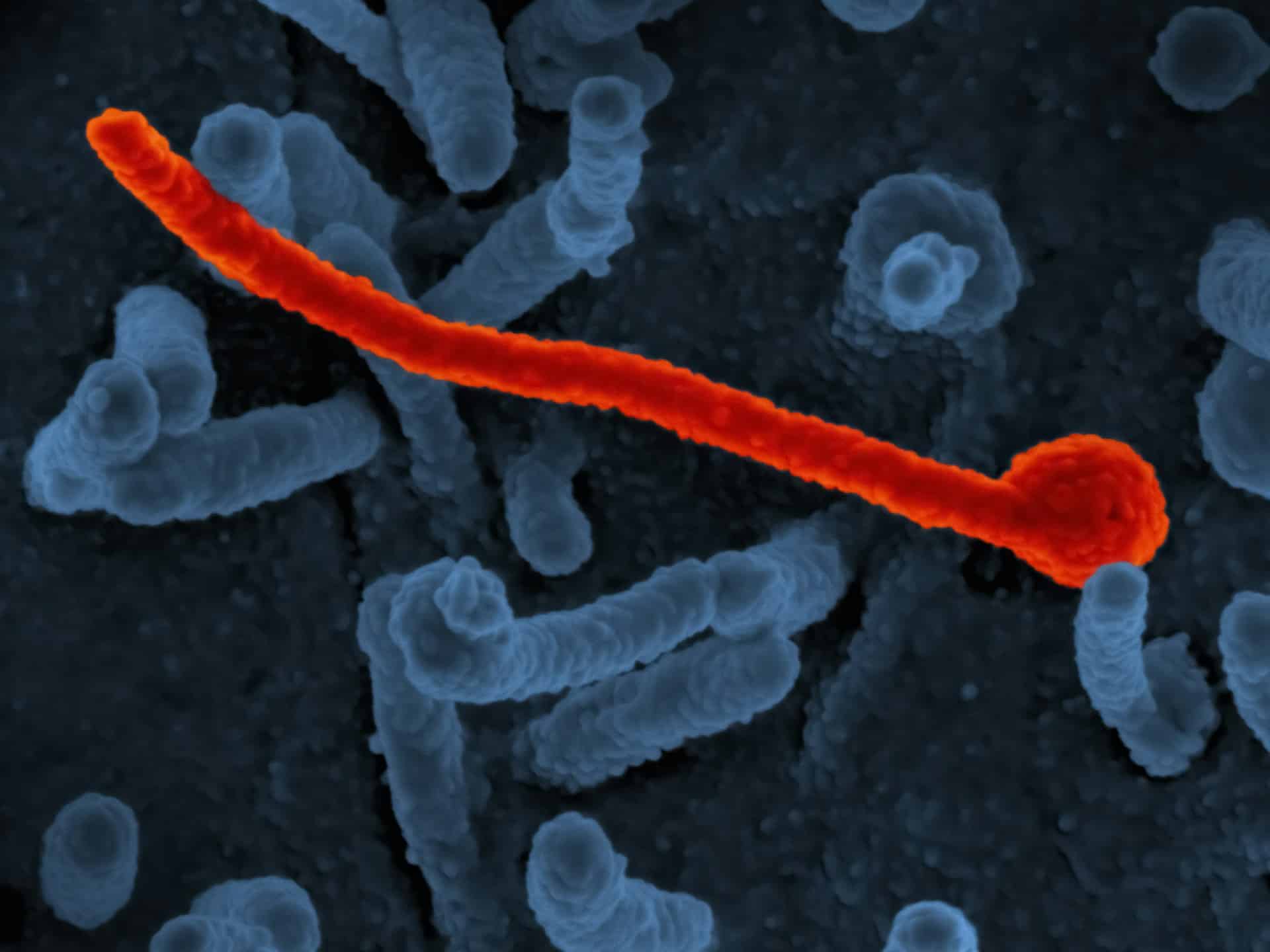
Featured photo by National Institute of Allergy and Infectious Diseases on Unsplash.