

Annabelle Rose Machin is a GP, RCGP curriculum editor, SCA examiner, and former WiseGP fellow, with a passion for Greek history and travel.
An odyssey has become part of our everyday language, meaning a long, eventful journey. In Homer’s epic, Odysseus encounters numerous trials and temptations on his personal odyssey that shape him as a person. Not just a blockbuster adventure, his odyssey involves an exploration of human trauma, resilience, and survival.
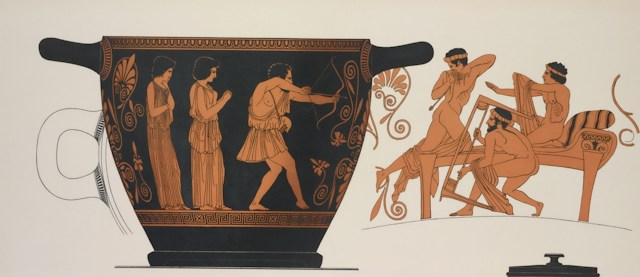
Odysseus leaves Troy carrying the emotional scars of war. On his journey home, he escapes cannibals, his crew are drugged, and he’s cast adrift by deadly storms. At times his arrogance costs lives and he’s plagued by guilt while held captive by Calypso. After 20 years he finally reaches home to find his palace in decay. Outside, his loyal dog, Argos, greets him with his last breath. Shrouding his grief and anger, wily Odysseus calls on his remaining allies to help him reclaim his world.
Myths such as the Odyssey not only provide entertaining stories, but they also provide tools to think with. We can draw parallels from many steps of Odysseus’s journey to modern life experiences. For instance, there are the dangers of hubris and the importance of evaluating a situation before rushing to act. Nolan’s adaptation particularly emphasises how compassion for others is a foundation for society.
“Myths such as the Odyssey not only provide entertaining stories, but they also provide tools to think with. We can draw parallels from many steps of Odysseus’s journey to modern life experiences.”
Odysseus’s story of perseverance over adversity is inspirational. As a human, he makes mistakes — but he proves you don’t have to be a superhero to win out in the end. His experiences re-shape his identity, as he abandons his pride, utilises patience with cunning, and, above all, comes to appreciate the importance of his family and home.
Some days at work feel like an odyssey! Persevering through complex cases, battling through abnormal lab results, and trying to admit a patient to hospital when no one is answering the phone! In our daily practice, overconfidence can be dangerous — we have to recognise the limits of our understanding, utilise time, and question diagnoses. Our past consulting experiences may shape our approach and suggested management plan, while the past experiences of our patients, in life and in the consulting room,1 will also shape their identity and illness experience.
So many of our patients present with physical symptoms layered over past traumas. The war veteran (Odysseus), the adolescent with a hostile home environment (Telemachus), and the victim of sexual violence (Circe). For us to truly understand patients presenting with complex symptoms, we must first understand their journey, so we can support them in their life beyond. For instance, trauma-informed practice is a care approach that shifts the question from ‘What is wrong with this person?’ to ‘What happened to this person?’
“Rather than having an emphasis on diagnosis, medical care should aim to create a tailored understanding of a patient’s illness-in-context, to help understand whether they are ill due to stress or trauma, or whether they have a disease with a biomedical explanation.”
Rather than having an emphasis on diagnosis, medical care should aim to create a tailored understanding of a patient’s illness-in-context, to help understand whether they are ill due to stress or trauma, or whether they have a disease with a biomedical explanation. If GPs and patients work to build this understanding together it can help to ensure patients get the right tailored management and avoid the burdens of over-medicalised care.2
Life is a never-ending odyssey. An adventure we all embark on, searching for meaning, belonging, and new experiences. In my everyday practice, I find the greatest meaning through understanding patients’ stories to tailor care and support them on their illness journeys. It’s a challenge to find the time and headspace for this, but, like Odysseus, GPs are creative problem-solvers. As triage means we face more complexity, flexible appointment lengths and continuity could help us to support today’s Circe, Telemachus, and Odysseus, as we encounter them on their modern-day odysseys.
References
1. Kato K. Correct, but not reassuring. Br J Gen Pract 2026; 10.3399/bjgp26X746193
2. Reeve J. Medical generalism, now! Reclaiming the knowledge work of modern practice. Boca Raton, FL: CRC Press, 2023.
Featured photo by the New York Public Library on Unsplash.