
 Kathrina Crystallis is a London-based GP with expertise in food systems, nutrition, and prevention, taking a whole-systems approach to human health. She is on LinkedIN.
Obesity is one of the most significant public health challenges facing the UK and as GPs we spend much of our working day caring for people with obesity and diet related diseases.
We often discuss prevention or offer advice on a healthy lifestyle. We may advise patients to eat more vegetables, reduce foods high in fat, salt, and sugar (HFSS), become more active, or lose weight. These conversations are well intentioned, yet they can leave patients feeling that success depends entirely on making better choices and having more willpower.
The House of Commons Health and Social Care Committee’s report, Food and Weight Management: Fixing the Food Environment, offers a different starting point. It states that obesity is not simply the result of insufficient willpower, but is shaped by the environment in which people live and make decisions.1 The report describes this as an obesogenic environment: surroundings that promote the consumption of less healthy food and make healthier behaviours more difficult.
Should this make us reflect on the advice we give our patients. Should we do more than tell patients what constitutes a healthy diet and help them understand and navigate the environment influencing their choices?
… patients [are left feeling] that success depends entirely on making better choices and having more willpower …
The patient who already knows what to do
Many patients do not need another explanation of the benefits of fruit, vegetables, fibre, or physical activity. They may already know that takeaway meals, sugary drinks, and frequent snacks can be harmful to their health.
The challenge is putting that knowledge into practice.
Consider a patient finishing a long shift. They are tired, hungry, and short of time. Their route home passes several takeaway outlets, a delivery app sends a discount notification, and the supermarket displays promoted snacks. Their eventual purchase may look like a personal choice, but it was made within a carefully constructed environment.
Research suggests that greater exposure to takeaway outlets around the home, workplace, and commuting route is associated with greater takeaway consumption and increased body weight.2 Advertising also influences food preferences, purchasing, and consumption, particularly among children.3
Acknowledging this does not remove personal agency. It gives us a more realistic basis for supporting change and supporting our patients.
Their eventual purchase may look like a personal choice, but it was made within a carefully constructed environment.
Environmental literacy
Perhaps part of preventative care should include what might be called environmental literacy: helping patients recognise how their surroundings influence their decisions.
A patient-centred conversation could explore when and where healthy choices become hardest. Is it after work? During the school run? While shopping when hungry or as a response to bargain deals? When food-delivery notifications arrive in the evening?
This may identify one or two practical changes chosen by the patient: disabling app notifications, carrying a planned snack, avoiding shopping when very hungry, or unplanned instore bargain purchases. Where feasible, someone might choose a different route home that passes fewer takeaway outlets, or a parent might alter the walk from school to avoid a row of sweet shops.
Is a discount always a bargain?
The Committee’s report highlights the role of supermarket promotions. Following government restrictions on volume promotions such as ‘buy one, get one free’, there has been a shift towards direct price reductions on HFSS foods. Between March 2024 and November 2025, the proportion of HFSS price-reduction promotions increased from 43% to 48%.1
For the most deprived households, meeting healthy-diet recommendations may require an unrealistic proportion of disposable income.
For someone managing a limited household budget, a bright discount label understandably attracts attention. We should not blame patients for responding to price. However, we might encourage a moment of reflection:
‘Was this something you planned to buy, or did the promotion persuade you? Is it healthy for your family, or simply cheaper than it was before?’
This advice must be offered carefully. Healthier food remains less affordable for many households. The report states that healthier foods cost more than twice as much per calorie, on average, as less healthy foods.1 For the most deprived households, meeting healthy-diet recommendations may require an unrealistic proportion of disposable income.
Patients are competing with powerful messaging
The scale of advertising matters. Total UK advertising expenditure reached £46.7 billion in 2025. £196 million promoted products such as sweets, chocolate, and crisps. Only £19 million was spent advertising fruit and vegetables.1
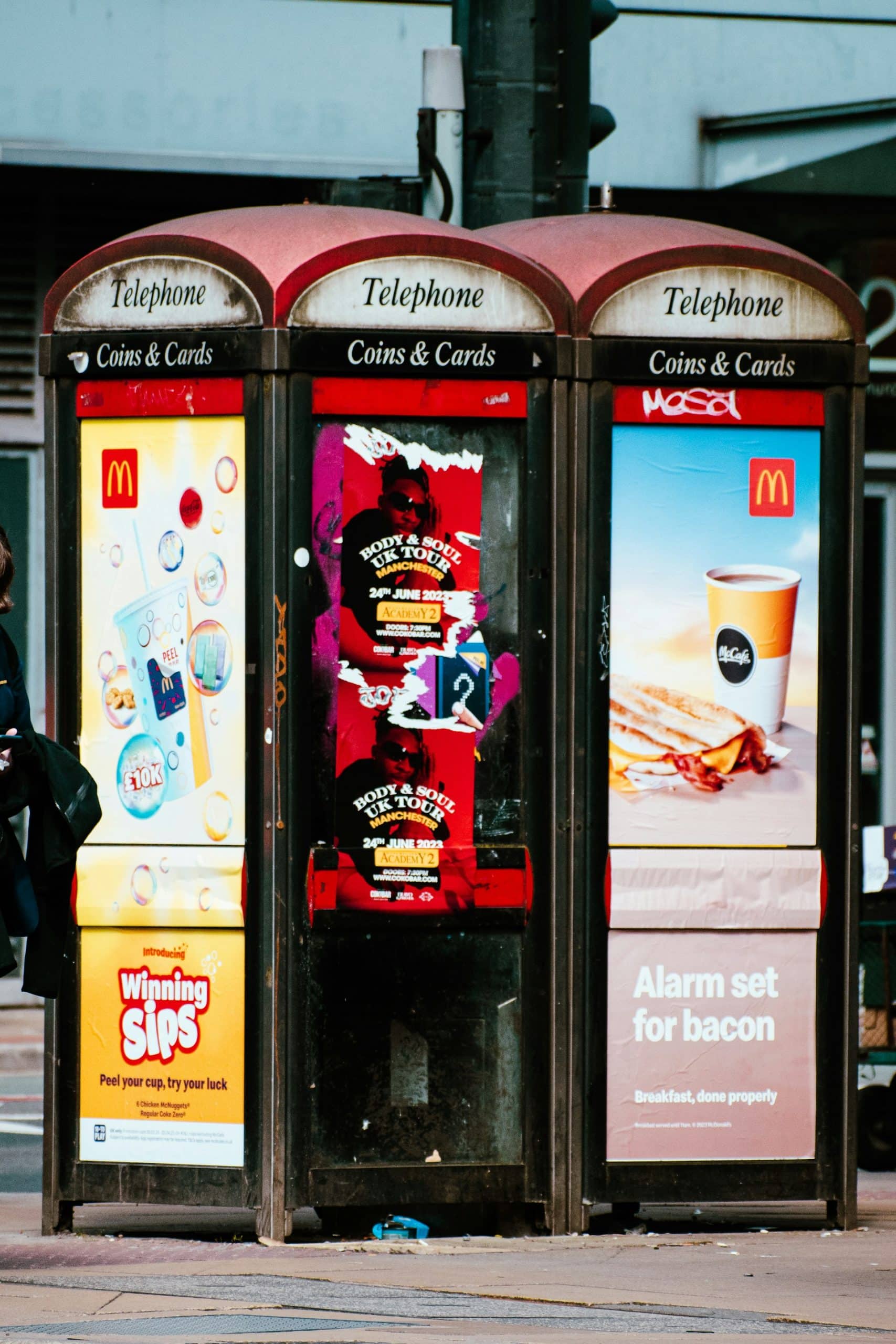
Outdoor advertising is also disproportionately concentrated in deprived communities. The Committee heard that four out of five outdoor billboard adverts in England were located in deprived areas.1
There is a danger that advising patients on how to navigate the obesogenic environment simply transfers responsibility back onto them.
Patients may believe that cravings arise spontaneously. Sometimes it may help simply to name the repeated prompts: the billboard, app notification, television advert, sports sponsorship, supermarket placement, or branded packaging. Being influenced by these messages is not evidence of weakness. Influencing behaviour is their purpose.
Awareness must not replace structural action
There is a danger that advising patients on how to navigate the obesogenic environment simply transfers responsibility back onto them. Government permits the environment, industry designs it, and the patient is then expected to become skilled enough to resist it.
That must not be our conclusion.
GPs should also advocate for healthier high streets, affordable nutritious food, clearer mandatory labelling, restrictions on unhealthy food advertising, and retail environments that make healthier choices easier rather than harder.
Obesity prevention cannot take place solely within a 10-minute consultation. Wider action on the commercial and social determinants of health is essential.4,5,6
Yet, while patients continue to live within the current obesogenic environment, perhaps we can give them one additional tool: an understanding of this environment and how to start to navigate it. That may be a more honest, compassionate, and useful form of obesity prevention.
References
1. UK Parliament Health and Social Care Committee. Food and Weight Management: Fixing the Food Environment. Third Report of Session 2026–27. UK Parliament, 2026. https://publications.parliament.uk/pa/cm5902/cmselect/cmhealth/223/report.html (accessed 27 Oct 2026).
2. Burgoine T, Forouhi NG, Griffin SJ, et al. Associations between exposure to takeaway food outlets, takeaway food consumption, and body weight in Cambridgeshire, UK: population based, cross sectional study. BMJ 2014; 348: g1464. doi:10.1136/bmj.g1464
3. Boyland EJ, Nolan S, Kelly B, et al. Advertising as a cue to consume: a systematic review and meta-analysis of the effects of acute exposure to unhealthy food and nonalcoholic beverage advertising on intake in children and adults. Am J Clin Nutr 2016; 103(2): 519–533. doi:10.3945/ajcn.115.120022
4. Swinburn BA, Sacks G, Hall KD, et al. The global obesity pandemic: shaped by global drivers and local environments. Lancet 2011; 378(9793): 804–814. doi:10.1016/S0140-6736(11)60813-1
5. Rutter H, Bes-Rastrollo M, de Henauw S, et al. Balancing upstream and downstream measures to tackle the obesity epidemic: a position statement from the European association for the study of obesity. Obes Facts 2017; 10(1): 61–63. doi:10.1159/000455960
6. World Health Organization. Obesity and overweight. Geneva: WHO, 2026. https://www.who.int/news-room/fact-sheets/detail/obesity-and-overweight (accessed 27 Oct 2026).
Featured photo by Felix Fischer on Unsplash