

Dr Beatrice Lyons is a GP in the United Arab Emirates
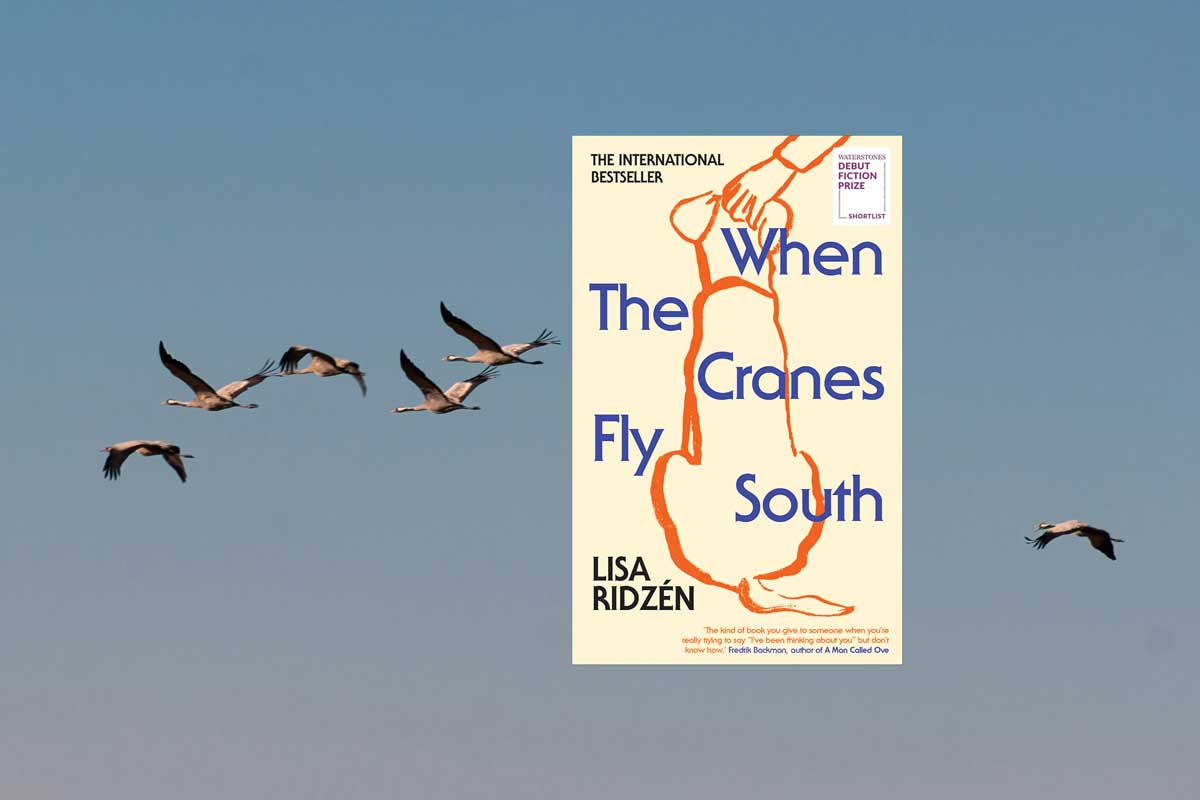
When The Cranes Fly South by Lisa Ridzen beautifully describes the value of everyday life of someone nearing the end of life and of the people who surround him. This international bestseller from Sweden, artfully translated into English by Alice Menzies, is inspired by the log entries of the carers looking after the author’s grandfather.
“Bo is about to say something but … by the time he has cleared his throat … the door has shut, the carers have left and the opportunity to be heard has been lost.”
Bo is a frail 89-year-old retired sawmill worker living in rural Sweden. His wife, Fredrika, has moved to a nursing home due to her late stage dementia. He is visited daily by various carers, some of whom naturally bond with Bo. The reader learns about Bo’s life through his daydreams from his rickety daybed, which he shares with his beloved elkhound named Sixten. Throughout the novel, Bo struggles to retain his independence, while his son Hans coordinates his father’s care in what he believes to be Bo’s best interest; notably, replacing Bo’s old daybed with an enormous hospital bed and, much to Bo’s chagrin, working at re-homing the dog.
“The book describes how time warps with age … time is now measured by the passing of the cranes each autumn.”
The style of writing is simple, which matches Bo’s life story (grew up working class, left education at the age of 16 years, marries a local girl, and works as a manual labourer, never travelling far) but the imagery is rich; Bo finds pleasure in dreaming of his wife creating bouquets of coltsfoot, harebell, and clover and in eating meals of fish balls, slow-cooked elk meat, and lingonberry jam. The book is slow paced, capturing the rhythm of Bo’s daily routine, seen from both the carers’ perspective (their brief handover notes) and Bo’s, who no longer worries about timings and sticking to routines (often refusing his showers). The book describes how time warps with age; there are instances in which Bo is about to say something but his body cannot keep up and by the time he has cleared his throat or steadied himself onto his feet the door has shut, the carers have left and the opportunity to be heard has been lost. For Bo, time is now measured by the passing of the cranes each autumn.
“This book should be on every GP, social worker, community nurse, palliative team member and geriatrician reading list …”
This book should be on every GP, social worker, community nurse, palliative team member, and geriatrician reading list to help understand the difference between task-oriented medicine and person-centred care and the dilemmas of patient autonomy versus patient safety. The book also touches on the different family members and the roles they play in caring for each other and how the balance shifts throughout life. It describes how men can find it difficult to accept. When Hans and Bo go to visit Fredrika in her nursing home, Bo wants to protect Hans and make him feel alright, but he can no longer play the role of protective father; ‘I glance over at our son, who briefly holds my gaze, but I don’t speak. There is something sad about him, and just want to make everything OK’, but he is fastened in a wheelchair and lost for words. Later on when Hans tells Bo that he can no longer care for the dog and that he is going to have the dog re-housed, Bo realises that ‘it’s his will against mine. That he’s the one who gets to decide. I don’t know when it happened, but we’ve switched roles’.
“This book will remind clinicians of the importance of listening and the value of everyday life stories.”
This book also beautifully illustrates how listening is not a soft side activity. This is not a new concept, the 1940s philosopher Simone Weil quote stating that ‘Attention is the rarest and purest form of generosity’ still holds true.1 Often as clinicians we might feel disempowered to help, but on various occasions throughout the story active listening provides enormous solace. When Bo, in desperation, phones his best friend Ture and says: ‘I’ll kill myself if they take Sixten away’, his friend calmly replies: ‘Those are strong words, Bo’, the friends have a gentle chat, there are silences, and Ture says: ‘I don’t want you to do that. I don’t want that to happen’ and by the end of the conversation Bo can ‘still feel the clawing sensation in my chest, but the weight does seem to have lifted a little’. In contrast, when Bo reminisces about his father with whom he had a terrible relationship, one of the problems was that his father never listened to him; ‘I would have liked to tell him about my work at the sawmill (…) but he doesn’t ask’ and Bo knows that even if he told him, the father would not be listening. David Augsburger, known for his influential work in pastoral care, says it all when he said ‘being heard is so close to being loved that for the average person, they are almost indistinguishable’.2
This book will remind clinicians of the importance of listening and the value of everyday life stories.
References
1. Weil S, Bousquet J, Correspondance, L’Âge d’Homme, 1982, p. 18
Featured book: Lisa Ridzen, When The Cranes Fly South, Penguin, 2026, Pbk, 320pp, £9.99, 978-0830708369
Featured image by Mohamed Fsili on Unsplash.