
 Aneez Esmail is Professor (Emeritus) of General Practice at the University of Manchester. He is on BlueSky: @aneezesmail.bsky.social
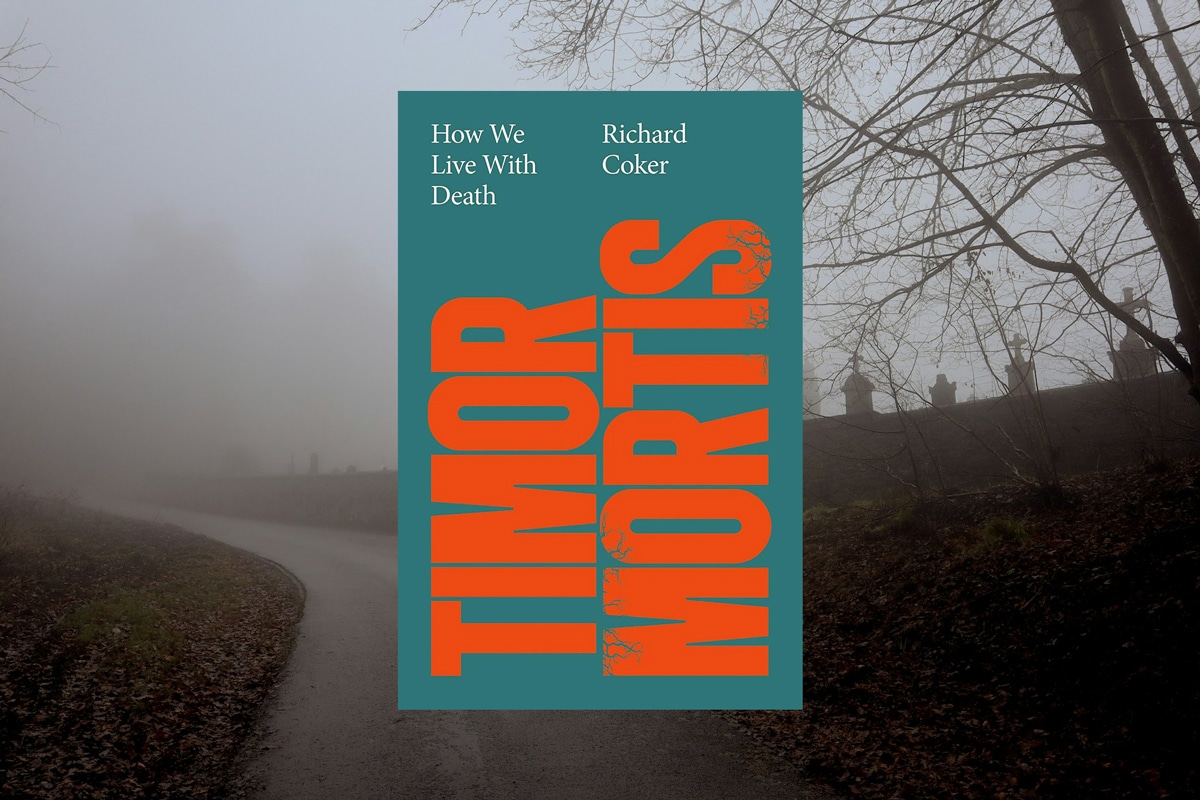
The Times article about an NHS doctor who claimed to have shortened quite a few patients’ lives caught my eye.1 Framed around assisted dying, the article pointed out that Richard Coker, the doctor in question, was risking legal action by talking frankly about assisted dying. He talked about how he made a decision on his own, to end the life of a patient who was suffering intolerably because he was terminally ill with pulmonary fibrosis. The story was recounted in a book that he had just written, Timor Mortis: How We Live with Death. I personally am in favour of assisted dying and am a director of the organisation Dignity in Dying, which campaigns for a change in the law. However, I am wary of doctors who admit to hastening someone’s death because it clouds the issue and detracts from the key points around why we are campaigning for a change in the law. What was also intriguing was that I knew Richard — we were colleagues on a Harkness Fellowship programme in 1997 and spent a year together in the US. I went on to pursue a career as an academic GP and spent 6 years as the medical adviser to the Shipman Inquiry. In his book, Coker asserts that it was the legislative response to the murders that Harold Shipman committed (Shipman was found to have killed at least 215 of his patients) that negatively changed doctors’ attitudes towards looking after dying patients. On that I would absolutely agree with him.
“… a very thoughtful and readable book with a blend of memoir, personal encounters with patients, philosophy, and social critique.”
However, this book is not about assisted dying. The book’s title is taken from a 15th-century poem whose final line ‘Timor mortis conturbat me’ means ‘the fear of death disturbs me’. For Coker, the book’s genesis starts off as an extended essay to his two sons as a means of trying to explain what he thinks and does but also as a book that he wishes he had read as a medical student. It developed into a very thoughtful and readable book with a blend of memoir, personal encounters with patients, philosophy, and social critique. Coker’s early work as a physician was as at St. Mary’s Hospital in London, where he encountered numerous patients who were dying of AIDS. It was this clinical experience that made him begin questioning his attitude to death and dying, and explore many of the ideas in his book. But it is not just his interactions with patients that this book explores. He talks movingly about his father’s death and the impact it had on him and his mother. Some of the most moving chapters in the book are when he talks about grief and legacy, even describing how he would like to be remembered.
Coker is at times scathing about the medical profession in its inability to critically assess its contribution to the care of the sick and the old. It is definitely the case that in this day and age, we obsess more about National Institute for Health and Care Excellence guidelines and the Quality and Outcomes Framework then we do about death and dying. He devotes an entire chapter to a critique of the wellness industry that sells the fiction of everlasting health. The breadth of what he covers is quite staggering for what is actually not a very long book. He even talks about the tangled relationship between sex and death and the role of the medical profession in capital punishment in some jurisdictions. It’s a testament to his skills as a writer who has read widely and has thought deeply about what can be a very morbid topic. His references to literature, philosophy, and contemporary authors allows the reader to contextualise the topic of death and dying beyond the narrow confines of how doctors often think about dying — that is, the benefit of a book rather than short articles and research that often discuss this topic in medical journals.
“… I never explored my feelings in depth, and it is only after reading the book that I was able to find a framework for doing this.”
Most of us as doctors will have witnessed and been close to patients who are dying. We would have thought about death, and sometimes even about our own mortality. I have, for example, always considered looking after dying patients as one of my most important roles as a GP. But even as an individual who was confronted by his own father’s death when 13 years of age, I never explored my feelings in depth, and it is only after reading the book that I was able to find a framework for doing this. I was reminded about a short vox pop in the British Medical Journal many years ago, which asked doctors how they would like to die. One of the responses, which made me smile, was something along the lines of ‘Lung cancer, because there is an inevitability about its progress that gives you time to plan your own death. The pain can also be controlled effectively with morphine. Find a good GP and tattoo DNR on your chest.’
Even those of us who have truly lived will die, and it behoves us to think more about dying and death. I wish I had read a book like this as I was embarking on my medical career. As a GP registrar I thought little about death, and while I tried to teach my own registrars to think more about looking after dying patients, I could only reference Atul Gawande’s Being Mortal as guide. What Coker has written should provide every medical student and doctor embarking on their career with a wonderfully thoughtful and highly prescient insight into how to live with death and why its so important. As he says in his last paragraph, drawing on his 40 years of experience, ‘we should think about death every day — not to overcome our fear of it, but so that our fear brings greater fulfilment to our brief time on Earth. We need to retain a smidgeon of fear, of anxious anticipation of death. This anxiety brings texture, definition, beauty and meaning to our lives …’
Featured book: Richard Coker, Timor Mortis: How we Live with Death, New Modern Arcade, 2026, HB, 336pp, £20.00, 978-1917923699
Featured photo by Call Me Fred on Unsplash.