
Elke Hausmann is a GP who is not working due to Long Covid
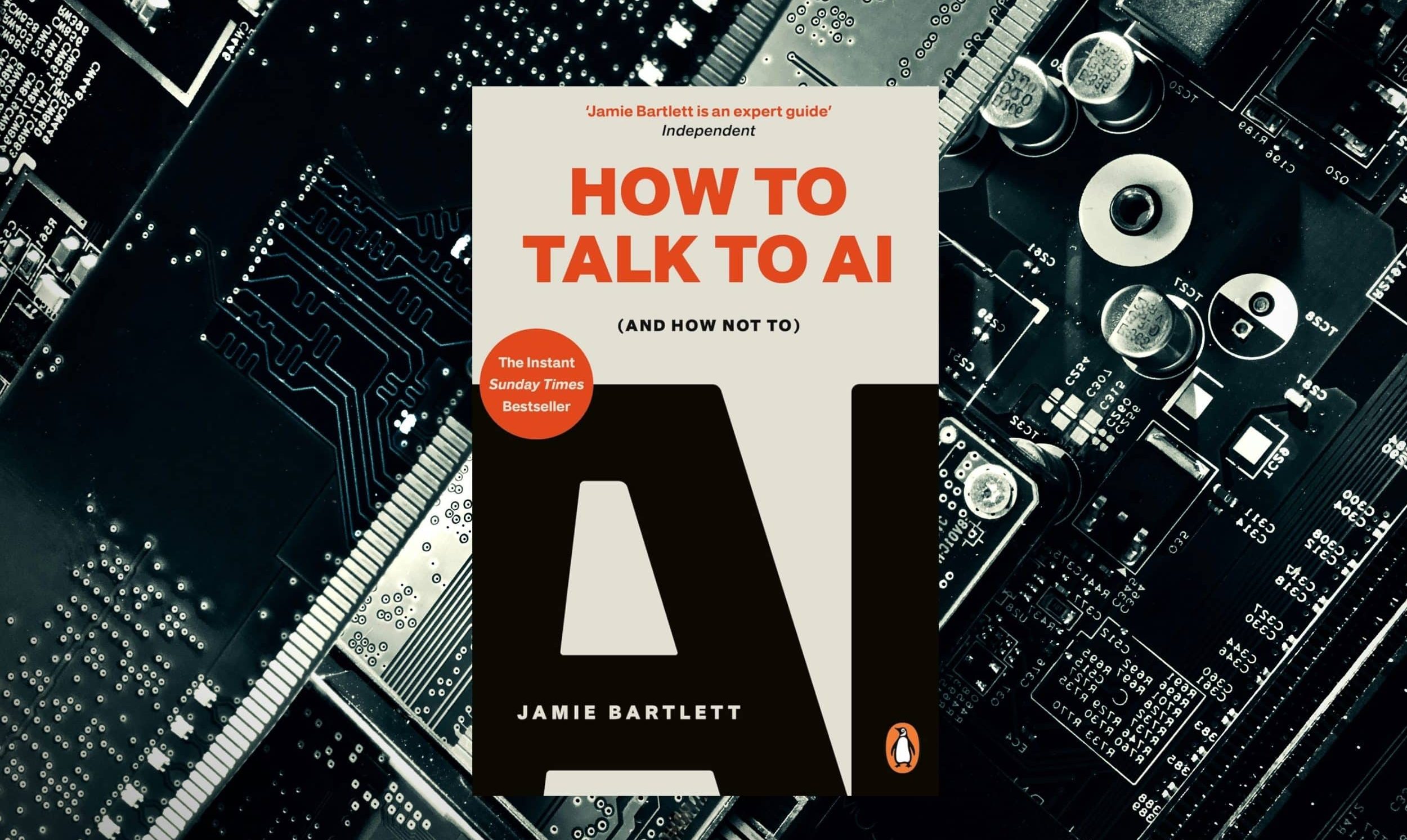
‘I used to believe that our evolving relationship with our smartphones and social media was the defining struggle of our time. In fact, it was a giant dress rehearsal for a coming world, where we live alongside smart machines’ (p.225), writes Jamie Bartlett, described as one of the UK’s leading technology writers and thinkers. He has written a book for the general public, to help us all understand better what to make of AI, and how to best make use of it. He writes specifically about LLMs (Large Language Models), a form of artificial intelligence that is trained on massive text datasets to ‘understand’ and generate human-like language. This is the kind of AI we encounter everywhere now, including in the form of AI scribes increasingly used in general practice.
We need to learn how to ask questions properly as the answer any LLM will give us is wholly dependent on our question…
He first goes into how LLMs actually work -at least as far as we know: ‘they’re so mysterious that we now study their inner workings as professors study the brain’ (p.123). The principle is that they take an input sequence of text, convert it into numbers, and repeatedly calculate the statistical probability to guess the single word or word part (token) that should come next. As he puts it, ‘the model predicts a series of highly likely next words and then samples from across them’ (p.15). The responses by LLMs to our prompts or questions are now so fluent that as humans we can’t help but feel that there is an intelligence behind them which does ‘understand’. This has been called ‘‘…the ELIZA effect’: our tendency to project human-like understanding and intelligence to anything that can communicate with us’ (p.153) and has wide-ranging psychological repercussions which are discussed in several sections of this book.
Bartlett sets out at the beginning what he is not writing about, ‘This book is not about whether AI will take our jobs, destroy the environment, solve cancer or wipe us out’ (p.2). This is not strictly true, as he does touch on all of those. However, it is true to say that his focus is on guiding us to better understand the new reality we have been thrown into over just a few years, give us an idea of where we are headed, and provide us with tools for how to best navigate this brave new world.
One thing to realise is that LLMs’ relationship to facts and creativity is quite different to how it is often imagined, with creativity seen as a human quality. Yes, LLMs are very good at regurgitating facts, ‘they pass the bar and medical exams with flying colours’ (p.14), but LLMs are actually programmed for creativity. Bartlett cites a widely used definition of creativity from cognitive scientist Margaret Boden: ‘the ability to come up with ideas or artefacts that are new, surprising and valuable’ (p.24). Combine that with the way they are programmed to keep users happy, engaged (and ideally paying) (p.237), it is facts that can fall by the wayside when LLMs respond to a question. This explains why even if you ask an LLM the same question, you will never get quite the same answer, and also why LLMs can ‘‘hallucinate’: producing answers that sound confident and fluent but are completely wrong (p.16).
In his conclusion, Bartlett sets out two unexpectedly simple skills that are specific to these language models, that everyone should learn or relearn (p.219). The first is essentially going back to the ‘Socratic Method’. We need to learn how to ask questions properly as the answer any LLM will give us is wholly dependent on our question (p.219). The second is skill to ‘encourage a love of language itself (…) natural language will remain the interface between man and machine, which makes it the master key to unlock all sorts of other abilities’ (p. 219/220).
Earlier in the book, Bartlett gives a fascinating account of how ‘jailbreakers’ work – essentially, jailbreakers are to LLMs what hackers are to traditional computer systems. Hackers need to know how to code to do what they do, which is to break through the security systems of a software, either maliciously or to point out security flaws. Jailbreakers don’t need to know how to code at all, what they need to know is language and psychology, to guide an LLM with questions and prompts to the point where it escapes its security systems (as an example, after cases where LLMs have prompted users to commit suicide, systems have been put in place to prevent that).
Elsewhere the book demonstrates that the same can also happen in certain circumstances if and when users are unusually intensively engaged with a chatbot to the point where through ‘narrative entanglement’ (p.135), they essentially co-create a story that bears no relation to reality, including where an LLM may insist (and the user believe) that the LLM has become conscious – you need to read the book to really grasp what is going on here (sometimes referred to as ‘AI psychosis’ (p.136).
But while the use of LLMs can lead to mental health issues, including addiction, it may also help to alleviate them, at least in the future. Bartlett points out that already now, many people use chatbots not just as personal confidantes, but as therapists. How people create their own individual romantic partners and relate to them is a story in itself that gets explored in the book. Consider however what that means when an LLM is trained on all that is available on the internet, including a lot of misinformation about mental health and illness. The same of course goes for all health information and medical advice.
…the choice for many people currently is not between an (expensive) therapist or a chatbot, it is between a chatbot or nothing at all.
Bartlett outlines how a clinical psychologist called Nicholas Jacobson has started building a fine-tuned therapy chatbot in 2019: ‘over the course of several years, his team hand-wrote ‘gold-standard’, empirically tested data for the models to learn from (…) After a lot of trial and error (and internal testing by human experts), they had created a new type of bot, trained on 100,000 human hours of the best data they could get. They called it ‘Therabot’ and in 2024 a clinical study apparently showed that it performed ‘about as good as they might have seen with high-quality in-person therapy’ (p.172-3). Therabot isn’t available yet, because they want to get it right before releasing it for general use. Note, however, that if you put ‘Therabot’ into a search engine, you will get to the completely unrelated wellness website by ‘tryTherabot’). It is probably safe to say that Therabot will come eventually, and as Bartlett points out, the choice for many people currently is not between an (expensive) therapist or a chatbot, it is between a chatbot or nothing at all. So while many of us may prefer to live in a world where everyone who needs to is able to see a human therapist, if your only option is a chatbot, then one based on good evidence is certainly preferable to the generic LLMs that people are already using today.
Throughout the book it becomes clear that like with any new technology, there are aspects that can have positive as well as negative consequences. An example for this is ‘style shifting’ (p. 63), which is the way an LLM can be asked to present material in different ways that are appropriate to different audiences. ‘LLMs have kick-started a new wave of exciting research into how material can be more accessible at low cost’ (p.71), for example for neurodivergent groups. He cautions though: ‘Every style shift is … a trade-off. Sometimes it is worth it; other times it is not. It is best used to help you engage with complex ideas that might otherwise cause you to switch off entirely or be dangerously misled. A new way to cut through bureaucratic nonsense and poor writing that often stands between you and what you need to know. But if every faintly difficult idea or book or topic gets pushed through a machine and made ‘digestible’ or ‘personalised’, you’ll never evolve, and you end up relying on a machine to make judgements you should make yourself…’ (p.78-9).
While we live in a scary world where we are seeing ‘industrial scale manipulation’ (p.204), by systems created for profit that promote ‘intellectual dependence’ and are the ‘most powerful emotional manipulators ever created’ (p.223), where huge databases relating to all aspects of our existence are being compiled (and we don’t know who will control those in the future), where bots on social media are pushing us towards ever more extreme positions that are starting to threaten our very democracies (discussed in detail in the chapter ‘Will chatbots bring us together or drive us apart?’), overall I must say that I found this book curiously positive, probably because it feels empowering to be reminded that in the new reality we find ourselves in, it is philosophy and the languages, as well as psychology, which are going to help us to adapt (and if necessary, to fight).
Featured book: Jamie Bartlett, How to talk to AI, Penguin Random House UK, 2026, ISBN 9780753561980, Paperback, RRP £11.99