 Andrew Papanikitas is Deputy Editor of the BJGP.
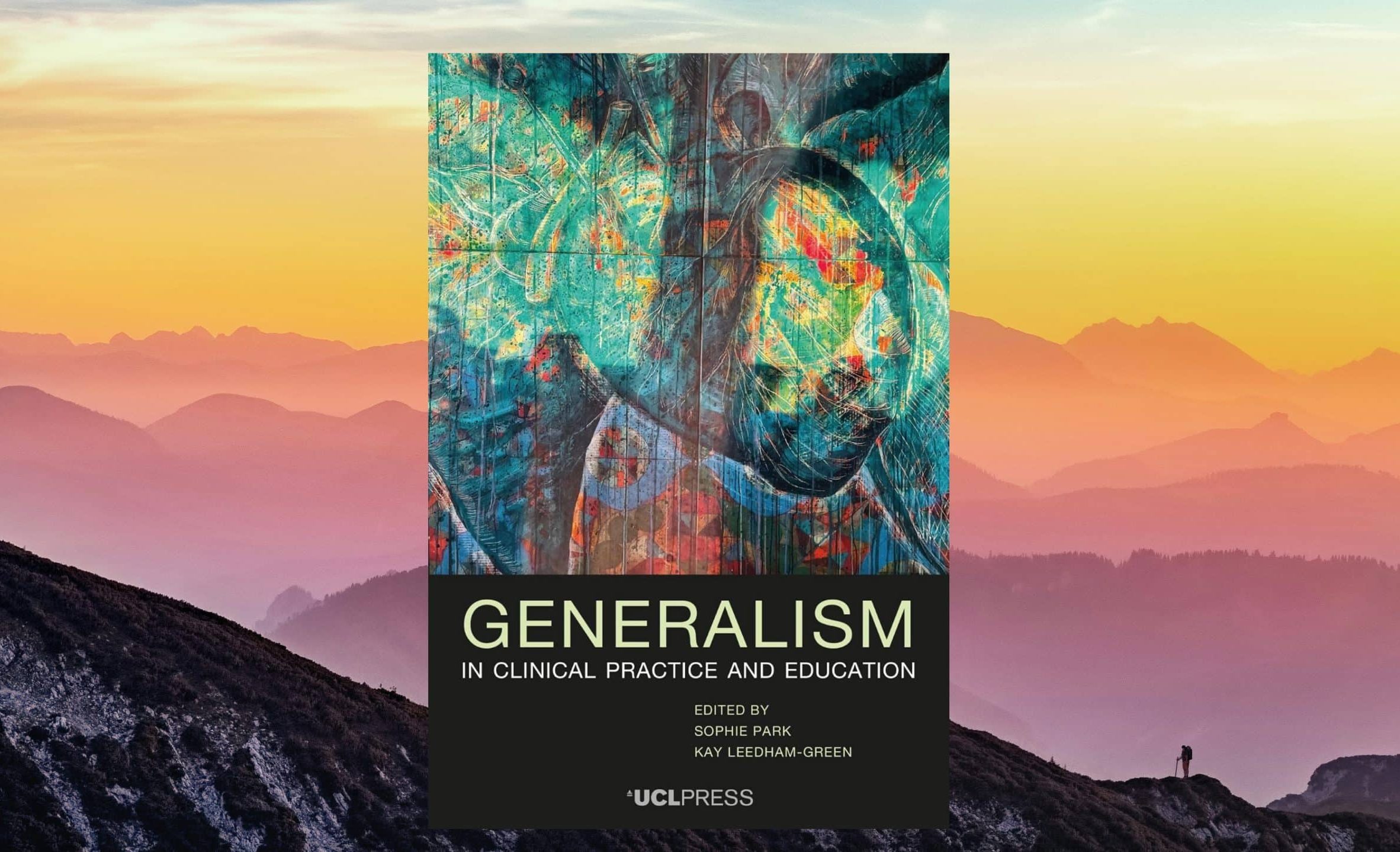
There is something about generalism in medicine that jars with the technological imperative or our age – even my spell checker keeps changing the word to journalist and every instance of the word is underlined in red in MS Word– my machine seemingly does not like it. What is a generalist, anyway? A jack of all trades and master of none? Why should this matter in medical education? Explaining the importance of an idea and showcasing just how it can be practically deployed is the key issue for any new textbook. In chapter 1 of this new and open-access textbook, Sophie Park, Kay Leedham-Green and Tanya Cohen offer a nuanced answer to this vexed question. Generalism is an inclusive holistic form of clinical practice. Its relevance is driven by the rising complexity of population health needs and big challenges in society such as equitable healthcare and responding to climate change. I like the fact that rather than jumping into the philosophy of generalism very first chapter in this edited volume invites the reader to reflect on their own philosophy of practice: What particular professional group do you identify with? How do you perceive your profession in relation to others? How do you perceive yourself in relation to patients? How do you judge the quality of care you provide?
I am starting to worry about the twin phenomenon of generalists being seen as too expensive and unnecessary as their tasks can be offloaded to a healthcare factory line…
Of course the authors of chapter 1 offer an idealised definition. A generalist is an inclusive clinician for all types of patients and problems. Generalists embrace complex, situated and unique patient problems. Sophie Park and colleagues discuss what a generalist is, what a generalist values, the ways in which generalist know things and the ways in which generalists do things. So far so good, but now I am starting to worry about the twin phenomenon of generalists being seen as too expensive and unnecessary as their tasks can be offloaded to a healthcare factory line, or being expected to be masters of everything in the time allocated for something. Refreshingly their idealism is situated within a realistic appraisal of what John Launer refers to in his foreward as the commonly agreed upon crisis in medicine.
This is a book that can be worked through or dipped into. I first open Graham Easton’s chapter on interactional knowledge, and find that it is about the importance of storytelling, and co-constructed meaning between clinician and patient in the consultation. The stories we recognise from the media (three act plays) follow the pattern of setting up the situation and characters and their goals, showing how they go about achieving or confront their goal, and finally the resolution. Easton quickly dismisses this as far too simple for clinical settings. He suggests that Lubov’s (1967) narrative framework has a better fit to conversation: an abstract or short summary of what the conversation is about, orientation that identifies the timings, places and people, complication action (what happened?), the significance of the event or story, the resolution or conclusion, and a coda that brings the perspective back to the present moment. As with the rest of the book this illustrated with clinical examples putting these ideas to work. It also brings home the importance of thinking holistically about healthcare. I wonder about considering each chapter using Lubov’s framework, given the strength of storytelling present.
Chapter 10, for example, is all about supporting generalism through health justice partnerships. The authors take onboard learning from United States of America and from Australia, where lawyers have been integrated into healthcare teams in order to address social determinants of health. Social welfare law provides people with rights in relation to things like benefits and housing or fair treatment in terms of employment and access to community goods. However these protections often fail to benefit the most disadvantaged groups experiencing the greatest burden of ill health. They do not receive or access the benefits to which they are entitled. This might result from unenforced laws or incorrect denial of critical services. Accordingly, the provision of the right services can prevent crises such as eviction, loss of income or termination of employment with obvious impacts on health subsequently. Many readers will recognise local initiatives that take a similar approach.
…climate change is described as the greatest global health threat facing the world but also the greatest opportunity to redefine the social and environmental determinants of health.
I’m very taken with chapter 13 on sustainability, health and healthcare. The chapter describes the relationship between the human effect on our climate and our responsibilities in the provision of healthcare. Importantly, it is urgent and hopeful: climate change is described as the greatest global health threat facing the world but also the greatest opportunity to redefine the social and environmental determinants of health. The chapter benefits from some very clear tables. One such table describes climate change impacts on health. It highlights how climate change impacts lead to human exposure to harm, which in turn lead to health consequences. For example, the connection between rising temperature, disease vector ecology and vector borne disease, or, rising temperature, displacement of populations, and malnutrition or poor mental health. The chapter presents a clear way in which sustainable healthcare can be addressed without compromising health outcomes. This comes in two forms: The first lies in reduction the need for healthcare (which is sound preventative medicine). And the second is to do healthcare with less carbon intensity (much of which can be presented as a win-win scenario of reducing waste and therefore cost and eating better food).
This book successfully engages a broad international readership. It is a real challenge to produce an edited volume that can appeal to policymakers (think healthcare leaders), policy workers (think medical educators) and policy targets (think -amongst others- doctors and patients meeting each other on the front line of healthcare). The word generalist is not used synonymously with general practitioner, but people within any clinical setting who instinctively adjust their remit in response to patient and population needs. General practitioners, however, will get a great deal from this book which should be required reading for any advanced generalist medical practice course. At the time of writing the e-book is free to download and is a fantastic resource for medical education. Highly recommended.
Featured book: Park S and Leedham-Green K (Eds), Generalism in clinical practice and education, UCL Press, London, 2024, ISBN: 9781800085442, DOI: https://doi.org/10.14324/111.9781800085428