
 Peter Lindsay has enjoyed and survived general practice for 44 years and has many clinical interests, including the care of children and people affected by learning disability.
… who will listen?
This is a challenging novel, asking us to accept everyone as part of our shared humanity, however they think about or see our world.
Written by a GP, it can also be taken as a plea to ‘listen’ and to always ask ‘has this person understood what I have said?’ With its next print, an added subtitle could be ‘… who would listen?’
“This book gives Gloria a voice. It needs to be read widely by anyone involved in the care of people with learning disability or neurodiversity.”
With wonderful empathy and understanding it chronicles the life of Gloria from age 19 when she falls ‘from the pond into the sea’1 of supportive care for people with learning disabilities, to 20 years later when she has moved from the care of her single, hard-working mother to supported living. There are no clinical labels but we are told enough to know Gloria is affected by learning disability and neurodiversity. We hear about her stimming at times of stress and mimicking others’ speech. We share the distress when she covers her ears near loud fireworks.
This book gives Gloria a voice. It needs to be read widely by anyone involved in the care of people with learning disability or neurodiversity. We learn about John Steinbeck’s ‘Lennie’2 and Joseph Conrad’s ‘Stevie’3 from what others say about them. This book tells us how it feels to think differently. The author writes everything in the third person, describing what Gloria hears, sees, experiences, and, most importantly, feels. It is an upsetting book. It describes violence, exploitation, and human distress that could be avoided. Parts of the book are gripping — a true ‘page turner’. We share Gloria’s fear when she visits someone who we know will harm her or breaks into a house, simply because she has found a key that matches the doorlock.
We feel the loneliness and loss of purpose when, aged 19, she finds herself living with her mother who works every day to provide for their small inner-city terraced house, leaving her to walk through the parks or sit in her room, repeatedly listening to her single CD or shaking a box of things dropped by people who had smiled at her. We sense Gloria’s vulnerability when she meets a man who threatens her but is someone she can sit talking to, even though he does not listen to anything she says.
We sense the helplessness, the fear, the distress when she finds herself molested by another young man armed with a ‘shiny knife’. We recognise she is unable to find anyone, even her carers and mother, to tell what has happened to her. She feels responsible for pushing somebody. She knows she was forcefully kissed. All she is asked about is how she got lost and what she saw when someone else was assaulted.
“This book tells us how it feels to think differently.”
When she is called to court as a witness of a murder she sits with her mother using a video link but says nothing. We feel and share Gloria’s distress, demonstrated by her stimming and covering her ears, not understanding what is going on.
We recognise that things could be so different. Gloria shares our sense of fun and joy when allowed to. She enjoyed the novelty and thrills of the countryside at school camp. At the seaside, the wet sand under her feet, the cold waves washing her legs, and sitting in the sun with fish and chips by the sea are all a shared language with her mother on holiday, but then her mother’s work means Gloria is left alone again apart from one day a week when she goes to ‘jewellery making’.
The last pages build up the tension. The police, all provided with training in the care of people with neurodiversity4 but not in the care of people with learning disability,5 eventually release her from the prison cells. The isolation, the uncovered blue foam mattress, the smells, and the plain white tiles lead Gloria to have a ‘meltdown’ resulting in two unsuccessful suicide attempts. The text then jumps to the final chapter. By chance, Gloria meets people with a common purpose who talk to her daily and listen and provide cake! We now sense her happiness and hope it continues. Hopefully we will find out more in a sequel.
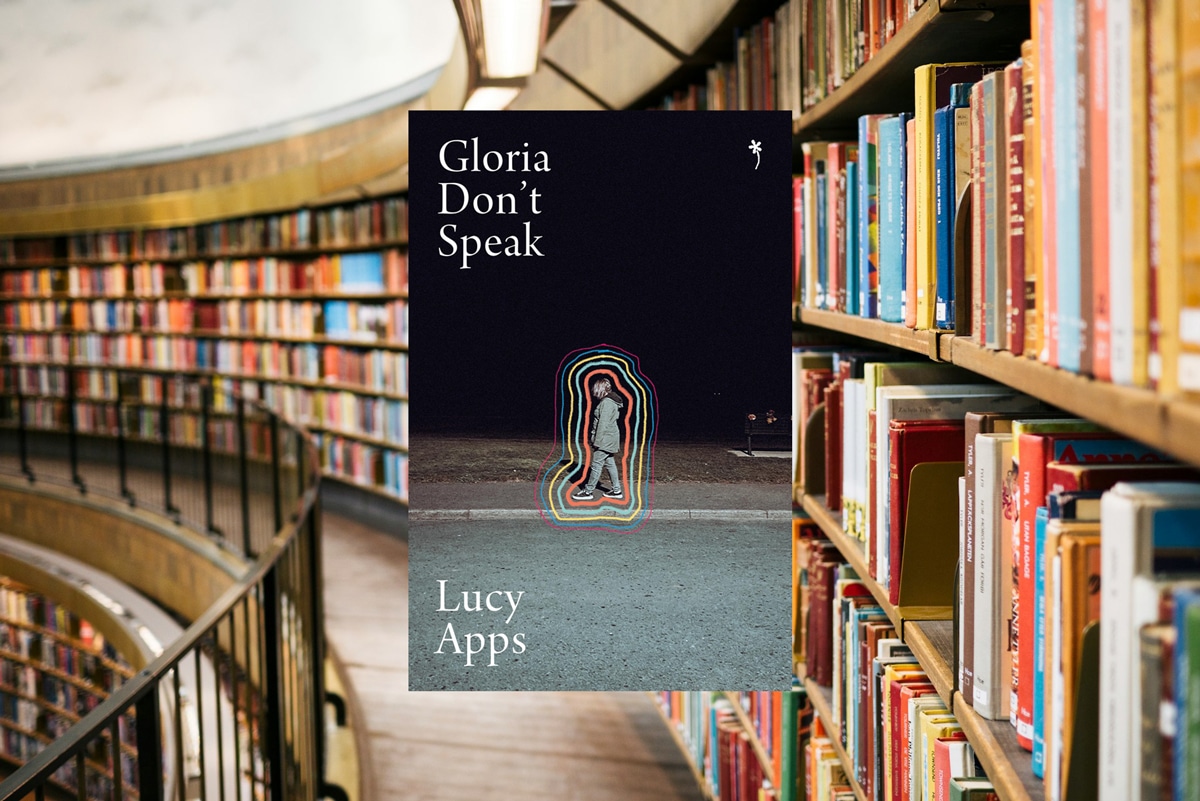
Featured book: Lucy Apps, Gloria Don’t Speak, Weatherglass Books, 2026, PB, 300pp, £12.99, 978-1068794179
References
1. Care Quality Commission. From the pond into the sea: children’s transition to adult health services. 2014. https://www.cqc.org.uk/sites/default/files/CQC_Transition%20Report.pdf (accessed 24 Apr 2026).
2. Steinbeck J. Of mice and men. New York, NY: Covici Friede, 1937.
3. Conrad J. The secret agent. London: Methuen and Co, 1907.
4. Gribbin R. 12-month update to the cross-Government Neurodiversity Action Plan. 2023. https://assets.publishing.service.gov.uk/media/65085a4d22a783000d43e7c6/ND_Update_Action_Plan_Letter_September_2023.pdf (accessed 24 Apr 2026).
5. Lindsay PJ. eLetter: The forgotten 30% in our prison. Br J Gen Pract 2026; DOI: https://doi.org/10.3399/BJGP.2025.0239.
Featured photo by Susan Q Yin on Unsplash.