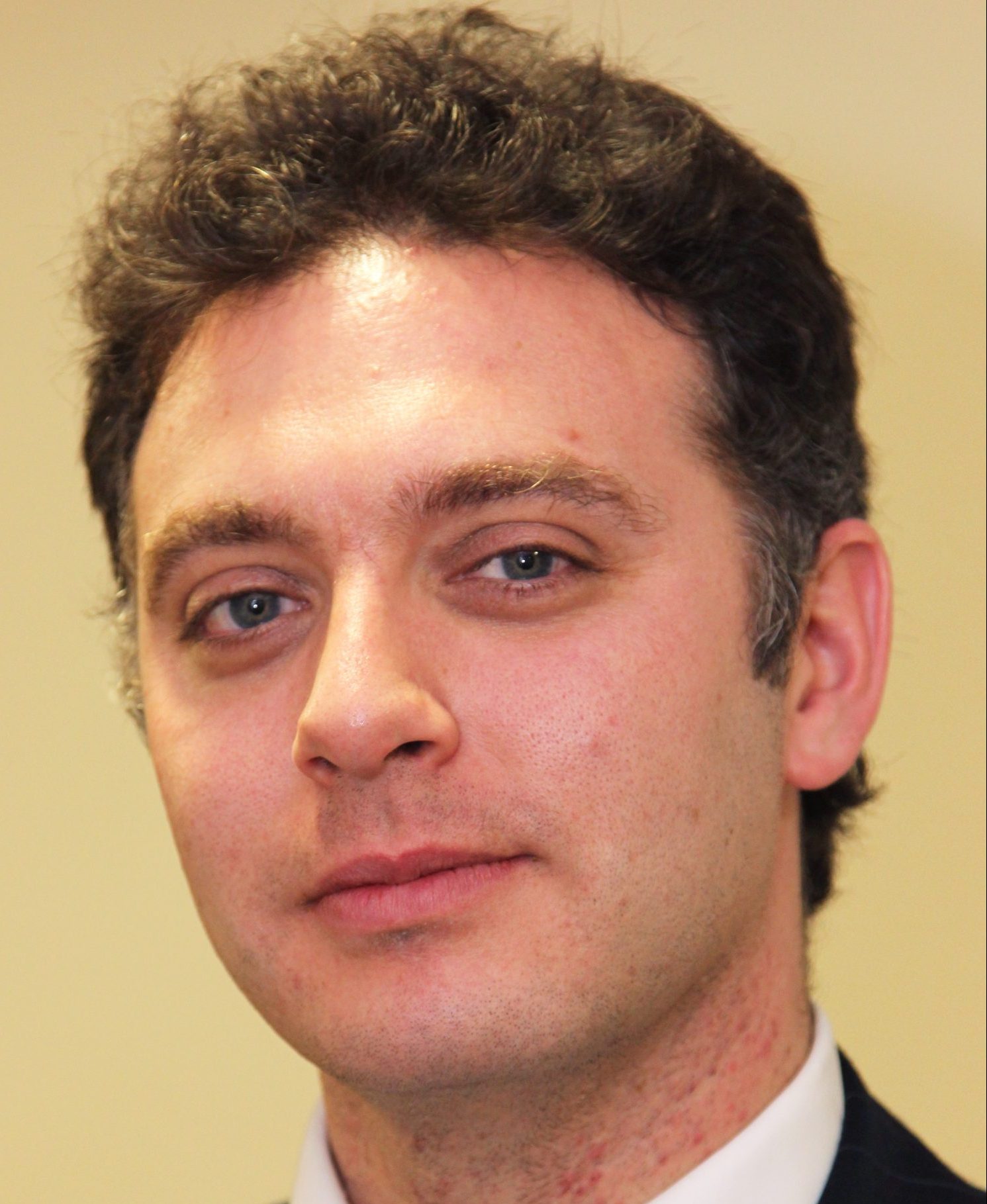
 Andrew Papanikitas is Deputy Editor of the BJGP.
I will digress, but please bear with me. When I was a medical student, I found medical sociology mostly impenetrable. It felt dry and jargon-laden, whist also somehow removed from anything doctors might directly influence. Thankfully David Armstrong, a local academic GP had produced a slim volume that filtered a lot of the intellectual noise.1 I was also fortunate to lectured by him, and I remember being provoked and engaged – how was it that doctors might make people sicker? Why were people with most medical-need least likely to get the medical assistance they needed? I fondly recall that his lectures slightly under-ran, but were consequently memorable and coherent. I felt a sense of intellectual bereavement when I learned, many years later, that my ‘go-to’ text had (after multiple editions) retired. But hang on a minute, am I not supposed to be reviewing a new book by someone else here? Where am I going with this? Despite being short and punchy, I do not believe I would have considered reading ‘Outline of Sociology as Applied to Medicine’ on a beach (unless forced to). I also read it in a slightly cynical way: less as a call to action and more as a survival guide.
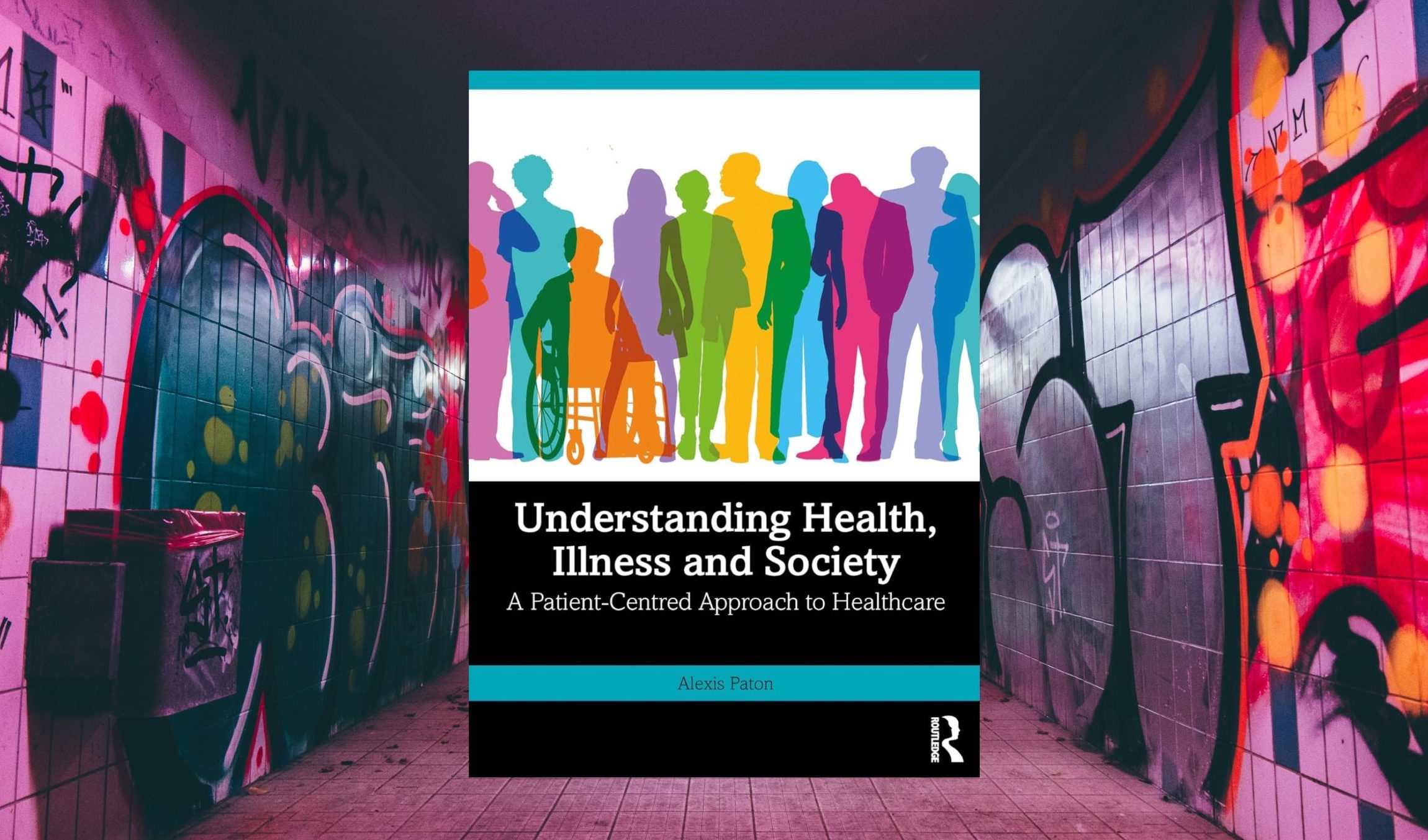
Describing Understanding Health, Illness and Society as a ‘fun’ read feels morally wrong. However, I could see myself reading it on the bus or even on the beach.
At last I believe that I have found another slim sociology text that takes the fight for health justice to audiences whose attention and focus is under siege. Whilst clearly a primarily intended for medical students – the author addresses her readers directly- it is very written in a way that is accessible to any non-sociologist with an interest in the social determinants of health. It is an excellent primer or refresher whilst also an engaging and provoking read – I can imagine myself reading it in ‘leisure time’ without feeling that my rest has been stolen by the powers that be. Alexis Paton is ostensibly a feminist, bioethicist, journalist and sociologist as well as a medical educator. She chaired the Royal College of Physicians’ ethics committee through the arrival of COVID. Her book serves core functions of sociology in, ‘Sticking it to the man,‘ and shining a light on social injustice. I initially zeroed in on the chapter of the social determinants of health whilst sense-checking some teaching that I was about to deliver.
The chapter on social determinants of health explains the inverse care law with some clarity: those with highest healthcare needs find it hardest to access the goods of healthcare.
Alexis Paton has a refreshingly argumentative style – I can imagine her speaking as I read the book. The chapter on social determinants of health explains the inverse care law with some clarity: those with highest healthcare needs find it hardest to access the goods of healthcare. She is kind to GPs and flags the deep-end problem of GPs that serve in areas of socio-economic deprivation having more work, larger lists, less hospital support and more clinically ineffective traditions of consulting. She unpacks this an other concepts with examples. I was especially taken with her elegant five-page discussion of the US opioid crisis as a case study of how the adverse effect of social determinants of health can be amplified by commercial interests. We are told about a social environment whether there is little or no expectation of sickness rights, an insurance based system and work environment that favour painkillers rather than surgery or physiotherapy for chronic pain, and a drug company seeking a market for a synthetic opiate. What could possibly go wrong?
Describing Understanding Health, Illness and Society as a ‘fun’ read feels morally wrong. However, I could see myself reading it on the bus or even on the beach. Alexis Paton channels her talents as a bioethicist a journalist, and a social scientist, reconnecting this topic with a sense of righteous outrage. Consequently, I find myself thinking that this is a text that wakes the student (and I daresay the tutor) up, and shows the reader why the topic matters.
Featured book: Paton, A. (2025). Understanding Health, Illness and Society: A Patient-Centred Approach to Healthcare (1st ed.). Routledge. https://doi.org/10.4324/9781032677552 ebook and paperback RRP £41.99
Reference:
Armstrong, D. (2003). Outline of sociology as applied to medicine. Arnold; Distributed in the United States of America by Oxford University Press.
Featured Photo by Hin Bong Yeung on Unsplash