
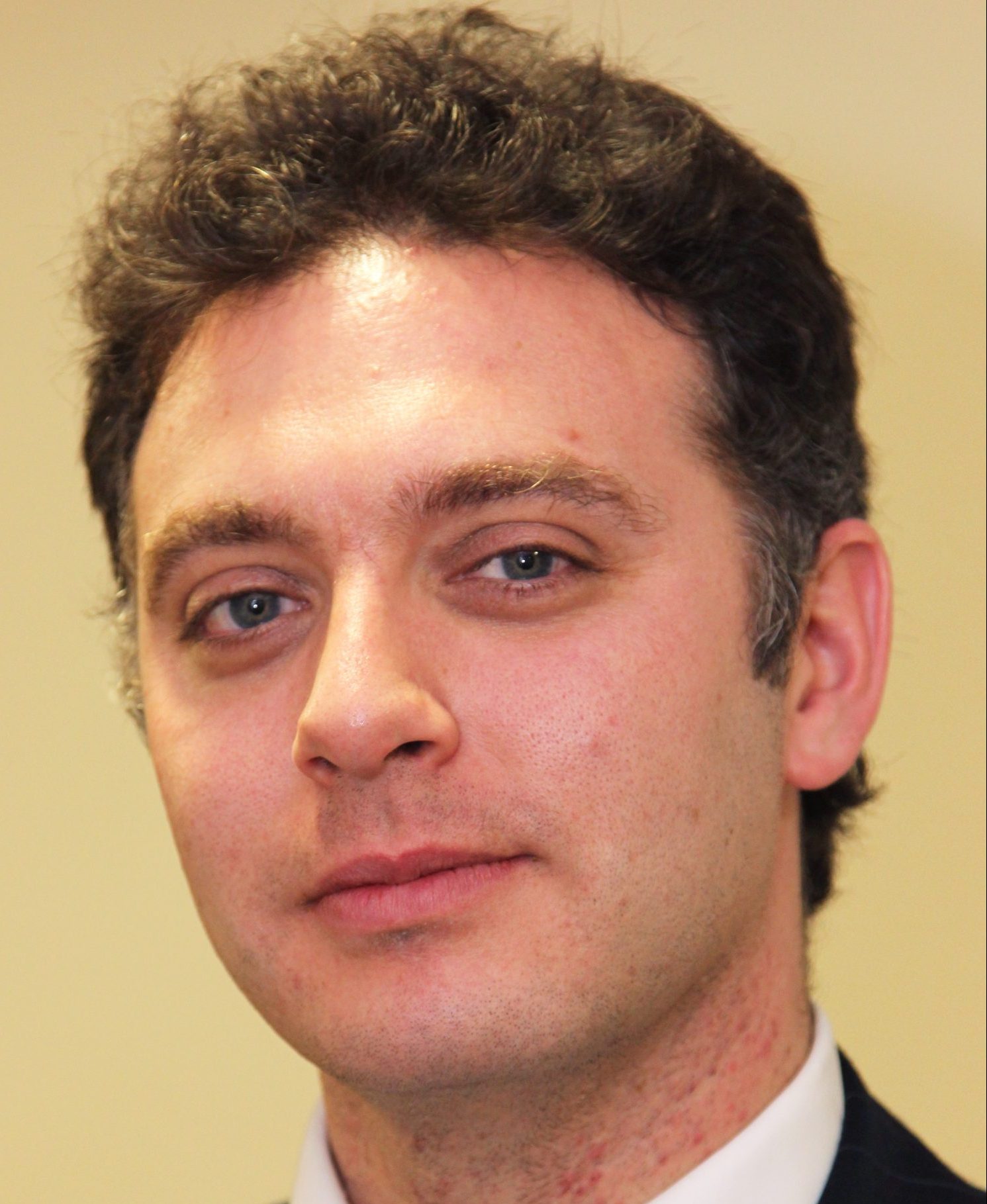

 Andrew Papanikitas is Deputy Editor of the BJGP.
In automation theory, a centaur is a person who chooses to use technology to help them do the things that matter to them. The reverse centaur is a term coined by Cory Doctorow, author and international technology activist, who also famously came up with term ‘enshittification’. A reverse centaur is a person who has been conscripted to serve as a helper for a machine, at an inhuman, machine pace. It’s a subtler and creepier version of the tail that wags the dog. As Doctorow says: ‘it’s not enough to ask what the technology does — we have to understand who it’s doing it for and who it’s doing it to’.1
A reverse centaur is a person who has been conscripted to serve as a helper for a machine, at an inhuman, machine pace.
While the classical examples are truly awful (delivery drivers and warehouse workers being used like extensions of a system or machine epitomise this phenomenon), many of the articles coming through BJGP Life extend this idea into medicine. Charlotte Sidebotham reflects on the thresholds between clinical and other tasks, and how they have been eaten away so that the space to think, recover, catch up, or go to the bathroom has gone. The space between one task is another task.2 Ben Hoban reminds us that this can be coupled with an unrealistic and unhealthy expectation of mechanistic precision. A desire for perfection forces us to define too narrowly our goals and the methods we use to pursue them, and to sideline whatever falls outside this narrow view.3 John Goldie invites us to look beyond the GP to the other staff and consider not just how each of us could work but how we work together, less as a machine and more as an organism. General practice is not a solo cognitive act but a distributed system of people, tools, and spaces thinking together. Safety and fairness depend less on individual reasoning than on how this network aligns.4 Our systems appear not to recognise or value the relational groundwork done by GPs while managing minor illness, points out Tim Senior.5 Such a system will alienate doctors from general practice both a service and as a career.
But what of the technologies that are there to assist? Can GPs be healthy centaurs? Camille Gajira calls for thoughtful engagement with AI-tools. Generative AI does not think or understand. It generates outputs based on how we interact with an AI agent and how that agent has been trained. It is important for users to have AI literacy, which includes prompt-writing and interpreting outputs in context.6 Rebecca Payne and colleagues offer the distinction between large language models (LLMs) as physician and as secretary: the difference is crucial. When LLMs structure and summarise known information, they can augment human expertise. When used to generate new clinical interpretations in high-stakes settings, limitations of human–AI interaction become more apparent.7 The limitations are not just those of the technology, but of the purpose to which those technologies are deployed. Suzanne Maxwell enthuses about the possibility of self-driving cars that might take a tired GP home at the end of a long working day. She also recognises that the very same benefit could easily become a burden if it is used to justify a longer working day, even an extension of the working day to the journey home.8
Should we lose hope? Should we impotently rage against the machine? Or allow ourselves to be passively and perhaps graciously assimilated?
The notion of being slaved mechanically (if voluntarily) to a system sits in direct tension with the agency to be a holistic practitioner. Reviewing a lively new sociology textbook this issue, I am taken with the author’s case study of the US opioid crisis and the commercial determinants of health. A social system that makes sickness economically deadly combined with economic incentives to buy and sell opiates in preference to other forms of therapy (including incentives for doctors).9 Alex Burrell (as if in answer) looks Yonder to discuss recent work on working rurally, pain-related distress, access and experience, and tailored public health messaging.10
Should we lose hope? Should we impotently rage against the machine? Or allow ourselves to be passively and perhaps graciously assimilated? In the science-fiction television series, Star Trek, the Borg (a machine-enhanced society networked by computers into a hive mind) goes on a rampage of conquest across the stars with a war cry akin to ‘Resistance is useless. Your life is over. You will exist to service us’. In this issue, however, we have three modes of resistance against the global threats facing our species: Mareeni Raymond returns to Hackney 1 year after greener practice in primary care was materially supported in practice operational targets and finds that some but not all practices have managed to keep their sustainable practices;11 Jim Brockbank discusses supporting general practice in Myanmar throughout 5 years of conflict;12 and Catherine Gaynor urges us to talk about the clinicians who risked prosecution to protest against the role of big business in funding climate-harming industries.13 Here we have a spectrum of resistance: working with a reluctant system to do some good, mitigating the harms of a system, and fighting against a system.
Perhaps resistance is useful. To become a reverse centaur is (by contrast) a kind of abdication of our humanity.
References
- Doctorow C. The reverse centaur’s guide to life after AI: how to think about artificial intelligence before it’s too late. London: Verso, 2026.
- Sidebotham C. Thresholds. Br J Gen Pract 2026; DOI: https://doi.org/10.3399/bjgp26X745797.
- Hoban B. Doing it right, and doing it well. Br J Gen Pract 2026; DOI: https://doi.org/10.3399/bjgp26X745821.
- Senior T. There’s no such thing as minor illness. Br J Gen Pract 2026; DOI: https://doi.org/10.3399/bjgp26X745857.
- Goldie J. The surgery that thinks. Br J Gen Pract 2026; DOI: https://doi.org/10.3399/bjgp26X745785.
- Gajria C. AI does not ‘say’: implications of using anthropomorphic language to describe AI use. Br J Gen Pract 2026; DOI: https://doi.org/10.3399/bjgp26X745737.
- Payne R, Bean A, Mahdi A, Purves A. AI in primary care: secretary, not physician. Br J Gen Pract 2026; DOI: https://doi.org/10.3399/bjgp26X745749.
- Maxwell S. From surgery to steering wheel: could driverless cars help the primary care workforce? Br J Gen Pract 2026; DOI: https://doi.org/10.3399/bjgp26X745809.
- Papanikitas A. Book: Understanding Health, Illness and Society: a Patient-Centred Approach to Healthcare. Br J Gen Pract 2026; DOI: https://doi.org/10.3399/bjgp26X745845.
- Burrell A. Yonder: Working rurally, pain-related distress, access and experience, and tailored public health messaging. Br J Gen Pract 2026; DOI: https://doi.org/10.3399/bjgp26X745725.
- Raymond M. Green Impact for Health 1 year on: did City and Hackney practices keep going? Br J Gen Pract 2026; DOI: https://doi.org/10.3399/bjgp26X745833.
- Brockbank J. Supporting general practice in Myanmar throughout 5 years of conflict. Br J Gen Pract 2026; DOI: https://doi.org/10.3399/bjgp26X745761.
- Gaynor C. The ‘Emergency Break Glass’ has been broken — now we must break the silence. Br J Gen Pract 2026; DOI: https://doi.org/10.3399/bjgp26X745773.
Featured Photo by Quinn Smith on Unsplash