

Rhodri Evans is a GP in Newport, South Wales. He is interested in the history of general practice, and its intersection with environmental matters.
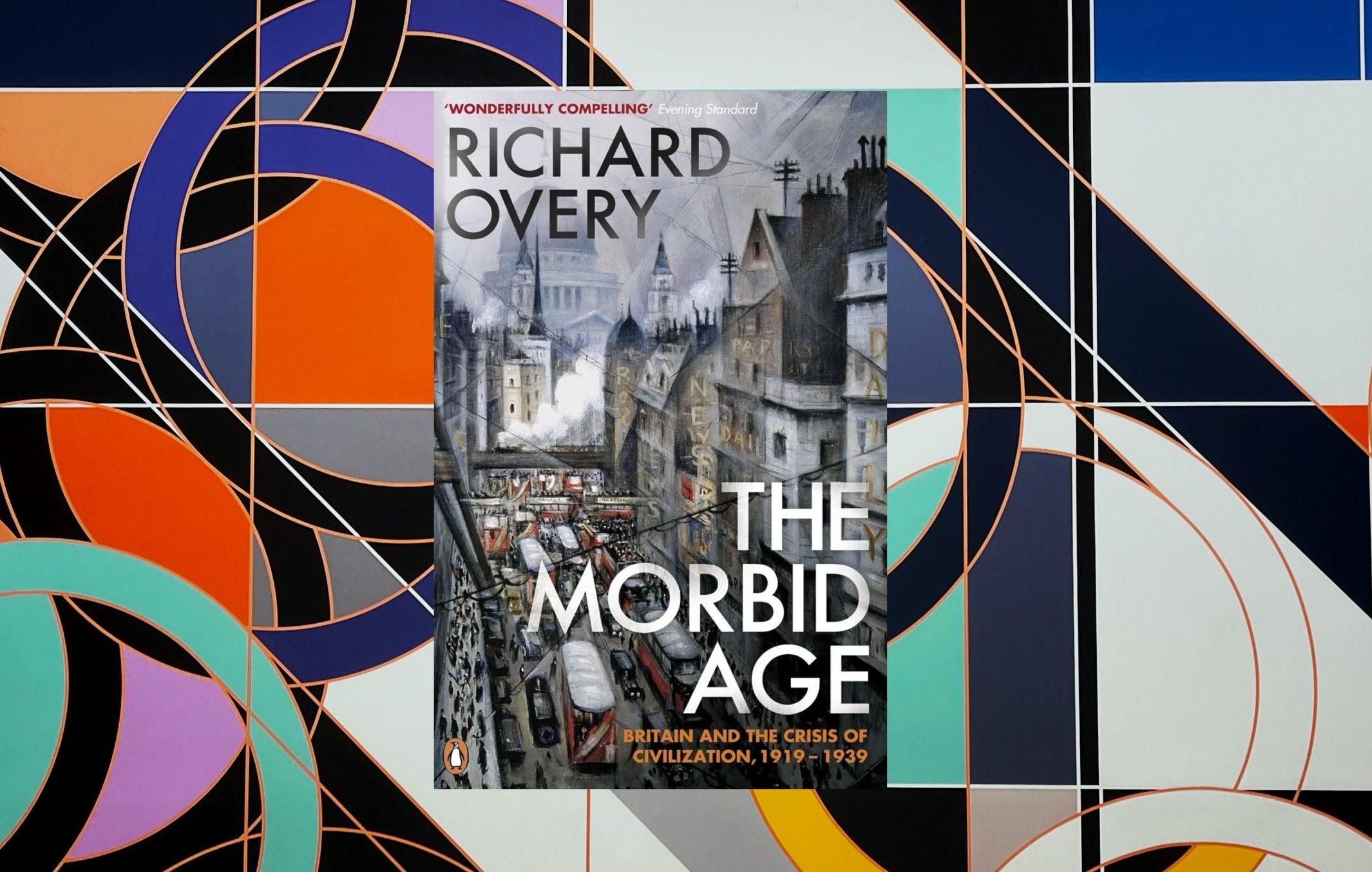
A century ago Britain was firmly in the interwar years, a period of great anxiety that has become known as the Morbid Age. Many of these anxieties were rooted in health and health care, and their consequences still affect us today. The historian Richard Overy published a great book about this period in 2009, titled The Morbid Age: Britain and the Crisis of Civilization, 1919–1939, and it is timely to explore it again.
There was a widespread belief that civilisation was in crisis after the First World War (WW1), or to use of the many health-related metaphors that abounded at the time, civilisation was sick. Catastrophising became commonplace: EM Forster wrote in 1936, ‘one gets this terrific fear about the death of civilisation’ (p15). Unsurprisingly, after the industrial carnage of the trenches, science attracted much blame and became mistrusted. In 1924, Betrand Russell published a pamphlet titled Icarus or The Future of Science, and nowhere was this scepticism best articulated than in Aldous Huxley’s Brave New World, published in 1932. Science in the early 20th century provided new, radical ideas about the world, but many of these were embedded in uncertainty. The certainty of Newtonian physics was replaced by theories such as Einstein’s general relativity (1916) and Heisenberg’s uncertainty principle (1927). Following the rediscovery of Mendelian genetics in 1900, biologists were beginning to understand the basis of inheritance and diseases, but with few solutions and treatments to go with them. For a civilisation traumatised by the cataclysm of WW1, scientific uncertainty was not what was needed. Furthermore, some of the emerging scientific theories fed into the pessimistic discourse. In 1920, Joseph McCabe published The End of The World, which explored various ways life would end, including asteroids and the death of the sun through entropy.
It seems extraordinary that one of the cornerstones of progressive healthcare – easily accessible family planning – was rooted in deeply regressive ideology, and led by unpleasant characters, foremost of whom was the Englishwoman Marie Carmichael Stopes, founder of the eponymous clinics.
As if WW1 was not traumatic enough, the interwar period also saw economic collapse, and there was a widespread belief that capitalism had ceased to function, and the social consequences were all too visible. Among the arguments over causes and solutions there was a resurrection of Malthusian ideas. Thomas Malthus had argued in 1798 that population would always run ahead of food supply until ‘periodically readjusted through war, dearth and disease’ (p94). The Neo-Malthusian idea was the limitation of unwanted births, and one of its greatest advocates was Margaret Sanger, secretary of the International Birth Control Movement, and inventor of the term ‘birth control’.
It seems extraordinary that one of the cornerstones of progressive health care — easily accessible family planning — was rooted in deeply regressive ideology, and led by unpleasant characters, foremost of whom was the Englishwoman Marie Carmichael Stopes, founder of the eponymous clinics. Stopes was a bitter rival of the American Sanger, and she founded her own organisation with the disturbing title, The Society for Constructive Birth Control and Racial Progress. While Sanger and other birth control proponents favoured the diaphragm and spermicidal gels, Stopes pioneered and promoted the ‘Pro-Race’ cap, a cervical cap. Stopes and her second husband opened their first family planning clinic in Holloway, London in 1921.
Stopes demonstrated an astonishing level of bigotry: in a public meeting in 1921 she spoke about the dangers of allowing ‘wastrels’ to breed. Instead, the only ones who should become parents were those who could ‘add individuals of value to the race’ (p96). Arguably Stopes tapped into general concerns about the condition of the population: the prime minister, David Lloyd George, had warned that it was not possible ‘to run an A1 empire with a C3 population’ (p98). In 1923, Stopes published Contraception, and in a foreword, Sir James Barr, previously president of the British Medical Association (BMA), stated ‘While the virility of the nation was carrying on the war the derelicts were carrying on the race.’1 Contraception, therefore, was the means for improving the quality of the race. Stopes advocated strict breeding; chance breeding was not ‘the way to rear an imperial race’ (p98). Astonishingly, when Stopes’s son decided to marry the daughter of the aeronautical engineer, Barnes Wallis (of Dam Busters fame), Stopes cut him out of her will and refused to go to the wedding because her future daughter-in-law wore spectacles. The irony was, of course, that in her overtly eugenic/racist drive, she unwittingly helped thousands of women in England from poor backgrounds — by the late 1930s there were 90 birth control clinics operating.
Eugenics in the interwar period was respectable and organised. At the 1932 Congress of Eugenics in New York a message was read out from Leonard Darwin, one of Charles Darwin’s sons, that without biological correction Western civilisation was destined to suffer the lot of ‘every great ancient civilisation’ (p101). The Eugenics Society in the UK had, in the 1930s, around 800 members — largely from the scientific, political, and cultural elite, including the economist John Maynard Keynes who helped set up the Cambridge branch.2 Eugenics stemmed in part from a fear of physical and mental deficiencies being transmitted from generation to generation, and great effort was made to identify and define these deficiencies, culminating in the egregious Mental Deficiency Act of 1927. The Act defined four categories: idiots (unable to look after themselves); imbeciles (unable to manage their affairs unaided); feeble-minded (requiring care and supervision); and moral defectives (deficient but also vicious).
There was great debate in the UK in the interwar years about the value of sterilisation. Thankfully there was no compulsory sterilization — as happened in the US — or worse, of course, in Germany. But the open nature of the debate is shocking: in 1935 the BBC broadcast a debate between Bertrand Russell and GK Chesterton titled: ‘That parents are unfitted by nature to bring up their own children’ (p119). Stopes, when asked in 1930 about compulsory sterilisation, said that it ‘should be applied at least to all those assessed with a mental age of less than 12’ (p120). The famous biologist Julian Huxley, brother of Aldous, was a critic of modern medicine for unnecessarily keeping people alive. He argued that ‘humanity will gradually destroy itself from within, will decay in its very core and essence’ (p121). In Julian’s view there should be an ‘eugenic board’ in each locality, and he said in 1934 that sterilisation ‘should be regarded as a privilege and a badge of good conduct’ (p121). Such views were not confined to extremists and eccentrics. In 1931, the BMA set up a Mental Deficiency Committee to investigate proposals for sterilisation, and after a year of deliberation a report recommended that voluntary sterilisation might be a way forward. Partly as a result of this, in 1932 the Ministry of Health agreed to a study of sterilisation, and the subsequent Brock Report in 1934 recommended voluntary sterilisation for inherited mental disease or ‘grave disability, physical or mental’ (p125). However, sterilisation failed in the UK. Even though there was support from myriad organisations, parliament opposed it, in particular Catholic MPs and the bulk of the Labour Party, whose members saw eugenics and sterilisation as class prejudice. In the end, the strength of democracy in the UK — however flawed — ensured that abhorrent but fashionable views, which carried the support of a vociferous body of experts, did not prevail.
Psychoanalysis reached its zenith in the interwar period. Freud published The Ego and the Id in 1923, and in the UK he found his most enthusiastic and eloquent disciple, Ernest Jones. Jones was born near Swansea and he was a gifted medical student. Unlike many commentators, Jones was able to describe and explain Freud’s work from a traditional medical standpoint. Furthermore, Jones utilised psychoanalysis to explain the psychological ills of the Morbid Age. He argued that the postwar generation bore ‘a much heavier burden of guilt’, and that the reaction to this guilt was expressed in ‘desperate, panicky, and always irrational forms’ (p138). The scale of the psychological trauma was undeniable: in an age when benefits were far scarcer than now, 120 000 WW1 veterans were awarded pensions for psychiatric disability, and 6,000 were classed as ‘permanently insane’ (p143).
One GP stated that mild neurosis could be treated with a ‘cheerful prognosis’ and a ‘bottle of valerian.’ Another recommended ‘holidays, rest in bed, tonics, mild sedatives and an encouraging chat.’
Despite the efforts of Jones to give psychoanalysis medical and academic respectability, the medical establishment as a whole was sceptical. In 1926, the BMA Ethical Committee established an investigation into psychoanalysis following an incident in a school in Hove, where allegedly psycho-analytic methods had allowed boys and girls to bathe together naked. William Brown, a famous psychologist at Bethlem Hospital, London, argued that all patients under analysis became ‘very suggestible’ (p146), with a state of mind characterised by ‘passivity, receptivity and lack of criticism’ (p147). GP responses, as always, were more pragmatic. One GP stated that mild neurosis could be treated with a ‘cheerful prognosis’ and a ‘bottle of valerian’. Another recommended ‘holidays, rest in bed, tonics, mild sedatives and an encouraging chat’ (p148).
Sex was a major concern of psychoanalysis, and arguably the practice fed on general anxieties about sex in the interwar years. An inquiry was held in the early 1920s into the effect of cinema on schoolchildren, and Cyril Burt, a respected educational psychologist, said that cinema depicted adult life as ‘flirtation, jealousy, robbery … incessant excitement and wild emotionalism.’ In 1926 the British Social Hygiene Council (BSHC) started work to promote marriage and combat sexually transmitted diseases, and in 1931–1932 the BSHC organised 370 meetings in the UK, reaching an audience of 96 800. There was a growth of sex education in the interwar years. Stopes called on parents to combat ‘the secret enemy’ by teaching children ‘cleanliness, disinfection and chastity’ in the home, and the great social reformer Beatrice Webb stressed the need for physical exercise and ‘happy comradeship’ to calm down the sexually aware teenage girl. With regards to boys, the BSHC in 1933 published What Fathers Should Tell Their Sons; there was grave anxiety about masturbation, and again the cure was fresh air, exercise, and adventure books. Boys were to be taught ‘chivalry and manly protection of women.’
A century on, it is easy to criticise and even ridicule the anxieties of the Morbid Age. Instead, it should be acknowledged that the interwar anxieties were justified. In the age of modernism, the world was changing rapidly, and the fears of another cataclysmic catastrophe were realized with the Second World War (WW2). It is equally easy to discount the discussions and developments of the Morbid Age, and instead focus on the great progress made after WW2. The Labour Government of 1945 acted on the Beveridge report and, among a raft of achievements, created the welfare state and the NHS. However, the seeds of these accomplishments were planted earlier, during the Morbid Age. Progress in family planning and mental health, for example, came from the interwar discussions. And, most importantly, the need to protect the weak and vulnerable originated in large measure from the long interwar discussion and subsequent rejection of eugenics, a decision confirmed by the emerging horrors of Nazism. Despite the gloom, we have much to be grateful for the Morbid Age.
Featured Book: Overy R, The Morbid Age: Britain and the Crisis of Civilisation, 1919 – 1939, Penguin, 2010, 544 pages, paperback, ISBN 978-0141003252, £16.99
Featured Photo by Jon Tyson on Unsplash