


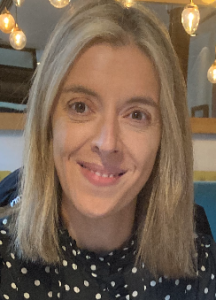
 Sara Ares-Blanco is a family doctor in Madrid, Spain, and a tutor for family medicine residents. She serves as Chair of the WONCA Europe Working Party on Policy Advocacy.
Last April I was invited to participate in a round table at the EURACT Conference in Iaşi, Romania. The discussion centred on a simple set of questions: How can we improve the influence of general practice in our countries and across Europe? What are the issues, and what are the solutions? As I was contributing, I said something that appeared to resonate with the audience, “Enough of Complaining at the Coffee Break.”
The room responded, and the reaction confirmed something I had long sensed, that there is a need to move forward,1 and that I believe many of us feel the same.
I am not denying the crisis of primary health care.
I am not denying the crisis of primary health care.2 Our discipline is underfunded.3 Multidisciplinary teams and task-sharing will change the way we practise. Artificial intelligence is being used to resolve clinical uncertainty and to transcribe consultations in real time. Live recordings of encounters are shown in lecture theatres full of students. New tools such as point-of-care ultrasound, retinography, and rapid diagnostic tests are changing clinical reasoning. And above all, the society we serve has changed profoundly. We live in an on-demand world where nearly everything is one click away. Expectations around health, our own and that of the healthcare system, have become less realistic than they once were. The tolerance for frustration has fallen: explaining what osteoarthritis means, or that cardiovascular risk factors such as dyslipidaemia may develop despite an otherwise healthy lifestyle, can feel to a patient like a betrayal, when the real betrayal is simply time passing. Meanwhile, we still lack adequate resources for vulnerable patients, and welfare states continue to struggle to support migrants, people with disabilities, and those of low socioeconomic status.
And yet, having acknowledged all of this, I must also say plainly to all my dear colleagues: we have to advance. We have complained about politicians who do not protect our health systems sufficiently. We have complained about working conditions and about one another. We have spent precious time complaining without bringing any additional good into the world, content with ourselves, forgetting we have a short life. Can we not, instead, feel something close to joy at having been given an extraordinary profession? We are the doctors sustaining a continent of more than 300 million people. We see 70% of European citizens every year.4 We are the doctors who know their patients by name, in many cases, their doctor.5 We are the ones who sit with the patient who has lost a child, who helps the person with diabetes manage their condition, who listens to teenagers in their first encounters with the health system, and who coordinates the care of those living with multimorbidity. Sustaining a continent is not free; sometimes it comes at a high personal cost. But it is worth it.
Advocacy is not a rock star on stage; it is a choir. It is every primary health care organisation, every family doctor, pulling in the same direction
.When people ask me about the future of our work in policy advocacy at the European level,6 I can only say this: we may fail, but we cannot live without attempting it. We are called family doctors because we treat everyone, and because we understand the dynamics within a family. When one member struggles, all struggle, but when a family commits to overcoming its difficulties together, it does. Advocacy is not a rock star on stage; it is a choir. It is every primary health care organisation, every family doctor, pulling in the same direction. We advocate when we give the best possible care to a single patient in our clinic. We advocate when we publish evidence on the benefits of family medicine. We advocate when we inspire medical students with the possibilities of family medicine. And we advocate when we speak before the European Parliament. What matters is that all of these voices carry the same message: family medicine matters for the survival of a continent, and because it accompanies every person within it.
Finally, we must expand our ambitions and dream together. Let us stop complaining during the coffee break and start imagining. My dream is that family medicine becomes a standard participant in every health policy conversation, because we are the closest thermometer that society possesses. We know what works on the ground, and what is simply not feasible. That knowledge is essential for any decision that places patients and health professionals at its centre. No single Working Party on Policy Advocacy can be present in every conversation across every European health institution. We need each of you to use your connections and your ideas to bring family medicine into the room, wherever that room may be. We are in the same family: let us be our best version of it.
References
- EURACT. Post-Conference Statement 4th EURACT Educational Conference lași, Romania, 23-25 April 2026 [Internet]. Iasi, Romania; 2026. https://www.euract.eu/file/8cfe4504-aad7-4652-af33-261da9f6d92e/PCStatement.pdf [accessed 28/6/26]
- Russo G, Perelman J, Zapata T, Šantrić-Milićević M. The layered crisis of the primary care medical workforce in the European region: what evidence do we need to identify causes and solutions? Hum Resour Health. 2023 Jul 14;21(1):55. DOI: 10.1186/s12960-023-00842-4
- WHO E. Spending on health in Europe : entering a new era [Internet]. WHO; 2021. Disponible en: https://apps.who.int/iris/bitstream/handle/10665/340910/9789289055079-eng.pdf [accessed 28/6/26]
- Ares-Blanco S, López-Rodríguez JA, Polentinos-Castro E, Del Cura-González I. Effect of GP visits in the compliance of preventive services: a cross-sectional study in Europe. BMC Prim Care. 2024 May 15;25(1):165. DOI: 10.1186/s12875-024-02400-w
- Salisbury H. The complexity and joy of general practice. BMJ. 2022;376:o441. DOI: 10.1136/bmj.o441
- Gómez-Bravo R, Ares-Blanco S, Mamo N, Guisado-Clavero M, León-Herrera S, Rasic V, et al. Primary health care policy advocacy in Europe: A cross-sectional study of family medicine associations. Eur J Gen Pract. diciembre de 2026;32(1):2625572.DOI: 10.1080/13814788.2026.2625572
Featured photo by Chang Duong on Unsplash