


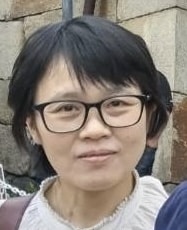
 Rie Oka is a hospital physician in Japan, focusing on geriatrics, hospital generalism, and end-of-life care in a super-aged society.
Japan is world-leading as a super-aged society and is now transitioning into a further stage: a “death-laden society” — one characterised by a rapid increase in deaths associated with ageing, including chronic and non-cancer diseases. The annual number of deaths is projected to double from approximately 800,000 in 1990 to 1.6 million after 2030. In response, Japanese policymakers have promoted the idea of ”dying in place”, spending one’s final days in familiar surroundings. However, for patients and families who lived through an era in which more than 80% of deaths occurred in hospitals and who have experienced the benefits of modern medicine, letting go of the cure model is not easy. For healthcare professionals as well, prognostic uncertainty in non-cancer diseases common among the oldest old often complicates shifts toward palliation. Consequently, delayed decision making on both sides may over-medicalise the dying process among the oldest old.1
…for patients and families who lived through an era in which more than 80% of deaths occurred in hospitals and who have experienced the benefits of modern medicine, letting go of the cure model is not easy.
We recently reported a quantitative study examining artificial nutrition and hydration among patients aged 90 years and older (the oldest old) who lost their ability to swallow during the terminal phase in a community hospital.1 As death approached, the daily volume of intravenous fluids gradually decreased and was discontinued in some cases. Following withdrawal of artificial hydration, care shifted toward a “comfort feeding only” approach: patients were served spoonfuls of jelly or water according to their comfort, and when even these were no longer tolerated, only oral care — moistening the lips and mouth with water — was continued. Notably, 38% of these patients had initially been admitted by ambulance, suggesting that the initial goals of life-prolongation gradually shifted toward palliation and acceptance of dying during hospitalisation.
I would argue that super-aged societies also require gatekeepers at the exit from medicine.
Among families whose priorities gradually shifted away from recovery, a small number chose to be discharged from hospital with the intention of dying at home. The remaining time might be measured not in weeks, but in days. Nevertheless, healthcare professionals work together with community care workers to prepare an environment in which patients may spend their final days in peace and comfort. Beds and care equipment are arranged, emergency plans discussed, and decisions made regarding what forms of food or fluid may still be taken and in what posture. Yet these practices are no longer placed under the strict control characteristic of hospital medicine. Places contain the traces of a life lived — bodily memories, emotional attachments, and shared memories extending beyond individual experience. As the geographer Edward Relph wrote, “place is a source of identity”.2
Joanne Reeve has described general practitioners as gatekeepers at the entrance to medicine, preventing unnecessary medicalisation.3 Indeed, by allowing time itself to work, many problems may resolve without excessive intervention. General practitioners, while bearing uncertainty about the need for specialist intervention, sustain continuous and comprehensive relationships with patients. I would argue that super-aged societies also require gatekeepers at the exit from medicine. Generalists, while bearing uncertainty about prognosis, may help de-medicalise dying and reconnect patients with their lifeworlds despite the risks of deterioration outside hospital. As end-of-life care in the community must be prepared through close collaboration with local support networks, the principles of general practice — continuity and proximity — may become most visible at the exit from medicine. If medical generalists function as gatekeepers at this threshold, the shift in treatment goals from recovery to palliative care may be more aligned with the wishes, relationships, and lifeworlds of patients and their families.
References
1. Oka R, Imura H, Maeda K. Artificial nutrition and hydration for the “oldest old” at the end-of-life in a community-hospital in Japan. J Hosp Gen Med. 2026;8(2):49–55. https://doi.org/10.60227/jhgmeibun.2025-0042
2. Relph EC. Place and placelessness. SAGE; 2016. 156 p.
3. Reeve J. Protecting generalism: moving on from evidence-based medicine? Br J Gen Pract. 2010 Jul;60(576):521–3. doi:10.3399/bjgp10X514792 PubMed PMID: 20594443. https://bjgp.org/content/60/576/521.long
Featured photo by Syuhei Inoue on Unsplash