
 Will Norman is an RCGP Fellow, GP educational supervisor, GP partner, and art lover.
This year La Biennale di Venezia made the headlines as Pussy Riot started a revolt in protest at the inclusion of Russia and Israel in the 2026 event. Should countries whose leaders were indicted for war crimes be allowed to use the soft power of culture at the world’s biggest visual art festival? Fast forward a few weeks and the Russian pavilion stood closed when we visited, with Israel moving to a different, more secure venue. Leading on from this, the International Jury who award the Golden Lion had resigned en masse, leading the organising committee to launch a Visitors’ Lion vote instead. If they had hoped to diffuse the situation with such a decision, it backfired, as numerous artists then asked to be removed from the ballot in solidarity. It was shaping up to be quite an event.
“Kouoh had talked of trying to find the more peaceful and unexpected, like using the minor keys in jazz and its freestyle.”
Before the headlines garnered from the vernissage events, the festival was always set to be a more reflective and thoughtful edition. Sadly, this year’s curator Koyo Kouoh died unexpectedly last year, leaving her curatorial collective to stage the exhibition at the heart of the Biennale In Minor Keys. Kouoh had talked of trying to find the more peaceful and unexpected, like using the minor keys in jazz and its freestyle. She included several poems within the two exhibition spaces, to help visitors slow down and reflect. There are certainly fewer ‘household name’ artists this year, perhaps a reason why it has been less well received in the press, but the Biennale has significantly upgraded its buildings, improving the flow within the main venues and finally making all floors accessible.
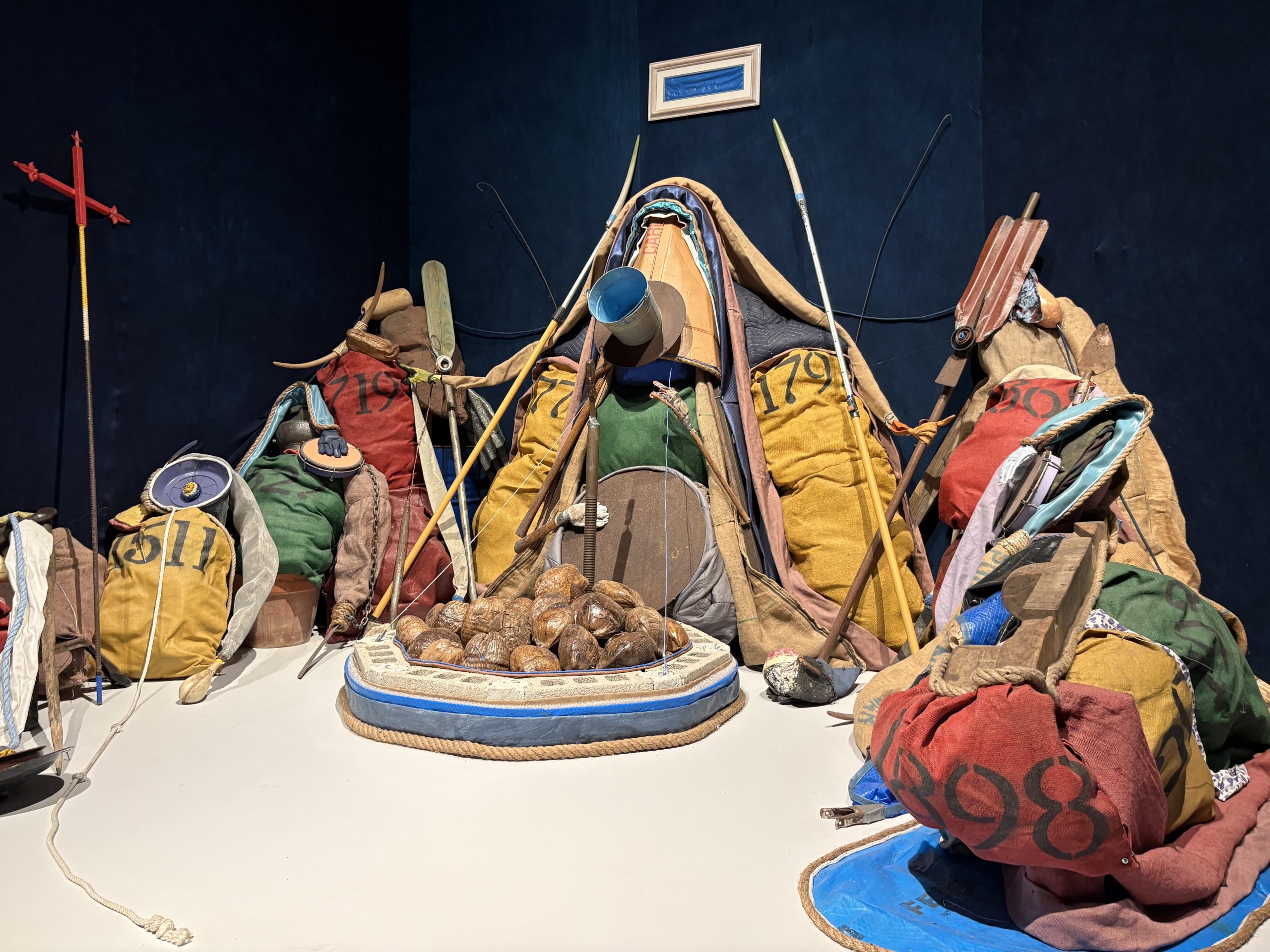
The joy of the two curated shows, as in previous years, is that an artist you enjoy will pop up in several different spaces, showing you a different angle of their practice. I particularly liked Afro-Puerto Rican artist Daniel Lind-Ramos’ monumental sculptures created from recycled materials, and I loved the landscapes of Mohammed Joha, originally from Gaza — beautiful colourful abstract collages made with scraps and discarded materials, taking its cue from everyday practices of Gazans caught in ceaseless cycles of destruction and rebuilding.
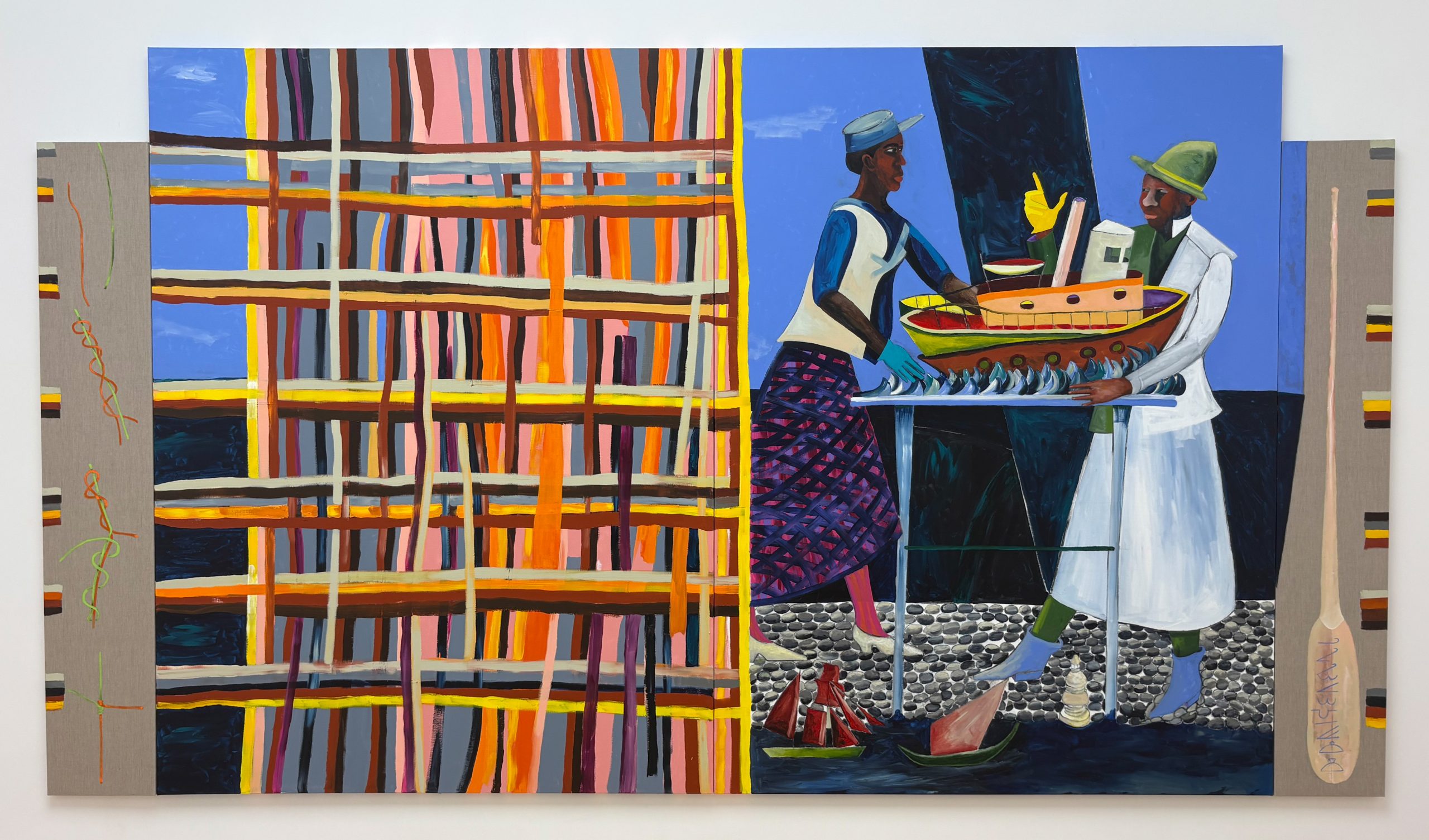
Britain is represented this year by Lubaina Himid, working with sound pieces by her wife, Magda Stawarska. Photographs don’t really encapsulate the sheer joy of the pieces, their large scale and presence a counterpoint to their thoughtfulness. Each has two characters in an uneasy conversation, working together, but having their own ‘minor key’ moment at one end, the other showing the output of their collaboration. Here we find architects, gardeners, chefs, and boatbuilders (featured photo) with the soundtrack of an English country garden, flowing water, buzzing bees, and folk songs.
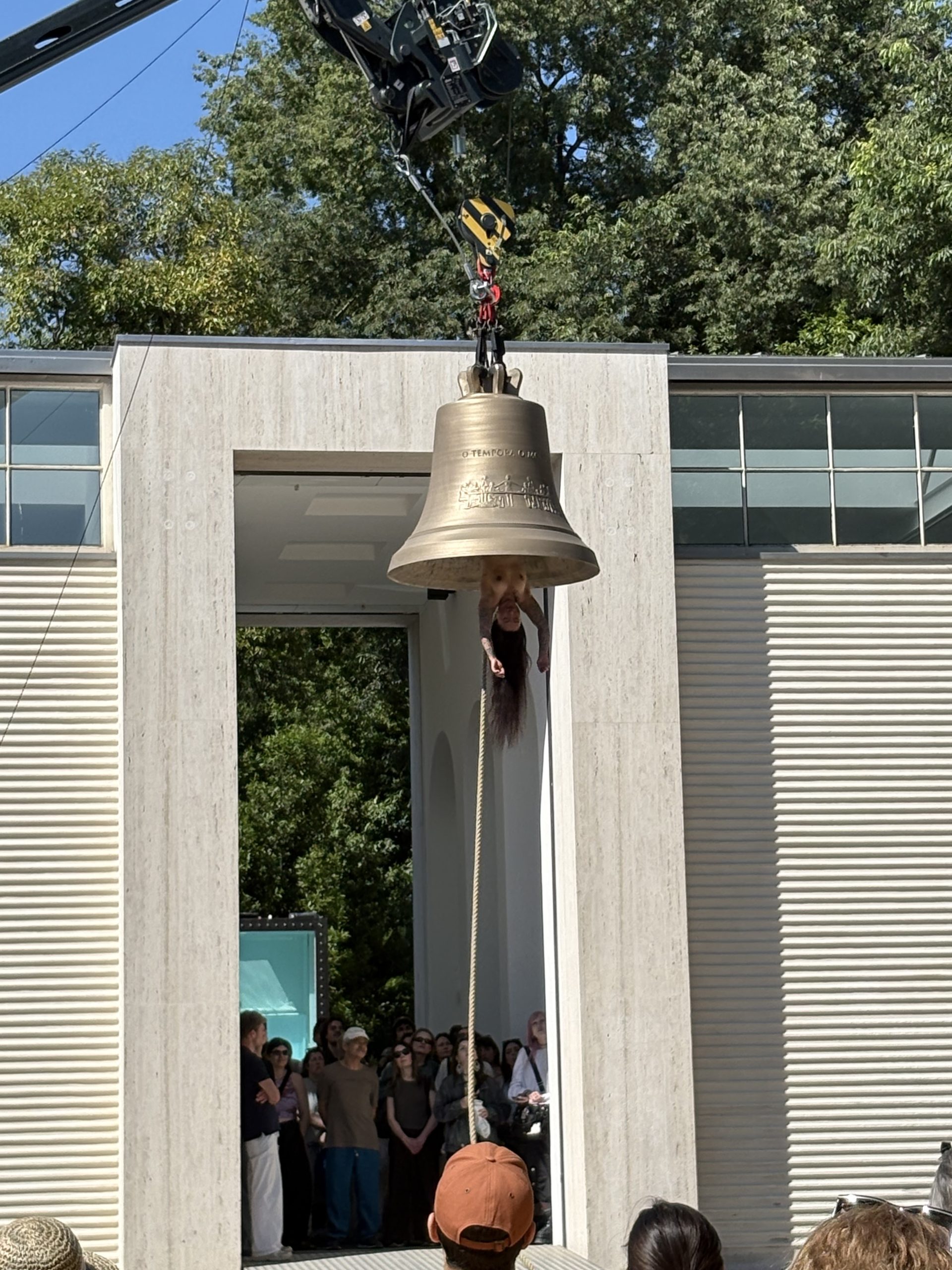
As for the other national pavilions there are a number of very successful performance pieces (how do you perform an artwork for 10 hours a day, 6 days a week, for 6 months?). The headline grabbing Seaworld Venice by Austrian artist Florentina Holzinger has naked women hanging as a clapper in a church bell and climbing above or sleeping within tanks of water (provided by visitors in portaloos before being treated and recycled into the works). Within the Netherlands pavilion, a very powerful piece by Dries Verhoeven called The Fortress is performed — the audience are ushered into an empty pavilion, shutters slowly come down over a half-hour period, and an artist gutterly shouts commands such as ‘love yourself’ as the audience become enveloped in the dark. Hard to describe adequately, but a very intense experience.
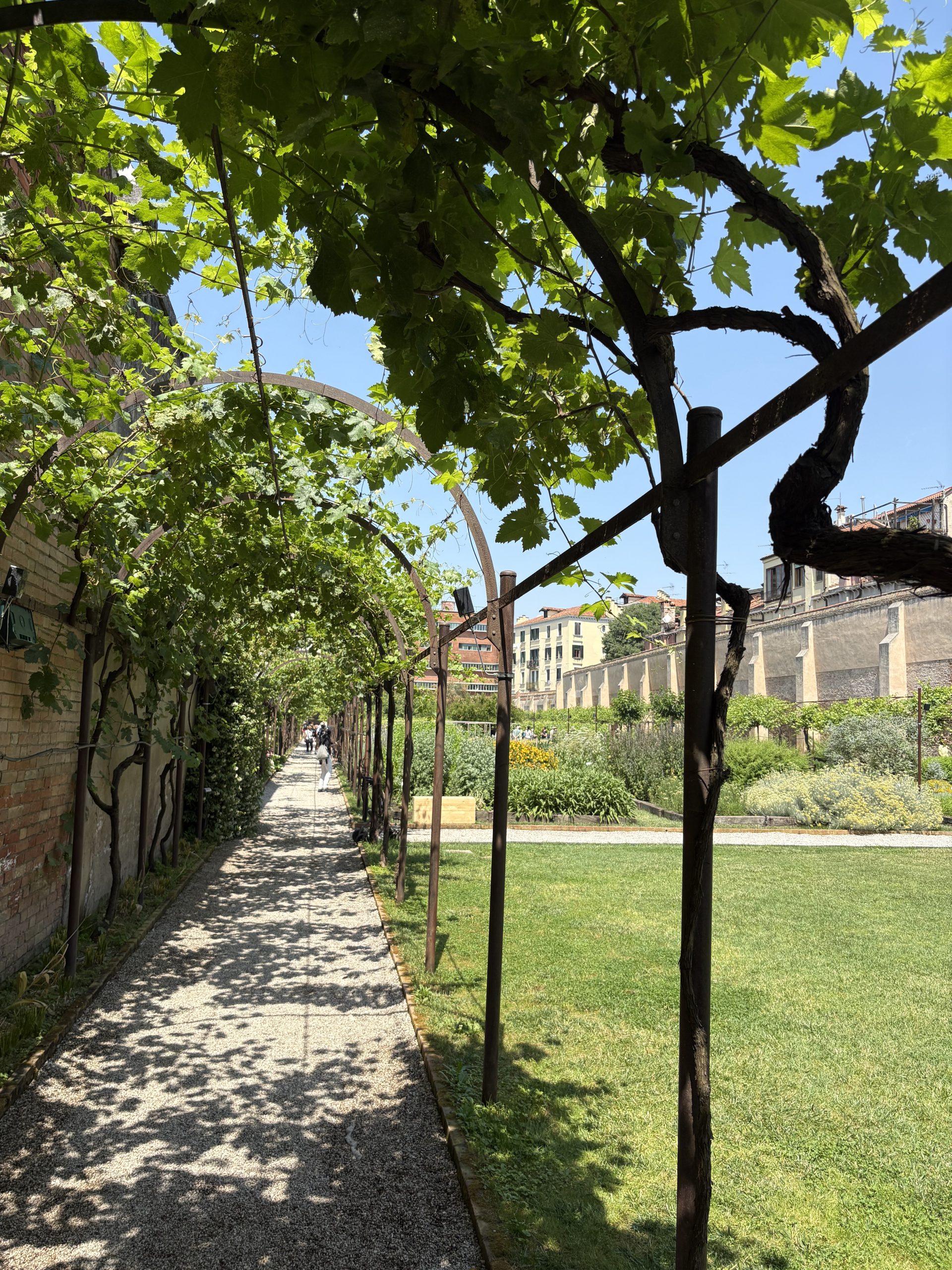
Spreading across the islands of the lagoon, other highlights included the Holy See pavilion by the train station, where you enter the mystic garden of a convent. You are supplied with headphones and as you wander around the tranquil garden you encounter new audio compositions by artists including Brian Eno and FKA Twigs to slow you down and aide a reflection on the minor keys and joys of life.
As ever the joy of the Biennale is in its scale and the spread across Venice. Well worth a visit, and on until 22 November 2026!
Featured photo: Lubaina Himid, Boatbuilders, 2025. Photo © Will Norman.