
 Rebecca Quinn is a GP in Battersea, London. She has previously worked as a locum in health inclusion clinics for asylum seekers and refugees, and has hosted on the Homes For Ukraine scheme. She also enjoys writing poetry and is on Instagram as @beccajanequinn
“Sally, are you here?”
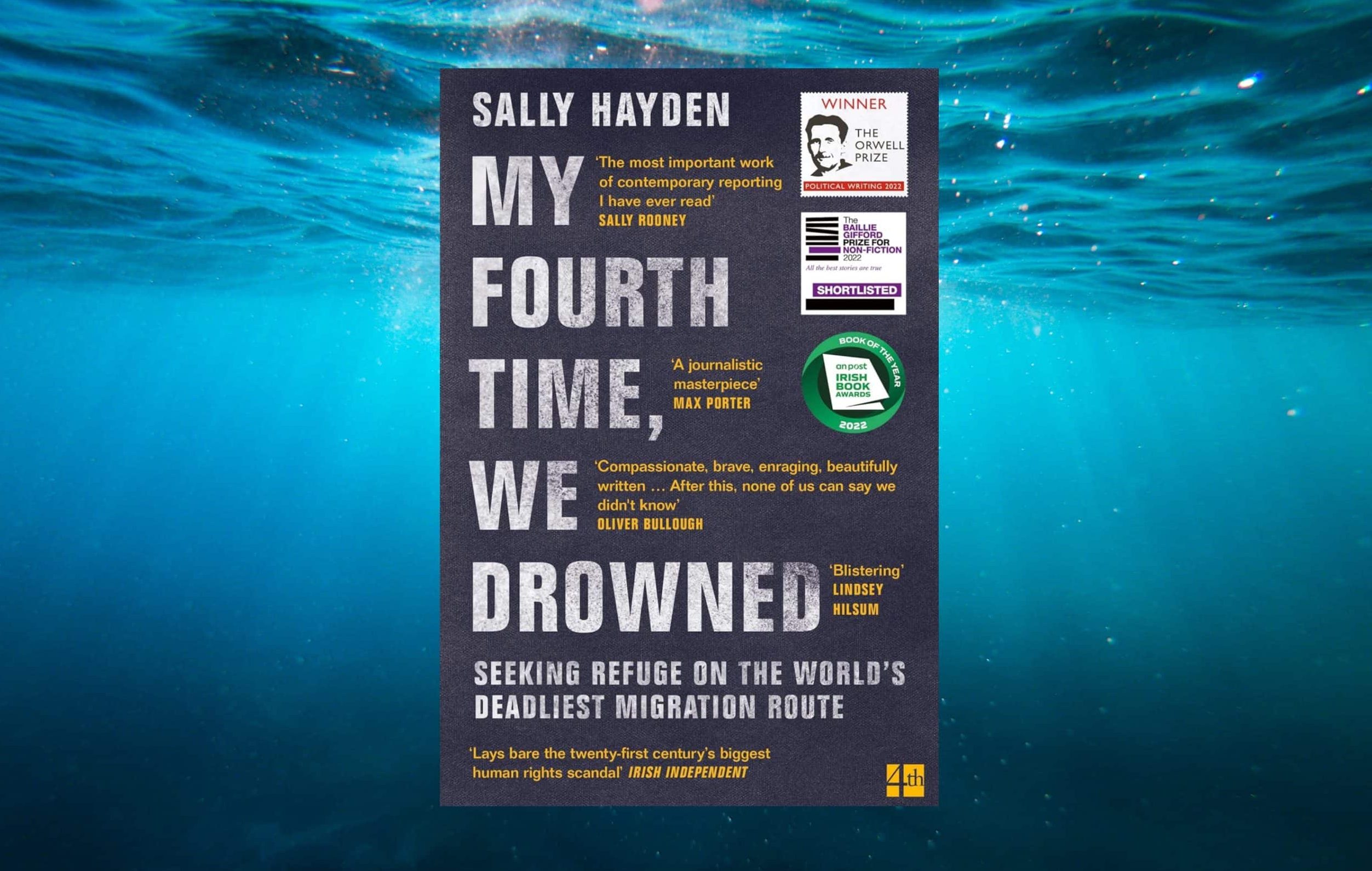
Sally Hayden is an Irish journalist whose book has drawn together a compelling document recounting the experiences of refugees along the East African and Central Mediterranean migration route. Her involvement began when she was contacted on social media by an Eritrean migrant. He was being held in a Libyan detention centre, asking for help. Through this and other subsequent contacts, she gained access to firsthand accounts of migrants seeking refuge in Europe and became a witness to the moral minefield of this world. The book takes us on a sobering journey, on which our horizons are painfully broadened and which drives us to question ourselves and our values.
The book takes us on a sobering journey, on which our horizons are painfully broadened and which drives us to question ourselves and our values.
The book starts with short biographies of the Eritreans, Ethiopians and Sudanese who later became Sally’s friends. It charts the events that compel them to save up fortunes, to leave their families and to entrust themselves to people smugglers. The East African migration route involves running the gauntlet through Libya. Here, many spend years held in warehouses, waiting for family and friends to pay smugglers additional ransom money before they are put on boats bound for the Italian coast. We hear of harrowing conditions documented through messages sent through smuggled phones: When one of the sick girls was about to die, [the smuggler] told her she can’t die before she gives him money, while she was crying. He insisted she call her family to speed up the process. Then she died for lack of treatment…
We learn about the effects of the 2017 Italian – Libyan Memorandum of Understanding, which resulted in the EU both pledging 100 million euros to train the Libyan coast guard in reducing ‘the influx of illegal migrants’ and at the same time pulling out of operating rescue boats in the Mediterranean. Statistics are harder to bear when they are populated with names.
In 2017, 2853 or 1 in every 51 people attempting to cross the Mediterranean drowned.
The same year 19,452 were intercepted by the Libyan coast guard and sent to Libyan detention centres , where they waited an undetermined amount of time to be ‘registered’ as refugees. WhatsApp messages and photographs sent to Sally illustrate how that these centres were notorious for using detainees as slave labour. It was not unusual for detainees to be sold back to people smugglers, to be extorted all over again: Once we came to Khoms [Souq al Khamis] we got warning messages written on the walls, ‘don’t let anyone go outside or work with soldiers outside the prison, otherwise they will sell you.’
The conditions in these centres were described as ‘hell’ and only worsened during the Libyan inter-militia wars. Many would in desperation attempt more failed sea crossings, which resulted in them either drowning, or being returned to detention.
Access by the UN to the centres were controlled by Libyan milita. Accounts from refugees tell of blankets being handed out before a visit, only to be collected in again as the inspectors drove away. The challenges faced by the UNHCR in managing the situation and delays in registering refugees are described baldly. The impression that we get is one of burnt out and overwhelmed staff, running an organisation which was itself was fast running out of empathy with the people they were tasked to protect.
Sally also presents to us the ethical questions surrounding treatment of refugees at Europe’s borders. She records her experience aboard the Alan Kurdi rescue ship run by the charity Sea Eye in the Mediterranean, and her interviews with humanitarian workers highlight the anti-immigration hostilities hampering their activity.
The disillusionment, the lost hope and lives of many of Sally’s correspondents speak all the more powerfully through the careful way the book is written. Sally is a journalist. She is factual. We are invited to respond with our opinions.
Towards the end of the book, Sally interviews Fessha, one of her Eritrean correspondents, after he had been resettled in Sweden. She writes: We spoke of Zintan [detention centre]’s many dead: Fatima whose son and husband died of medical neglect, Haftom, the dentist who loved to joke, Teddy, whose brother found out his fate through Facebook. Fessha’s eyes welled up; he said thinking about Libya ‘made him crazy’…. He had grown used to staying quiet about his past because Swedish people had no understanding of it. “People like them, they see the glass only, they don’t look beyond.…all my friends, they are in Libya still. It is not just my history; it is the history of refugees…still now they are detained in the dark jails of Libya. Being in Libya is like being in a morgue, sleeping beside mot ( death) because you are ready to die.”
In 2025, a total of 66,316 refugees and migrants reached Italy by sea in 1,510 landings, representing 46 per cent of all Mediterranean arrivals. 90% of these originated from Libya.1 At least 2,185 people died or went missing in the Mediterranean during this time.2
The 1951 UN Convention on the status of refugees define a refugee as, ‘some one who through a well founded fear of persecution due to race, religion, nationality, or member of a particular social or political group is outside their country of nationality and who is unable or, through that fear unwilling to avail themselves of the protection of that country.’
People deemed to meet these criteria are entitled to international protection with basic legal rights. It is an inescapable fact that not all who make this journey are able to prove that they meet these criteria, however. Seeking refuge in another country does not automatically give internationally recognised ‘refugee status’.
At our practices, we GPs receive the asylum seekers and refugees who have made it through the gates of, ‘Fortress Europe’. Some will have had routes here different from the ones described in the book. Some will have been trafficked. The majority of us have little understanding of the horrors that went before. We are supported with accessible materials like the excellent Doctors of the World Safe Surgeries Toolkit3 and the UKHSA Migrant Health Guide4 which help tackle of the specific health needs of this vulnerable population.
It is relatively straightforward to busy ourselves with interpreters, screening for communicable diseases, treating chronic disease and catch up immunisations. It is important to engage in health promotion, and to begin the referrals for psychological therapy and social support.
The majority of us have little understanding of the horrors that went before.B
ut we need to challenge ourselves to look beyond the glass. Do we know the difference between mental distress and disease? Do we try and understand what lies behind the chronic pain? Do our systems allow sufficient continuity so that we can practise trauma-informed care?
My Fourth time, We Drowned challenges us to be human. As doctors we have the unique opportunity to address the injustices described in the book at an individual level. We can try and bind up the pain and loss borne by our patients with holistic medical care. We have the freedom to treat people as people, with no political constraints. We can be impartial, but not impersonal.
This book gives depth to our understanding of migrant care. Its wide lens perspective inspires us to meet our asylum seeker, refugee and undocumented migrant patients more than half way. It challenges us to meet them well.
Featured Book: Sally Hayden, My Fourth Time, We Drowned – Seeking refuge on the world’s deadliest migration route. 4th Estate, 2023, ISBN 978-0008445614, 512 pages, paperback £12.99
References
- https://data.unhcr.org/en/documents/download/121482 [accessed 12/5/26]
- https://www.iom.int/news/21-migrants-died-every-day-2025-new-iom-data-reveals%23:~:text=In%202025%2C%20at%20least%202%2C185,route%20toward%20the%20Canary%20Islands [accessed 12/5/26]
- https://www.doctorsoftheworld.org.uk/safesurgeries/ [accessed 12/5/26]
- https://www.gov.uk/government/collections/migrant-health-guide [accessed 12/5/26]
Featured photo by Cristian Palmer on Unsplash