

 Ben Hoban is a GP in Exeter.
How can a small number of prison officers effectively supervise a much larger population of prisoners? Modern approaches predictably involve CCTV, although the 18th Century philosopher Jeremy Bentham proposed an architectural solution known as a panopticon, which has come to have greater success as a metaphor in healthcare than as a lodging for criminals. He imagined a circular building made up of rows of cells overlooking a central courtyard, which contained an observation tower. From there, an inspector could look through shuttered windows into any of the cells without themselves being seen. Even though it was only possible to monitor a few prisoners directly at any time, all had to assume that they were constantly under observation if they wanted to avoid being caught misbehaving, and this is in fact the defining feature of the panopticon.1 We can understand its role in healthcare by considering first that modern medicine crystallised around the discovery of germs as agents of disease and the need to control the spread of infections.
Leprosy once represented the archetype of a condition that changed someone from a member of a community into a source of danger to be excluded from it. Foucault saw epidemics – or plagues – as an extension of this, with even apparently healthy people confined to their homes and made to present themselves at their window for regular inspection. Within our own experience, the Covid-19 pandemic was a plague in this sense, even though we were observed through testing and contact-tracing rather than by local health inspectors. We can see both these elements – isolation and observation – in the panopticon, although by making observation assumed rather than explicit, it also introduces a third, self-scrutiny.2 This element of Bentham’s design is a fundamental part of modern healthcare systems, which promote not just regular scrutiny in the form of screening tests and checkups, but also require us to scrutinise ourselves. The medical gaze takes note of our symptoms, not because of what they might mean to us as individuals, but only according to whether they suggest an underlying disease.3 Every time we examine ourselves for lumps, wonder how long a mole has been there, or casually inspect the toilet bowl, we internalise this gaze, seeing ourselves through another’s eyes like inmates of the panopticon. We talk without irony about healthcare surveillance, overlooking the word’s more sinister connotations in any other context.
Every time we examine ourselves for lumps, wonder how long a mole has been there, or casually inspect the toilet bowl, we internalise this gaze, seeing ourselves through another’s eyes like inmates of the panopticon.
The landscape of healthcare has changed considerably since the days of Bentham and Foucault, and medicine is no longer defined by germ theory and the need to deal with outbreaks of infection, important though they remain. The global burden of ill health is now dominated by non-communicable conditions, which come on more slowly and last longer, and as a consequence, the traditional diagnostic method based on interpreting symptoms, signs, and laboratory findings has started to seem outdated.4 Rather than observing our patients through the shuttered windows of the panopticon, we are invited instead to consider the diagnostic window, the period preceding more concrete indications of disease when someone’s healthcare activity quietly starts to change, leaving clues in the medical record like trace evidence at the scene of a crime yet to be committed.5 From the system’s perspective, identifying patients to investigate by analysing such clues is simply a targeted form of screening. From a personal one, it embeds surveillance at a deeper level not even accessible to those under observation. We may accept that the doctor no longer knows best, but nor would the patient: both would depend on the information-sifting engines reviewing the notes to tell them what might go wrong at some point in the future, and what to do about it.
We suffer, though, not just because we are ill or in pain, but insofar as the meanings we attribute to those states diminish us as people.
The enforced self-scrutiny of the panopticon is ultimately about control and compliance, a poor model for everyday healthcare. If the cutting edge of diagnosis has moved on, however, it is not because we have changed our approach, but rather because self-scrutiny is no longer enough! We have not left the prison behind; we are rebuilding it digitally. Perhaps that seems overly dramatic. The traditional response to concerns about mass surveillance is that only the guilty have anything to fear and that it is necessary to accept a loss of individual freedom for the common good. What is at stake, then, is whether the benefits are worth the cost, and to what extent we are free to choose. There would undoubtedly be a benefit in terms of earlier diagnosis, although it would come at the cost of our ability to make sense of our experience for ourselves.
Many patients already feel a high degree of ambivalence in relation to their own bodies, viewing them as treacherous friends or outright enemies and the cause of all their suffering. They feel similarly ambivalent about their treatment, which promises to help them but often makes them feel worse, mirroring their suspicions of ambivalent care on the part of those whose job it is to look after them.6 No one goes through life without their fair share of pain and illness, and many get a good deal more. We suffer, though, not just because we are ill or in pain, but insofar as the meanings we attribute to those states diminish us as people.7 Medicine that arrogates to itself the interpretation of our life’s story isolates us not just from each other, but from ourselves; it cannot help but cause suffering. Can we really live in such an arbitrary world, in which everything we feel or do might have some hidden significance? HP Lovecraft, that master of gothic and tentacled horror stories, is not usually regarded as a commentator on healthcare trends, but his words here are apt: The most merciful thing in the world, I think, is the inability of the human mind to correlate all its contents.8
Bentham intended that members of the public would visit the panopticon to supervise the gaoler, just as the gaoler supervised the inmates, but we are all within its walls and under observation now, and it is difficult to escape the medical gaze, which sees many things clearly, and others, not at all. Leprosy, plagues and prison are grim guides. We need effective healthcare, but we also need the freedom to make sense of our own lives, and we need a little mercy too.
References
- Jeremy Bentham, Panopticon: The Inspection House, first published 1791
- Michel Foucault, Discipline and Punish: The Birth of the Prison, first published in French in 1975
- Michel Foucault, The Birth of the Clinic: An Archaeology of Medical Perception, first published in French in 1963
- Hay S, Ong K, Santomauro D et al, Burden of 375 diseases and injuries, risk-attributable burden of 88 risk factors, and healthy life expectancy in 204 countries and territories, including 660 subnational locations, 1990–2023: a systematic analysis for the Global Burden of Disease Study 2023, The Lancet, 2025; 406, 1873-1922 DOI: 10.1016/S0140-6736(25)01637-X
- Emma Whitfield, Becky White, Spiros Denaxas and Georgios Lyratzopoulos,
Diagnostic windows in non-neoplastic diseases: a systematic review, British Journal of General Practice 2023; 73 (734): e702-e709. DOI: 10.3399/BJGP.2023.0044 - Nina Smyth, Damien Ridge, Ashish Chaudhry, Dipesh Gopal, Nisreen A Alwan, Tom Kingstone Samina Begum, Alex Broom & Carolyn A. Chew-Graham, Ambivalent care: when patients feel unheard and unsupported, BJGP Life, 9th April 2026, https://bjgplife.com/ambivalent-care-when-patients-feel-unheard-and-unsupported/ [accessed 19/5/26]
- Eric Cassell, The Nature of Suffering and the Goals of Medicine, 2nd edition, Oxford University Press, 2004
- HP Lovecraft, The Call of Cthulhu, first published in Weird Tales, 1928
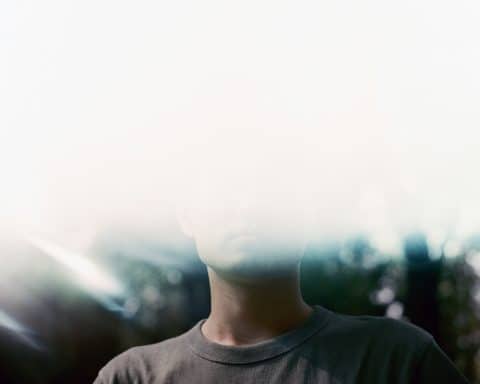
Featured photo by Tobias Tullius on Unsplash